Consumer Diary: Fake Charity, DCP Scam

Audio By Carbonatix

Boar’s Head pecorino romano cheese products have been recalled due to a potential listeria contamination. Photo credit: Harlan Levy





Consumer columnist and West Hartford resident Harlan Levy has more than 20 years of experience writing stories about everyday experiences that anyone could encounter.

Harlan Levy. Courtesy photo
By Harlan Levy
Personal note: Did this happen to you? With many big-family (10 of us, two dogs, and a cat) visits over the last month and feasts and the young folks’ three-meals-a day regimen I’ve gained 15 unwanted pounds, despite my daily exercise routine – although much less regular than usual. So, as this tumultuous year draws to a close, I’m damned if I don’t lose the 15 via smaller breakfasts, no lunch, smaller dinners, limited rich deserts, no beer, and regular workouts. Good luck to me, and too bad about the key lime pie in our fridge. Hope those of you in a similar predicament do the same.
Now, a few scams to kick off December: Fake charity requests and a bogus Department of Consumer Protection (DCP) ploy.
Charity requests abound this season – like the Dec. 2 Giving Tuesday program. Of course, scammers are out in force to take advantage of naive charitable folks. You may have read about the following guidelines to avoid the plethora of scams, but I’m giving you the basics anyway:
Confirm the charity is legit: Make sure you have the charity’s exact name and then do some research. Dishonest telemarketers will use names that sound like well-known charities to confuse you, so here are some sites to research:
- BBB Wise Giving Alliance and Charity Watch provide reports and ratings on how charities spend donations and run as organizations.
- DCP, Connecticut’s charity regulator can tell you if a charity is registered, a requirement.
Check where your donation is going: Call the charity directly and ask how much of your donation will go to your intended programs. You may also get this information from the charity’s website.
Payment: The safest way to donate is by credit card or check. If a caller or emailer or letter says the only way to pay is with cryptocurrency, a payment app, gift card, or by wiring money, it’s likely a scam, not a real charity.
Double-check links: Check who’s asking and who’s getting the money, even if it’s something a friend posts on social media. If you’re sent to a crowdfunding page, money will go directly to the organizer, who might not be closely tied to the cause you want to support.
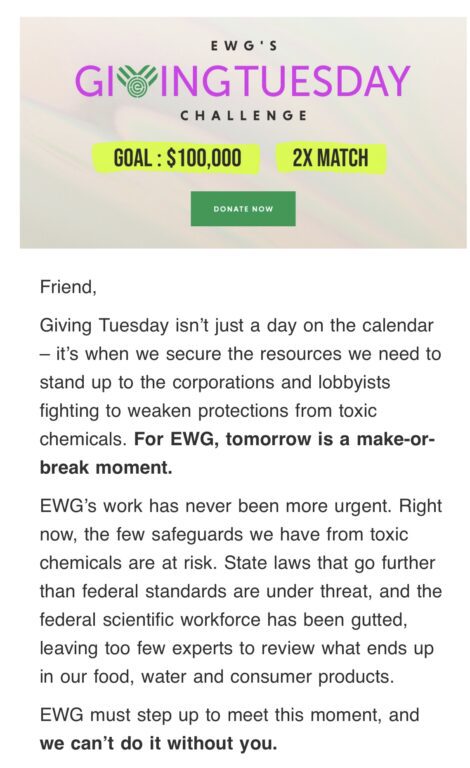
A typical email pitch for a charitable contribution for a Giving Tuesday event. Question: Is it legitimate? Courtesy of Harlan Levy
DCP scam
The Department of Consumer Protection (DCP) has just issued a warning about a new scam impersonating DCP employees and divisions.
Government impersonation scams are delivered via email, phone calls, and letters aiming to steal personal information and money. Last year, consumers nationwide reported losing a massive $789 million to government imposter scams, proving how profitable these are … and how gullible our nation’s people are.
“If you receive an unusual message from a state agency or organization, your first instinct should be to pause and do more research to verify the communication is legitimate,” said DCP Commissioner Bryan Caffarelli. “Avoid clicking on links or attachments out of curiosity. Instead, visit the official website, find the appropriate division to contact, and verify the message.”
Signs of a scam:
- The email ends with “@ct.gov.frienditsolutions.com
.” There are two domains, indicating a scam. All state government emails end with “ct.gov.” - Message lacks clarity: Common tactic with phishing emails. Vague information entices the recipient to respond, click links, or download attachments.
- Wrong phone numbers and department information: Verify phone numbers, addresses, and employee names on the Contact Us page at CT.gov/DCP.
- Suspicious link: The link reads “Click here to send me a file securely.” If you are unsure if you need to provide documents to DCP, reach out to the contact information you know to be correct. Do not click any links.
If you receive an email from our department and want to verify its legitimacy, visit CT.gov/DCP to locate the appropriate person to contact.
Boar’s Head recall
Boar’s Head, the popular brand of deli meats and cheeses found at Big Y and other supermarkets, in late November reported a recall on some cheese products due to possible listeria contamination.
The following pecorino romano cheese products are affected: the Boar’s Head 6-ounce retail cup and the Boar’s Head food service-sized bags.
The cheeses are produced by the Ambriola Company, which supplies products for several companies including Boar’s Head, the company said. Ambriola issued the recall, Boar’s Head said, adding it has halted the purchase of the products and has notified retail stores to remove it from the shelves nationally.
“No other Boar’s Head products manufactured at any other facility are impacted by this recall,” the company said.
Boar’s Head was the focus of a massive recall in 2024 linked to listeria, where it withdrew 7 million pounds of deli meats potentially contaminated with listeria. Ten people died and nearly 60 were hospitalized in a listeria outbreak that was traced to a plant in Jarratt, Virginia, that produced Boar’s Head deli meats.
That outbreak and one by Oklahoma-based BrucePac involving more than 11 million pounds of meat and poultry products sold at retail stores nationwide and distributed to schools and other institutions led to changes in how the U.S. Department of Agriculture handles food safety inspections and actions, particularly with regard to listeria.
In one big change, the Food Safety and Inspection Service is adding broader listeria species testing to all samples of ready-to-eat products. “The agency currently tests for listeria,” it said, “but adding more species to its regulatory framework will help regulators measure the effectiveness of the sanitation program.”
Now you know.
NOTE: If you have a consumer problem, contact me at [email protected] (“Consumer” in subject line), and, with the power of the press, maybe I can help.
Like what you see here? Click here to subscribe to We-Ha’s newsletter so you’ll always be in the know about what’s happening in West Hartford! Click the blue button below to become a supporter of We-Ha.com and our efforts to continue producing quality journalism.