
Consumer Diary: Optical Illusion Doormats, Back-In v. Headfirst Parking

Audio By Carbonatix
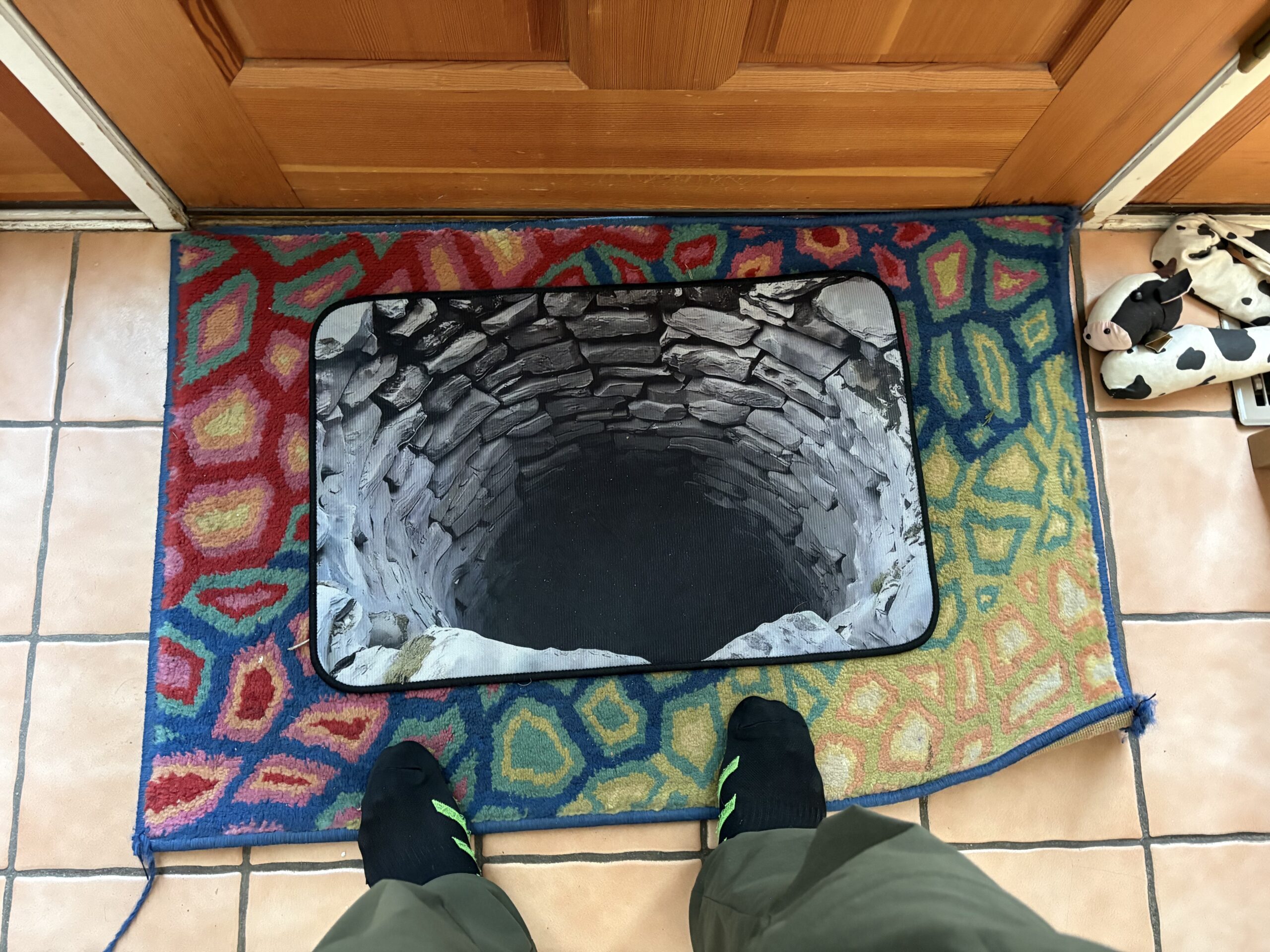
This optical-illusion doormat is not full-size as it appeared in the Chinese company’s ad, and only my dog might fear falling in. Photo credit: Harlan Levy





Consumer columnist and West Hartford resident Harlan Levy has more than 20 years of experience writing stories about everyday experiences that anyone could encounter.

Harlan Levy. Courtesy photo
By Harlan Levy
Hey everyone: Happy National Consumer Protection Week! More on that … with hard-to-believe loss data later.
First I want to write about an almost funny aspect of buying stuff from China.
It all started several years ago during the sudden (scary?) national toilet paper shortage. We had to act fast, so we went online and found and bought supplies of toilet paper from a Chinese company. When they arrived – just in the nick of time – contrary to their advertised photo, they were tiny. What a joke – on us.
A few years later my wife saw some full-size yoga mats offered by a Chinese company, and she ordered half a dozen. Guess what? They were 20 inches long … great for cat yoga practitioners. Hahaha.
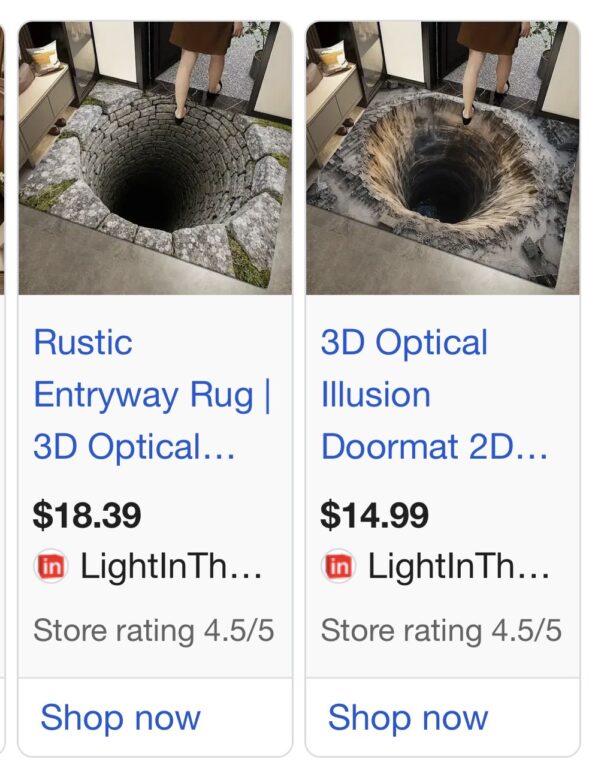
This Chinese doormat appears to be full-sized. But when it arrived it was only 22 inches wide. Courtesy of Harlan Levy
Then, a few months ago, while idly scanning the web, I saw a selection of Chinese trompe-l’oeil, optical-illusion full-size doormats. At least they appeared to be full-sized 36-inch doormats from the photos in the ads. (See my screen shot with someone’s leg.) I chose one that looked like you’d come in your front door and tumble down a deep black hole. What a minor hoot, I thought. So I ordered it and, last week, months since I’d forgotten about it, it arrived in a slim two-foot long package. Funny, it was less than two feet long! Strike 3!
At least it made our dog Latke wary.
Lesson: If you’re ordering items from China, there’s always a chance that the photos are completely deceptive. So check the dimensions if there are any, and be prepared to be disappointed.
Do you park headfirst or back in?
Last week I read an online New York Times column by Steven Kurutz, who declared that drivers who back into parking spots “like getaway drivers in a bank robbery” are annoying. Kurutz quoted West Hartford Public Schools teacher Matthew Dicks saying that it’s “ridiculous,” that it’s harder than driving forward with the narrowness of a standard parking space (7.5 to 8.5 feet) making it more dangerous to reverse into a spot. Dicks also was quoted as saying that it’s discourteous, because other drivers “must wait while you position your car, causing congestion in busy parking lots.” Stop backing into parking spots, he exhorted drivers. “It makes no sense.”
I and the AAA beg to differ. I always back in. Parking headfirst and then backing out risks hitting unseen pedestrians and other cars trying to make their exits or looking for spots. Over the past years I almost hit two people I didn’t see in my mirrors while backing out and at least a few cars driving past me.
Here’s what the AAA says: “Back into parking spots whenever possible to increase safety, as it improves visibility and allows for a safer, forward-facing exit from the spot. Drivers should scan the area for pedestrians, use mirrors and backup cameras while checking blind spots, and move slowly to avoid collisions.”
Method:
- Drive past the spot, signal, and turn the wheel to back into the space, keeping the vehicle centered.
- Check for pedestrians and other vehicles, particularly checking behind the vehicle before moving.
- Do not rely solely on rearview cameras. Look over your shoulders and use side mirrors.
- Keep your foot off the gas pedal, allowing the car to idle backward slowly.
NOTE: Years ago I purchased and stuck onto my side mirrors small concave circular mirrors
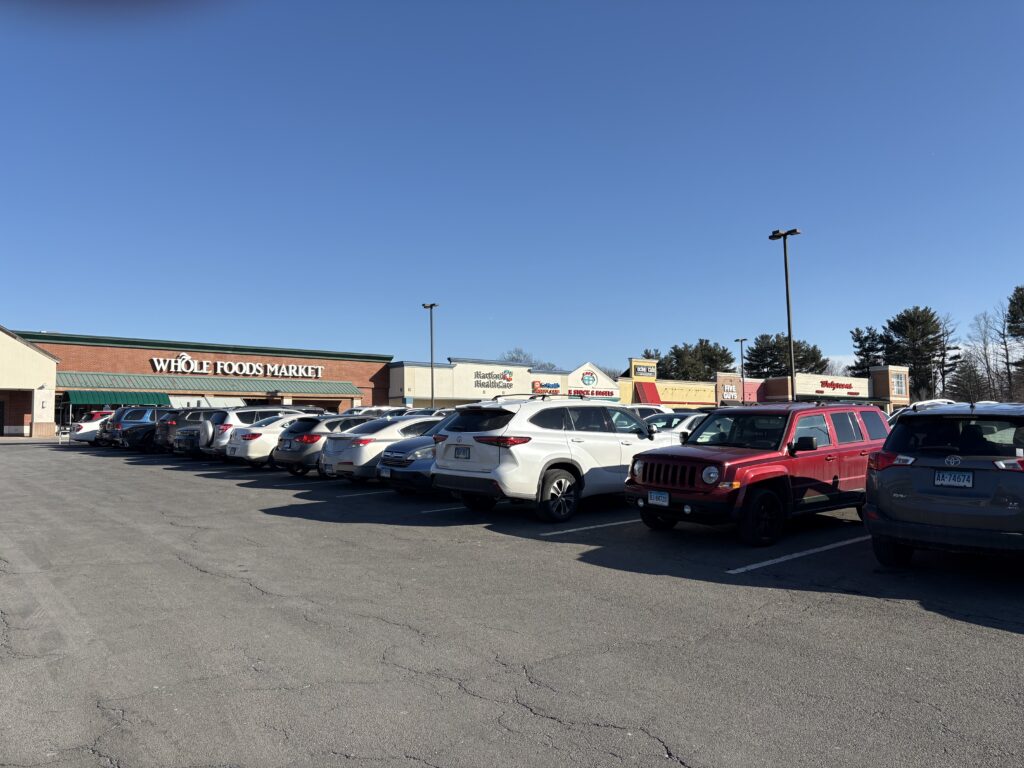
Seven out of 17 cars parking in this row at Whole Foods backed in. Is backing in safer? Photo credit: Harlan Levy
Consumer Protection Week data
I won’t repeat my scam alert warnings and safety procedures that I’ve written about repeatedly, but in spite of those common sense suggestions, the state Department of Consumer Protection’s Kaitlyn Krasselt on Monday released the following suggestions and sad data:
- Make sure you have updated and accurate contact information for your personal financial institutions and trusted organizations, such as your bank, credit card servicer, or utility company. This can help you combat the rapid increase in impersonation scams. To keep this information handy, you can print out DCP’s free contact information tracker available on DCP’s website. We recommend keeping it on the fridge or somewhere easy to find. If you receive an urgent or suspicious message, don’t engage, and call back the company’s real phone number to verify if the issue is legitimate.
- Data from the Federal Trade Commission shows that from January to September of 2025, there were 18,483 fraud reports in Connecticut, with a total loss of $96.3 million. The highest reported categories were identity theft, imposter scams, and debt collection.
Now you know.
Don’t fall for these scams, readers. Save your money!
NOTE: If you have a consumer problem, contact me at [email protected] (“Consumer” in subject line), and, with the power of the press, maybe I can help.
Like what you see here? Click here to subscribe to We-Ha’s newsletter so you’ll always be in the know about what’s happening in West Hartford! Click the blue button below to become a supporter of We-Ha.com and our efforts to continue producing quality journalism.




Again, a well-chosen, well-researched compilation — thank you Mr. Levy!