
Op-Ed: Black History Month

Audio By Carbonatix
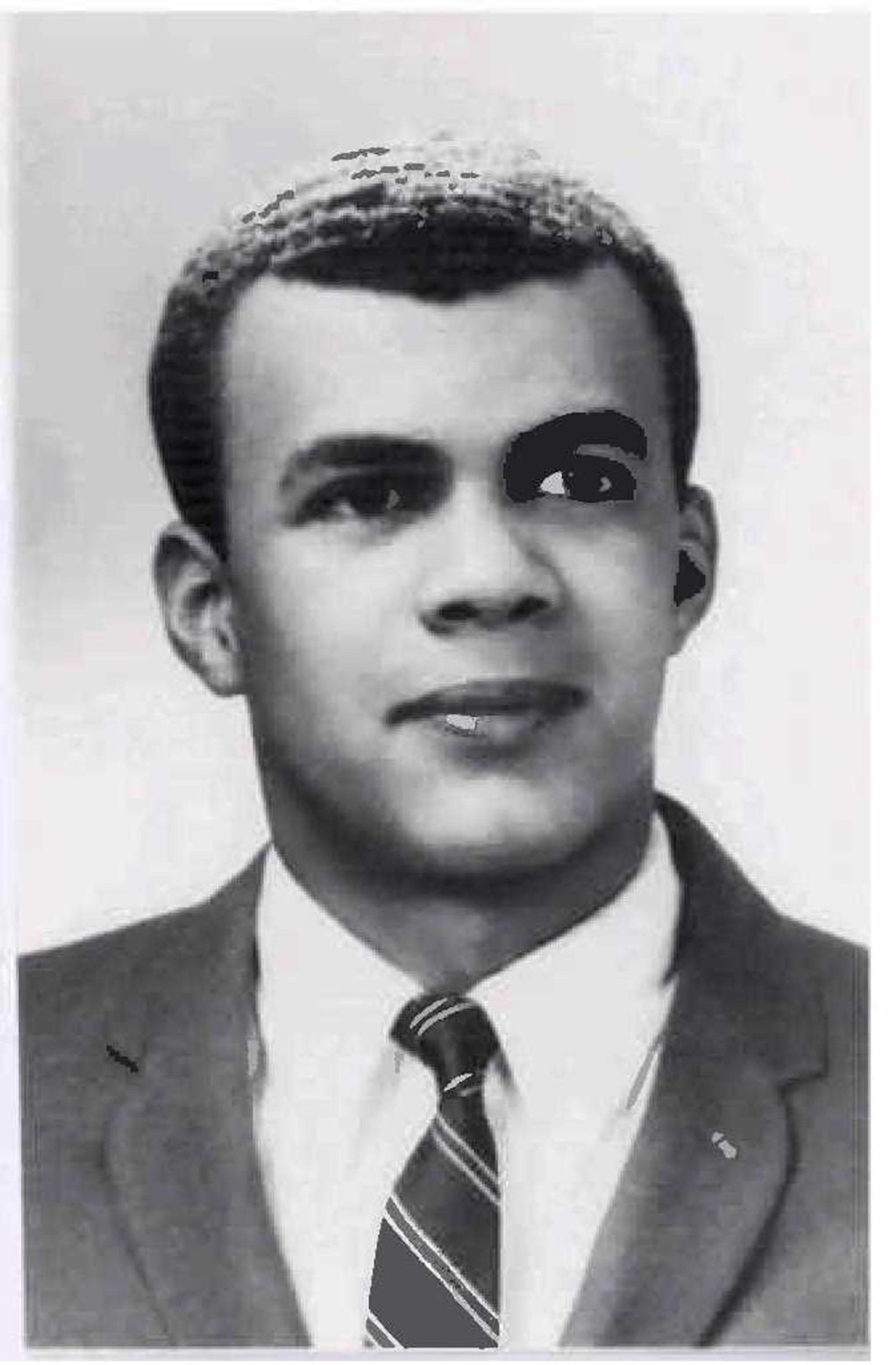
James Johnson as a young man. Courtesy photo





Thoughts about Black History Month from a West Hartford native.
By James A. Johnson
“I have a dream that my four little children will one day live in a nation where they will not be judged by the color of their skin but by the content of their character.” – Rev. Martin Luther King, Jr.
February is the time of the year when we pause to appreciate the triumph of African Americans over slavery and its enduring aftermath.
The impact of slavery for many African Americans has a dual burden of fighting racial injustice and rising above hateful bigotry that attempts to keep them shackled to that past. For a century and a half, it is a burden that no other racial or ethnic group has had to endure. Slavery is white history, not black history. By so readily owning slavery as the prevailing story of Black History Month we are permitting whites to make it our history, not theirs. The wholesale adoption of slavery is not the defining experience of Africans in America.
Our ancestors are defined by what others did to them, not by what they did for themselves. That theme permeates Black History Month which is in essence a celebration of firsts. I do not mean to diminish the accomplishments of Black survival under that cruel institution. The first African American to do _____ . They are being honored for what whites ordinarily accomplish. They are being remembered for the barrier they broke. This makes the persons who set the barrier integral to the accomplishment.
This is white history not Black History. I look forward to the day when we can stop celebrating things that nobody thought we could do. We are remarkable in our resilience. That is a cause for celebration. Every day.
Many individual whites may be against racism, but they still benefit from the distribution of resources controlled by their group. As we find ourselves grappling with issues of diversity, equity, and inclusion some have begun to wonder if this is not an exercise in futility.
The White Bonus
Tracy McMillan in her book, “The White Bonus,” sets out white advantage – the comforts and benefits that come from being a member of a dominant group. These benefits are characterized as privilege but McMillan sets out how racism hurts many whites as well. Tracy McMillan examines what white privilege delivers – in dollars and cents – not only to white people of wealth but also to white people from the poor to the middle class. She brings insight into how and to what degree, white racial privilege builds material advantage across class, time, and place.
McMillan starkly reveals how American institutions continue to benefit white people at the expense of Black Americans. Keep in mind genuine democracy cannot survive alongside massive inequality and the concentration of power in the hands of the elite population. The point of the book, is not to interpret white bonus or privilege, but to end it.
Persistence
Life is a continual process of growth, challenge, and obstacles. It has a way of sifting out the weak, the lazy, and those who are not able to move forward in the worst of times. This process involves every person – Black, white, brown, or yellow. Even though racism exists against Blacks, Jews, Asians, and the physically disabled – persistence of purpose is the key to obtaining your goals.
One characteristic that successful people share in common is persistence. Persistence means conviction, enthusiasm, and perseverance in the face of obstructions and failure. It is not brilliancy of intellect, talent, or resources but consistency of effort and constancy of purpose. The hallmark of success is the ability to ride out adversity or failure. For example, former U.S. President Calvin Coolidge said:
“Nothing in the world can take the place of persistence. Talent will not; nothing is more common than unsuccessful men with talent. Genius will not; unrewarded genius is almost a proverb. Education alone will not; the world is full of educated derelicts. Persistence and determination alone are omnipotent.”
Success is failure turned inside out. The power of persistence is characteristic of all men and women who have achieved success. Life is a continual pattern of growth and refinement, challenge, and obstacles. Persistence is another form of faith. Faith is not about everything turning out OK; Faith is about being OK no matter how things turn out. Adhering to this principle will add quality and richness to your life. Success is going from failure to failure without losing enthusiasm. Forget the mistakes of the past and press on to the greater achievements of the future. Promise yourself to be strong that nothing can disturb your peace of mind. Do not get lost in the sea of despair.
Keep in mind there is a place for anyone who will preserve because success is not far away. Tenacity of purpose accompany those who will achieve success. A man or women who refuses to quit, who keeps going in the face of defeat will find success. Every adversity, every failure, and every heartache carry with it the seed of an equivalent or a greater benefit.
Affirmative Action
Access to education is an important component of improving one’s success in employment and economic status. The problem is how to achieve those objectives, especially for marginalized populations. In higher education and employment, the use of affirmative action and preferential treatment to determine inclusion or exclusion involves getting somebody in and keeping somebody out. Is affirmative action reverse discrimination? Possibly. Or, is affirmative action a way to eliminate the barriers of racial discrimination to bring about equality of educational opportunity that meets Constitutional standards for all applicants for higher education?
In June 2023, the U.S. Supreme Court issued an opinion in Students for Fair Admissions v. Harvard College and University of North Carolina that overturned years of what courts carved out for the permissible use of race in its undergraduate admissions programs. The Court held that the use of race in the undergraduate admissions programs of Harvard and UNC cannot be reconciled with the guarantees of the Equal Protection Clause of the Fourteenth Amendment. 600 U.S. 181 (2023).
Narrowing the Use of Race
In both the Harvard and UNC cases, the plaintiff asked the U.S. Supreme Court to overrule Grutter v Bollinger and hold that universities cannot use race as a factor in admissions. In Grutter, the constitutional standard that a narrowly tailored use of race that furthered the compelling interest of obtaining a diverse student body met the Equal Protection Clause standard. The Supreme Court majority opinion in the Harvard and UNC 2023 affirmative action case determined that both admissions programs failed the Equal Protection standard.
What Remains for Affirmative Action
After the Supreme Court essentially eliminated the use of race in affirmative action in the Harvard and UNC affirmative action cases, some equity efforts remain for university admission programs.
First, the Court acknowledged that nothing prohibits universities from considering in an applicant’s personal essay a discussion of how race affected the applicant’s life, by discrimination, inspiration, or other experiences. These personal experiences must be tied to that student’s courage and determination or to a benefit acquired by the applicant whose heritage or culture motivated the student to assume a leadership role, attain a particular goal, or gain a particular skill which the student can contribute to the university. This permissible use of race provides universities the ability to consider an applicant’s discussion of how race specifically affected the applicant’s life, so long as that discussion is concretely tied to a quality of character such as leadership or a unique ability that the particular applicant can contribute to the university.
Secondly, rather than racial classifications, universities can use socioeconomic status as a way to recognize that education resources are not provided equally to all economic classes of students. Other socioeconomic criteria that colleges and universities may rely on in applicants’ personal profiles are whether the applicant would be a first-generation college attendee in the applicant’s family or whether the applicant was raised in a multiple language family environment.
Conclusion
The Preamble to the United States Constitution provides that “We the People of the United States, in Order to form a more perfect Union, establish Justice, insure domestic Tranquility, provide for the common defence, promote the general Welfare, and secure the Blessings of Liberty to ourselves and our Posterity, do ordain and establish this Constitution for the United States of America.”
We are now in the third decade of the 21st century and the country continues to recognize that the matter of equity, including race and color, is still a problem. Society and colleges have benefited from race conscious admissions, including Harvard and UNC. Now that the Supreme Court has limited the use of affirmative action in admissions by universities, the country must forge new paths to achieve educational equity and opportunity.
Higher education institutions have challenging work to achieve equal educational opportunities, including having a diverse student body. I have provided permissible equity action suggestions towards these goals in this article. I respectfully submit that admission officials of colleges and universities should continue to look beyond grades and test scores in their commitment to diversity and inclusion to transform America into a more perfect union.
As you read this article, read it as if I were a personal friend writing to you. The information on these pages engenders success – a transformational experience without regard to color, race, or cultural differences. However, the ideas, suggestions, principles, and concepts will only work when applied and practiced.
James A. Johnson is a native of West Hartford and a Conard alum. He is an accomplished lawyer and an active member of the Massachusetts, Michigan, Texas. and Federal Court bars. Jim concentrates in serious personal injury, sports and entertainment law, insurance coverage under the Commercial General Liability (CGL) policy ,and federal criminal defense. He can be reached at his website www.JamesAJohnsonEsq.com.
We-Ha.com will accept Op-Ed submissions from members of the community. We reserve the right to edit all submitted content.
Like what you see here? Click here to subscribe to We-Ha’s newsletter so you’ll always be in the know about what’s happening in West Hartford! Click the blue button below to become a supporter of We-Ha.com and our efforts to continue producing quality journalism.



2.5 generations of black people in elite universities was all it took for Americans to reelect the klan to all levers of federal power.
I am proud to count Jim Johnson as a lifelong friend. He has graced the pages of the West Hartford News since the 50’s, first as an outstanding athlete at Sedgwick Jr. High and Conard, later as a chronicler of West Hartford’s sports history, and still today, frequently weighing in on matters important to the Town.
JIm writes from the heart with an unique historical perspective. His love for the Town and the terrific upbringing it afforded us is always evident. I am looking forward to his next instalment.