10th Annual ‘Stories Behind the Big Stories’ Panel Discussion Returns to West Hartford

Audio By Carbonatix
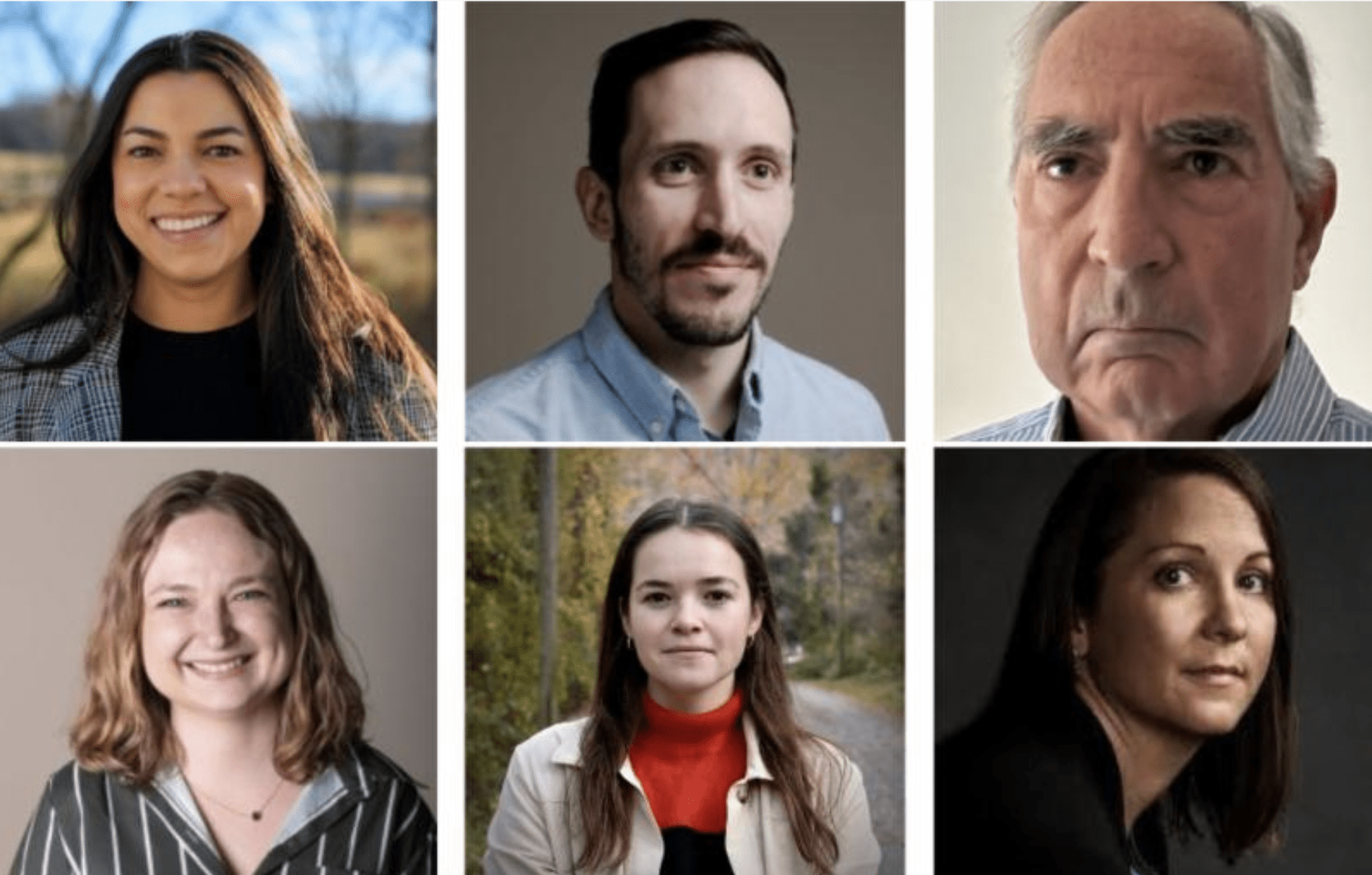
Participants in CFOG's 10th "Stories Behind the Big Stories" are (clockwise from top left) moderator , Camila Vallejo, Andrew Brown, Edmund Mahony, Jacqueline Rabe Thomas, Ella Napack, and Ginny Monk. Courtesy photos





The Connecticut Foundation for Open Government will host the 10th annual ‘Stories Behind the Big Stories’ panel discussion on Jan. 20 at the Elmwood Community Center in West Hartford.
Submitted
Chatbots enticing middle-schoolers into sexually explicit relationships. The deaths and danger of homelessness in Connecticut. The exploitation of automobile owners by towing companies. A cover-up by utility regulators. The unseen poisoning of drinking water.
The hard work of Connecticut journalists in 2025 – the secrets they uncovered and the resourceful, ethical and courageous methods they used – will be on display Tuesday, Jan. 20, when the Connecticut Foundation for Open Government (CFOG) hosts its “Stories Behind the Big Stories of 2025” from 5 to 7 p.m. at the Elmwood Community Center, 1106 New Britain Ave. in West Hartford.
Now in its 10th consecutive year, the discussion is designed to help the public appreciate the demanding process of newsgathering and the vital need for a free press. It will be moderated by CFOG board member Camila Vallejo, a former CT Public reporter who is a bilingual communications specialist for the Eviction Lab at Princeton University.
The panelists are:
- Andrew Brown, an investigative reporter at the CT Mirror
- Edmund H. Mahony, a veteran reporter at the Hartford Courant
- Ginny Monk, the children’s issues and housing reporter at the CT Mirror
- Ella Napack, an investigative reporting fellow at Hearst Connecticut Media Group
- Jacqueline Rabe Thomas, an investigative reporter for Hearst Connecticut Media Group
“For our 10th Stories Behind the Big Stories event, we have another great line-up of journalists to explain how they did their fascinating, groundbreaking work,” CFOG President Kate Farrish said. “We want the public to understand the persistence and professionalism that journalists display every day to uncover the truth.”
Napack will discuss her shocking findings that with few safeguards, Connecticut adolescents and teens were “dating’”AI chatbots that were targeting kids and sending them explicit content. Napack and her editor at Hearst decided the only way to prove that the story was true was to have her pose as a middle schooler to test the Artificial Intelligence companion apps. She said it took surprisingly little prompting for the bots to become sexually explicit. “The benefit to us and the public outweighed the idea of misrepresenting ourselves because we felt parents need to read this,” Napack said.
Rabe Thomas will explain how she and nearly two dozen reporters and photographers chronicled the reality facing many homeless people in Connecticut over a 48-hour period. Their sweeping series included profiles of some of the 134 unhoused people who died in the past year, including four from the cold, two whose cars caught fire as they slept inside and eight who took their own lives. “Each night, more than 800 people sleep outdoors, according to an annual count homeless providers complete each year, [and] … some don’t make it through the night,’’ they wrote.
Brown will describe how he and a team of CT Mirror journalists revealed that there are many as 8,000 lead pipes carrying tainted water to homes in public water systems in the state, threatening the health of thousands of Connecticut residents. Their public service reporting included a database that allowed residents to check if their home is served by a lead pipe.
Mahony will describe how he used the state Freedom of Information Act to disclose revealing text messages and emails from officials at the Public Utility Regulatory Agency (PURA) in an ongoing dispute between its former chairman, Marissa Gillett, and utility companies. Mahony wrote that Gillett acknowledged deleting – she said inadvertently – a sought-after text message exchange about who might have been behind an unusual news opinion column vilifying the utility industry. Gillett resigned under pressure following the disclosures of her inappropriate conduct.
Monk will discuss her yearlong project with ProPublica examining exploitative practices of Connecticut towing companies that allowed cars valued at below $1,500 to be sold without the owner’s knowledge after just 15 days. The series prompted state legislators to change the law to extend the window to least 30 days. More recently, Monk and her colleagues analyzed 6,000 forms that towing companies had submitted to the state and found that the towers regularly listed low values for the vehicles, allowing them to sell them quickly. Their reporting also highlighted the state Department of Motor Vehicles lax oversight of the towing process.
The event is sponsored by CFOG, a nonprofit organization founded in 1991 by residents interested in promoting open government and the public’s right-to-know. Its programs are carried about by a volunteer board of directors drawn from news media, the law, academia and government.
A $15 donation is requested for the event, which includes refreshments. Tickets can be purchased in advance using the “donate” button at http://www.tinyurl.com/
Like what you see here? Click here to subscribe to We-Ha’s newsletter so you’ll always be in the know about what’s happening in West Hartford! Click the blue button below to become a supporter of We-Ha.com and our efforts to continue producing quality journalism.