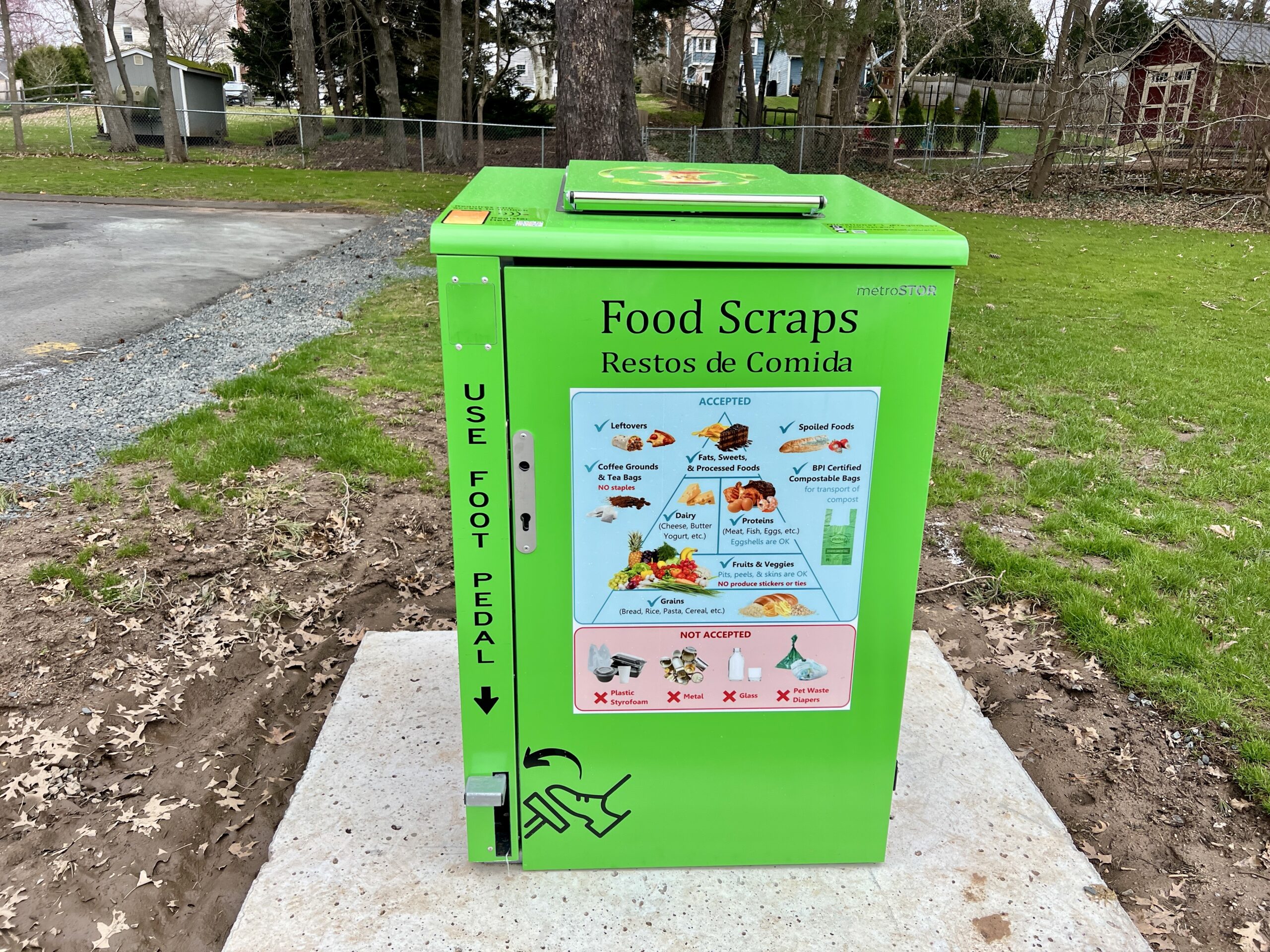
At West Hartford Forum, DEEP Hears the Good, the Bad, and the Suggestions for Bear Management

Audio By Carbonatix
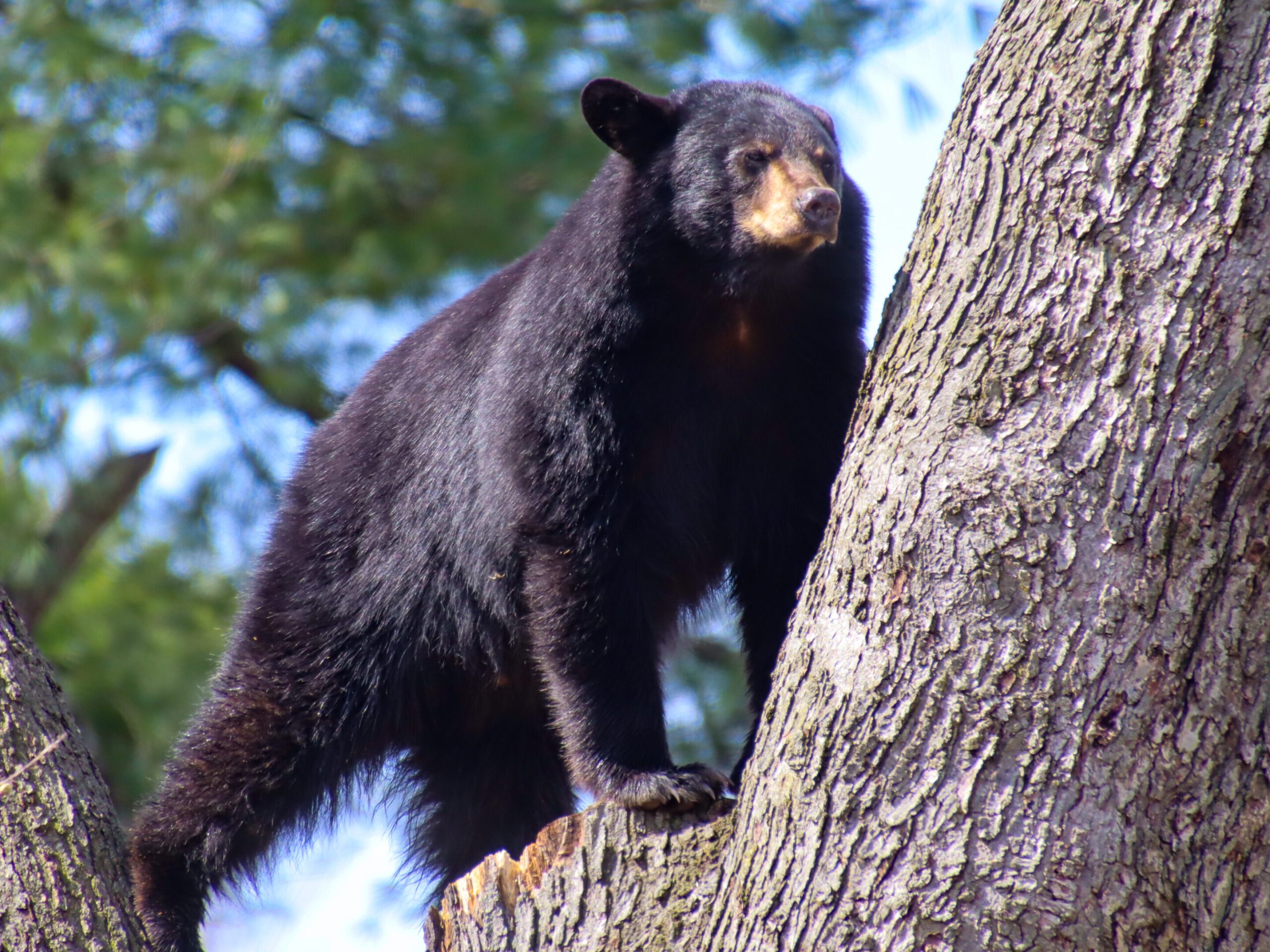
Bear in a tree at the Elmwood Community Center in West Hartford on March 26, 2025. Photo credit: Alex Adams, HopefullyLevelHeaded Photos (we-ha.com file photo)





The Department of Energy & Environmental Protection held the last of its four community listening sessions on bear management in West Hartford on Tuesday night.
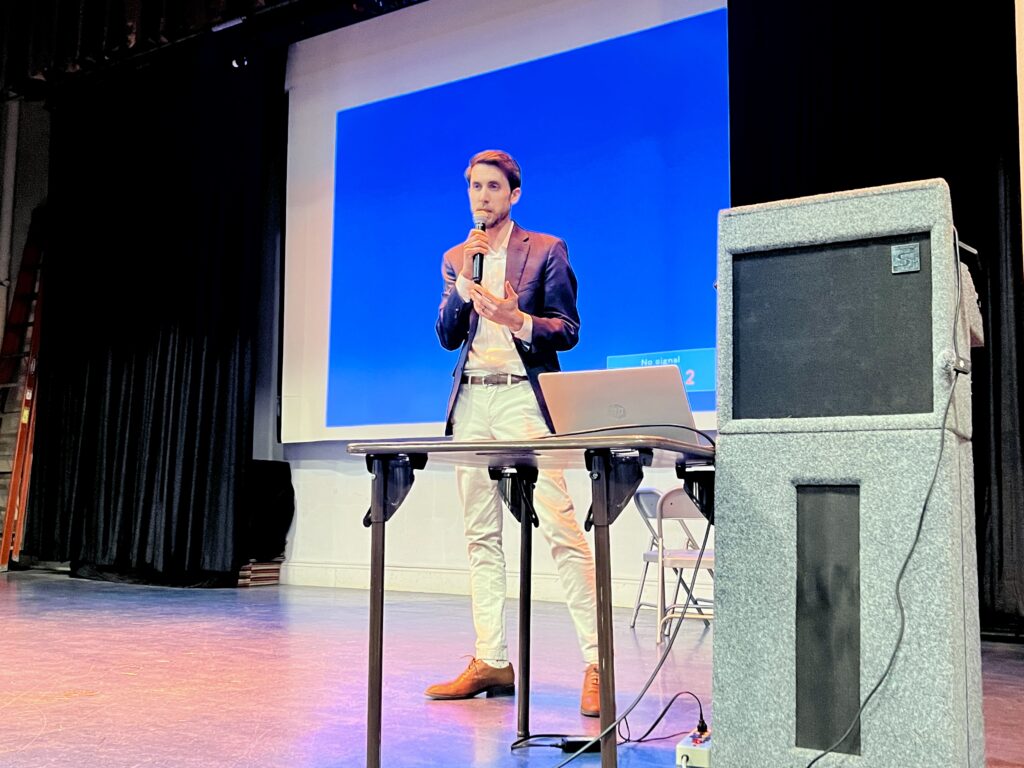
DEEP Deputy Director Mason Trumbull speaks at a DEEP Bear Management Listening Tour at the Elmwood Community Center in West Hartford. Dec. 16, 2025. Photo credit: Ronni Newton
By Ronni Newton
Connecticut’s Department of Energy & Environmental Protection (DEEP) Wildlife Division held four listening sessions on bear management at communities across the state, with the final forum held at West Hartford’s Elmwood Community Center on Dec. 16.
The goal of the sessions, DEEP Deputy Commissioner Mason Trumbull said, was to hear comments from those who view bears with “joy, fear, and everything in between,” and the input, which included comments about co-existing peacefullly with bears and suggestions for what DEEP can do better, will be summarized in a comprehensive report.
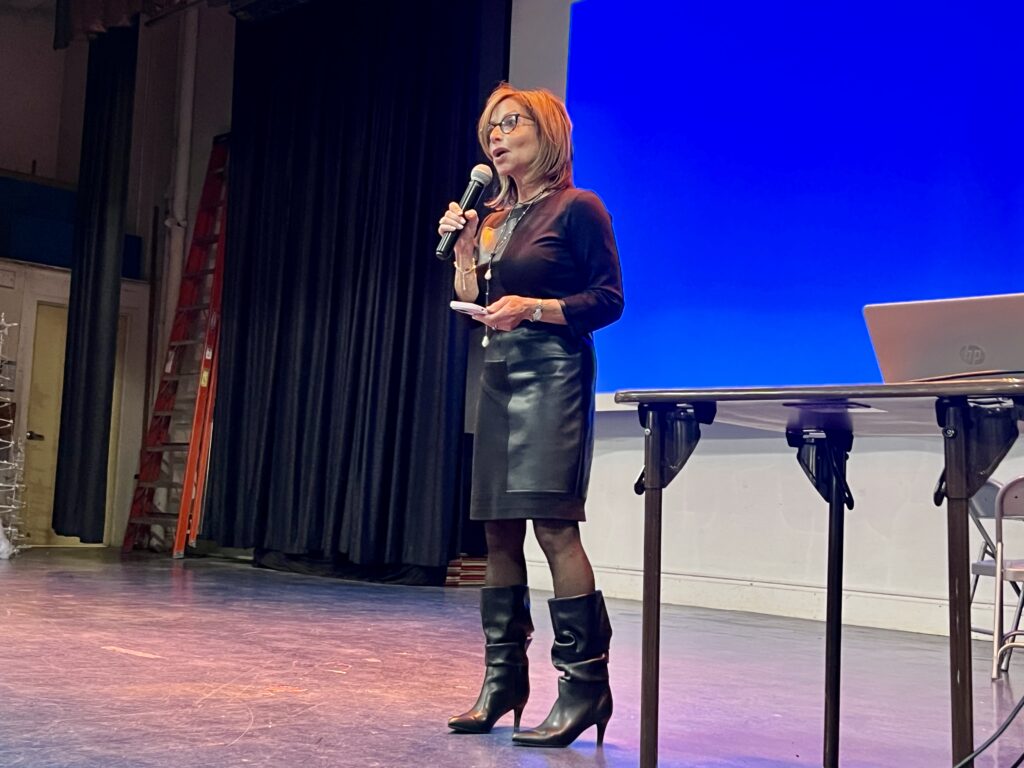
Mayor Shari Cantor speaks at a DEEP Bear Management Listening Tour at the Elmwood Community Center in West Hartford. Dec. 16, 2025. Photo credit: Ronni Newton
“We all have bear stories,” West Hartford Mayor Shari Cantor said as she welcomed roughly 100 people to Wednesday’s session. “Each town is different,” she said. “We have bears that walk through the center of town, along Trout Brook Trail. We have one who likes World of Beer,” she said, and another bear with an injured paw that enjoyed munching on residents’ pumpkins this fall.
“They’re not going away,” Cantor said, and it’s important for people to learn how to live with them. One of the things that West Hartford has recently proposed is an update to its leash law. Keeping dogs on leash will help avoid surprise encounters between dogs and bears.
In March 2025, DEEP produced “The State of the Bears” which indicated that in 2024, sightings of bears had been reported in 154 of the state’s 169 municipalities. West Hartford has had 1,000 bear sightings this year – the most reported bear sightings of any town in the state. But Eric Hammerling, the director of DEEP’s Office of Environmental Review & Strategic Initiatives – and also a town resident – said that doesn’t mean West Hartford actually has more bears than other towns, but just more reported sightings, perhaps because it’s still surprising to residents when they see a bear.
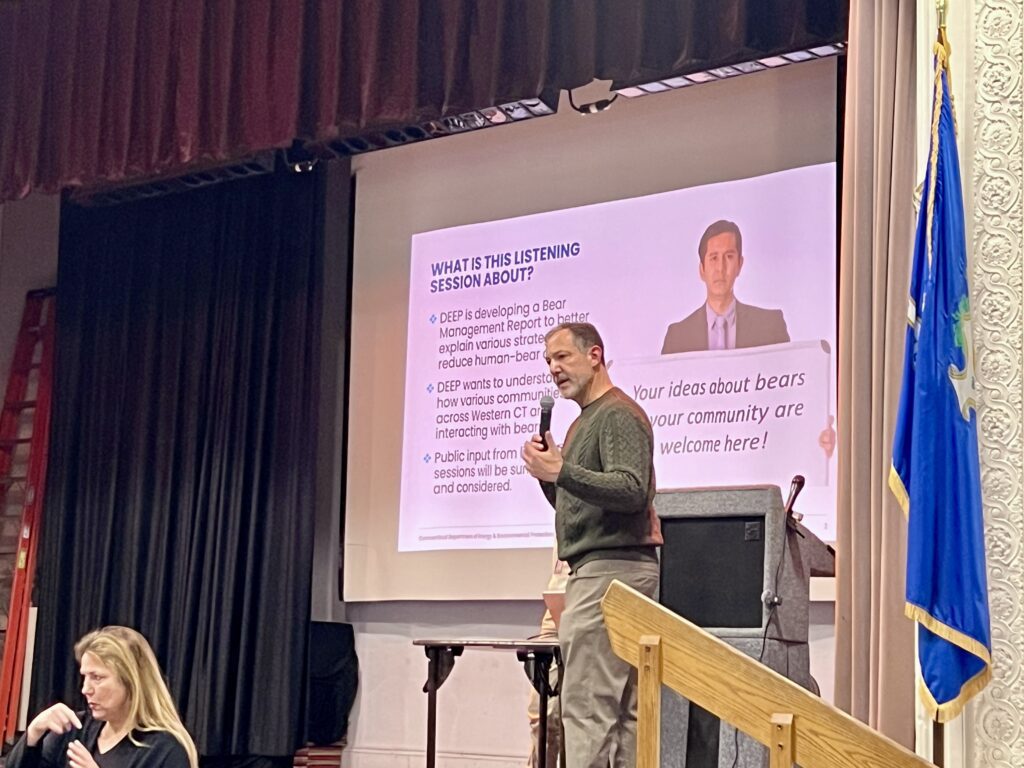
Eric Hammerling, director of the Office of Environmental Review & Strategic Initiatives, speaks at a DEEP Bear Management Listening Tour at the Elmwood Community Center in West Hartford. Dec. 16, 2025. Photo credit: Ronni Newton
DEEP is most concerned “when they get to the level of home entries,” Hammerling said, when a bear isn’t just in the yard or even putting its paw through a screen, but rather when it “forces itself into the living area of a home.” In 2024, there were incidents in 16 municipalities, and in the past five years in 38 towns.
Hammerling also noted that of the total of 16,000 reported “conflicts,” two-thirds involved trash or bird feeders.
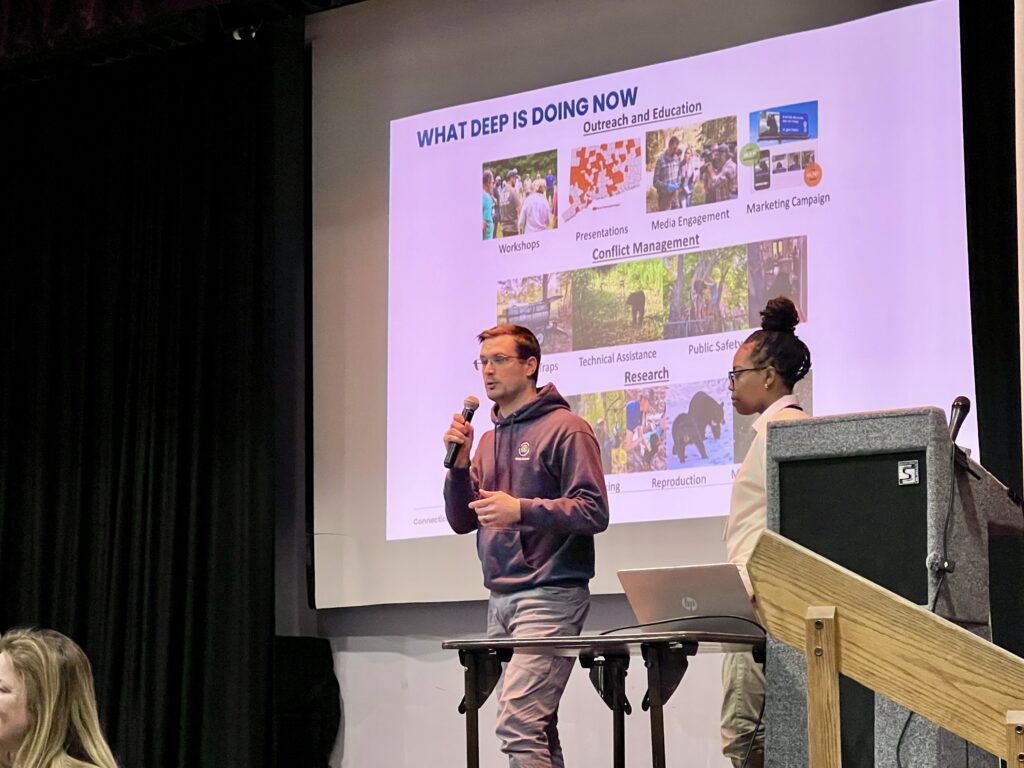
Wildlife educator Paul Benjunas speaks at a DEEP Bear Management Listening Tour at the Elmwood Community Center in West Hartford. Dec. 16, 2025. Photo credit: Ronni Newton
Wildlife education expert Paul Benjunas said outreach efforts have focused on preventing bears from accessing food and trash, with workshops on use of electric fencing and bear-resistant trash cans, as well as removal of bird feeders. “Bears don’t really hibernate,” he said, and having available bird feeders at any time of year can condition bears to return for food.
The public is also urged to scare bears away, Benjunas said.
DEEP posed three questions to attendees, asking for their personal experience regarding strategies that have worked well to reduce human-bear conflicts, what human-bear conflicts they find most concerning, and how the state and/or municipalities can help the public live more safely with bears.
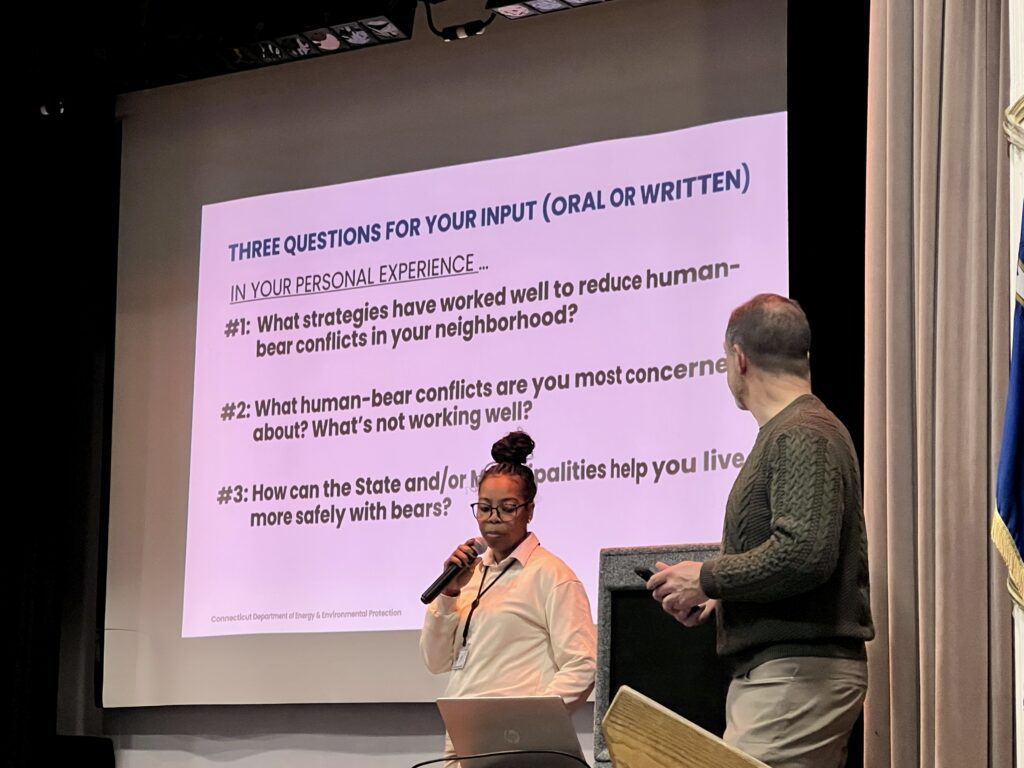
Akiebia Hicks of the Connecticut Land Conservation Council (left) and Eric Hammerling, director of the Office of Environmental Review & Strategic Initiatives. DEEP Bear Management Listening Tour at the Elmwood Community Center in West Hartford. Dec. 16, 2025. Photo credit: Ronni Newton
Many of those attending the listening session were from West Hartford, but there were others from throughout the state, including rural areas.
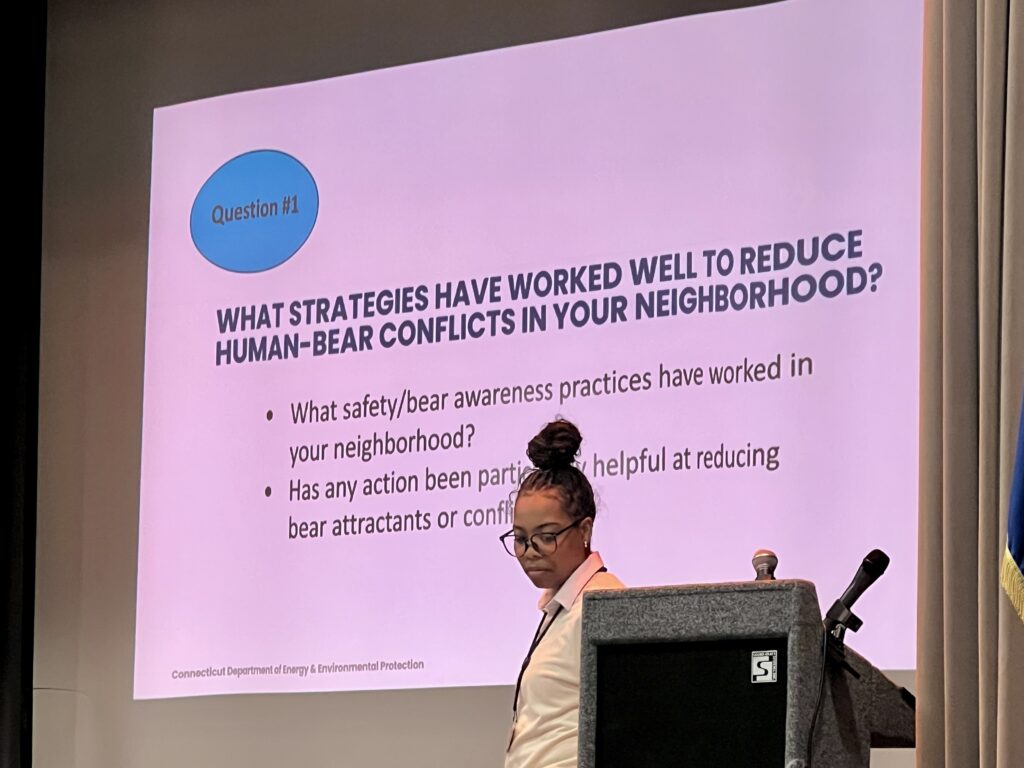
DEEP Bear Management Listening Tour at the Elmwood Community Center in West Hartford. Dec. 16, 2025. Photo credit: Ronni Newton
Successful strategies shared included the installation of electric fencing, keeping trash in the garage, using group texts or social media to alert neighbors of the presence of a bear, and banging pots and pans to notify neighbors that a bear has been sighted. Others don’t use bird feeders at any time of year.
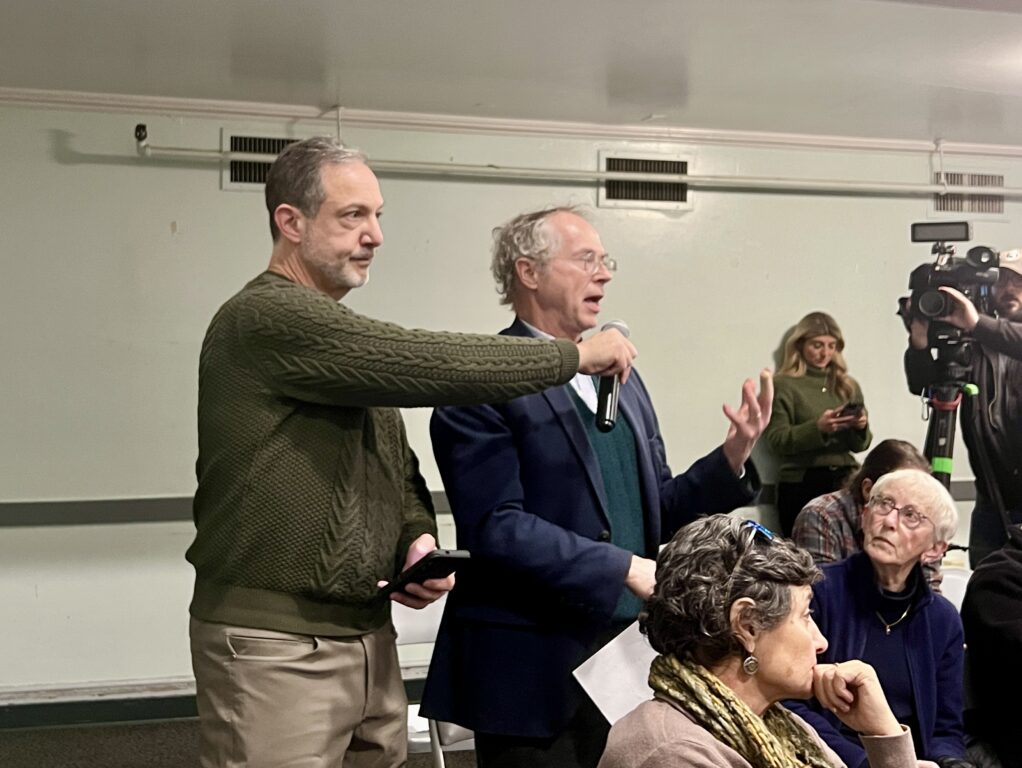
DEEP Bear Management Listening Tour at the Elmwood Community Center in West Hartford. Dec. 16, 2025. Photo credit: Ronni Newton
A North Granby resident said he sees bears all the time. “We love seeing them and realized we moved into their world,” but doesn’t feel threatened. He has bear-resistant trash cans, doesn’t leave screen doors accessible when cooking, and makes “human noises” when walking around when bears are present.
Bear whistles, ringing a bell, and shaking a jar full of coins were also mentioned as successful strategies.
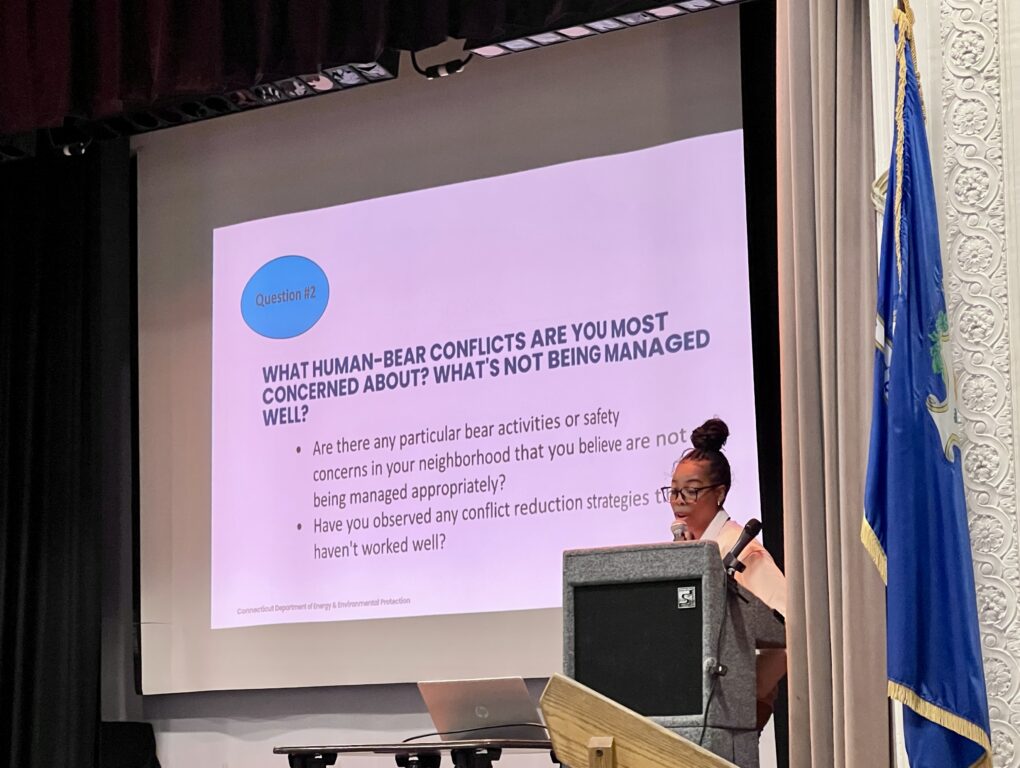
DEEP Bear Management Listening Tour at the Elmwood Community Center in West Hartford. Dec. 16, 2025. Photo credit: Ronni Newton
Concerning interactions included bears hanging around dumpsters at multifamily and commercial locations, bears that tip over the trash cans at Elizabeth Park, and bears in areas where there are young children.
“Inadvertent encounters” were mentioned, and one West Hartford woman said a bear had ripped off the lattice and was living under her deck – and wouldn’t leave no matter how much noise she made.
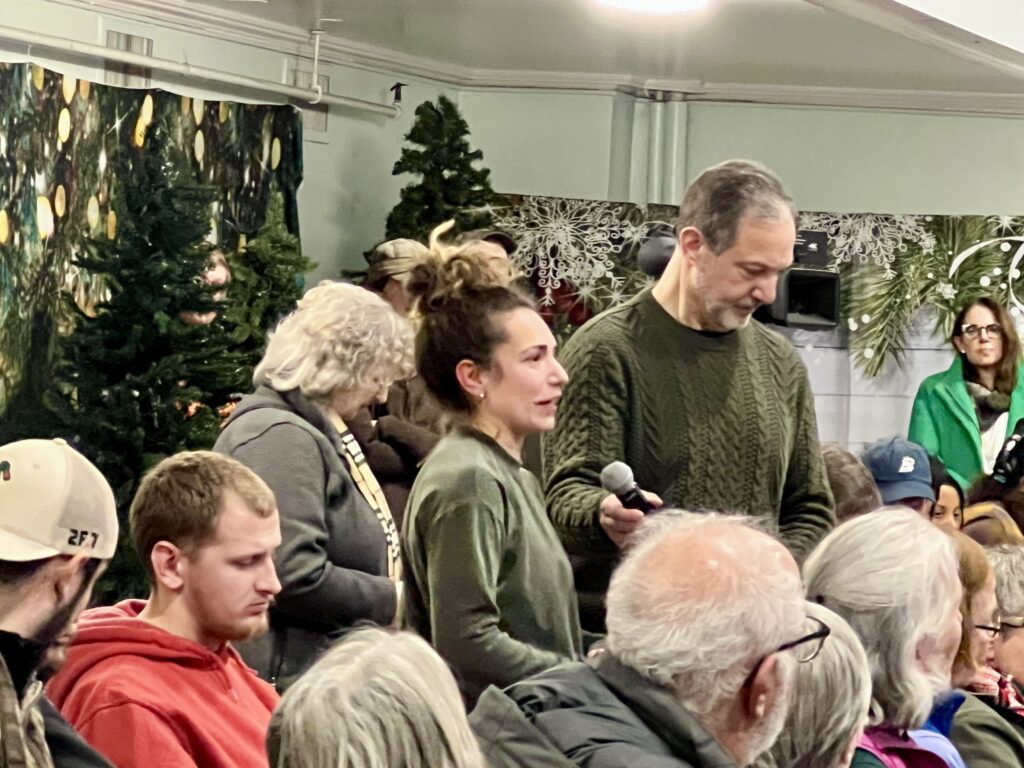
DEEP Bear Management Listening Tour at the Elmwood Community Center in West Hartford. Dec. 16, 2025. Photo credit: Ronni Newton
Hunting was also mentioned – but there was disagreement among those in the room about it being an effective means of managing the bear population.
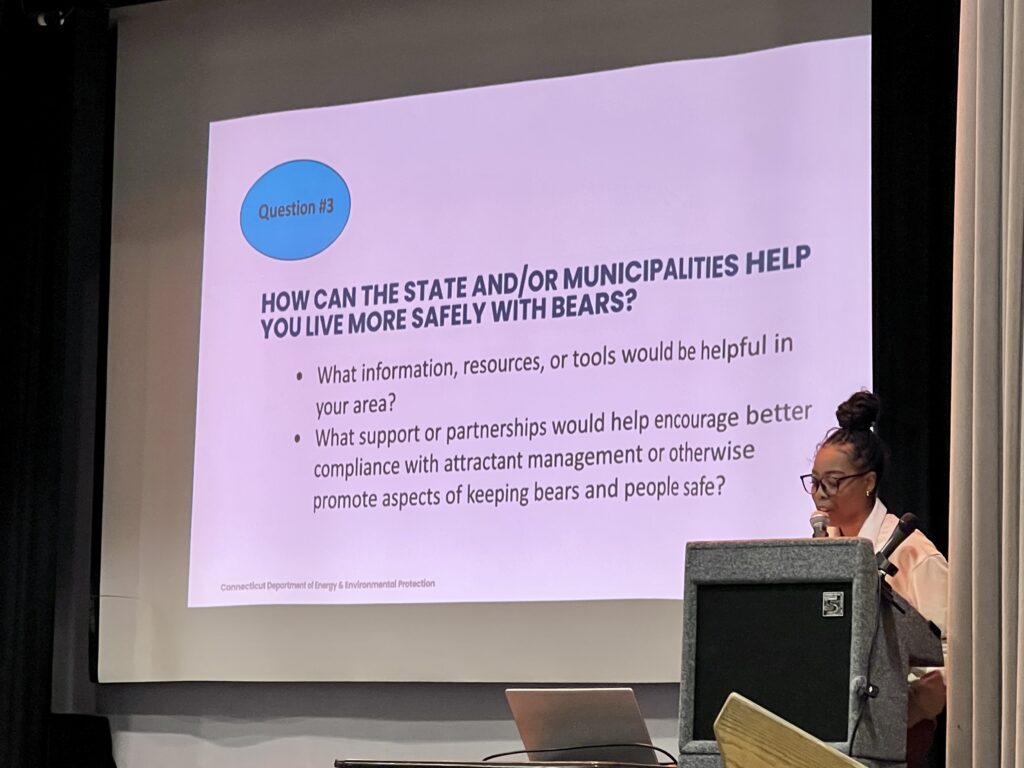
DEEP Bear Management Listening Tour at the Elmwood Community Center in West Hartford. Dec. 16, 2025. Photo credit: Ronni Newton
Comments about what would help residents and bears co-exist more safely included expanding education, increasing funding for bear-resistant trash cans, increasing education about electric fencing, and implementing a statewide ordinance regarding bird feeders.
“Every new resident should receive a bear-wise pamphlet from the town,” one resident suggested.
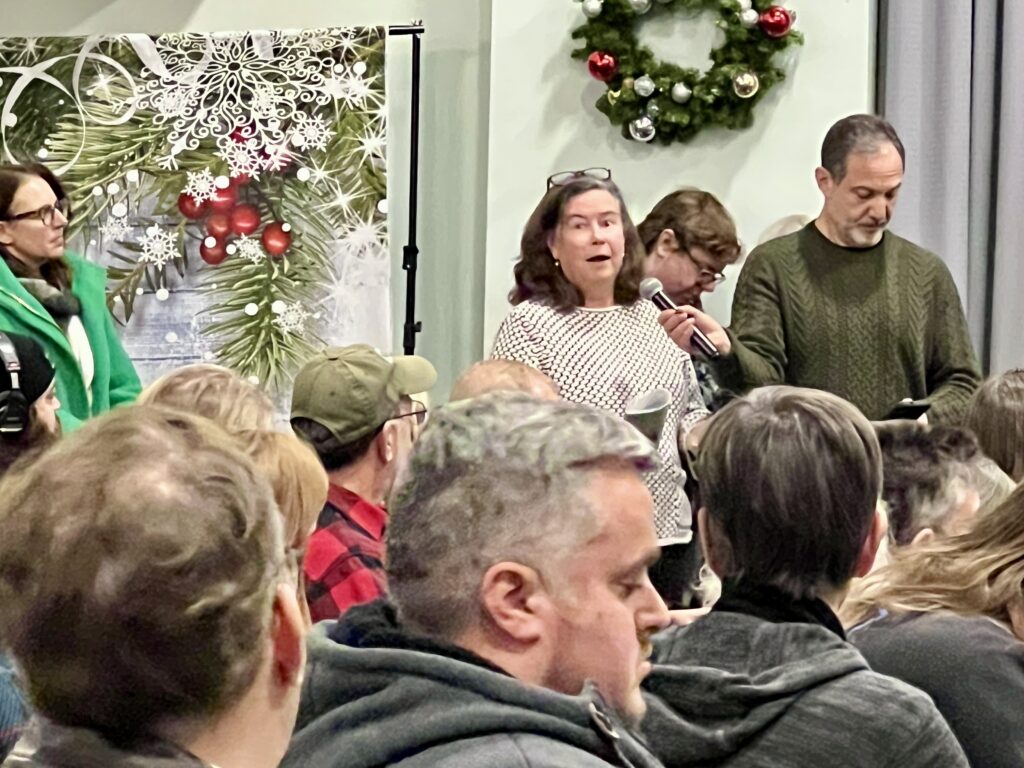
DEEP Bear Management Listening Tour at the Elmwood Community Center in West Hartford. Dec. 16, 2025. Photo credit: Ronni Newton
Holding workshops with elementary school children, and balancing development of recreational facilities with preservation of habitat was also suggested.
A variety of handouts – including bear whistles – were available to those who attended.
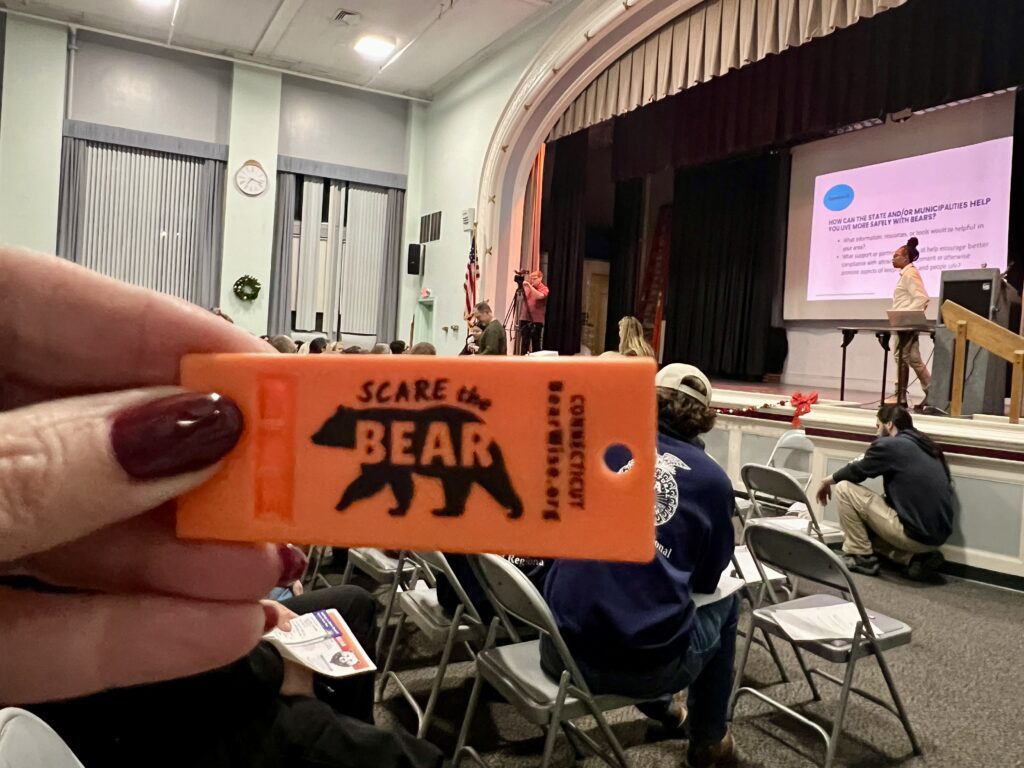
DEEP Bear Management Listening Tour at the Elmwood Community Center in West Hartford. Dec. 16, 2025. Photo credit: Ronni Newton
DEEP continues to encourage the reporting of beer sightings, and previously shared the following information in a news release:
“Bear sightings reported by the public provide valuable information to assist DEEP in monitoring changes in the black bear population. Anyone who observes a black bear in Connecticut is encouraged to report sightings online or send an email to the Wildlife Division at deep[email protected]. Information on the presence or absence of ear tags, including tag color and numbers, is particularly valuable. A common misconception is that a tagged bear is a bear that was involved in conflicts, and a bear with two ear tags was caught on two different occasions because of conflicts. Every bear receives two ear tags (one in each ear) the first time it is handled by DEEP biologists. Most tagged bears have not been caught due to human-bear conflicts but rather as part of a project researching the state’s bear population.”
Prior listening sessions were held in Sharon (Wednesday, Dec. 3), Derby (Thursday, Dec. 4), and Burlington (Wednesday, Dec. 10).
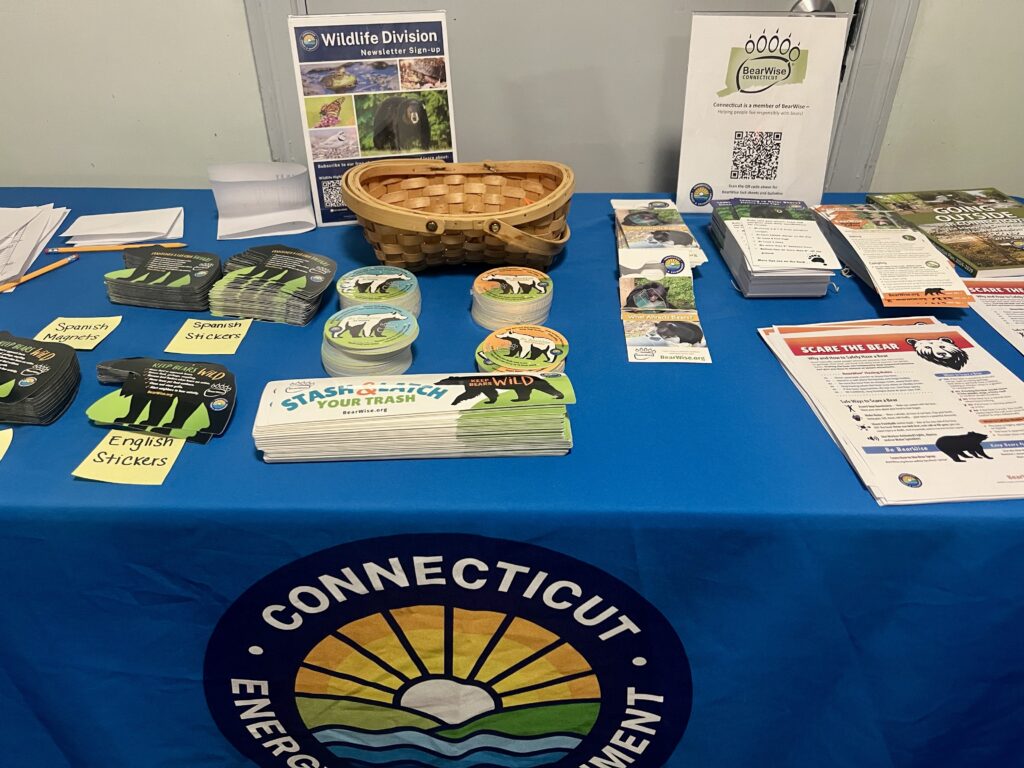
DEEP Bear Management Listening Tour at the Elmwood Community Center in West Hartford. Dec. 16, 2025. Photo credit: Ronni Newton
Like what you see here? Click here to subscribe to We-Ha’s newsletter so you’ll always be in the know about what’s happening in West Hartford! Click the blue button below to become a supporter of We-Ha.com and our efforts to continue producing quality journalism.