
From the West Hartford Archives: The Pond Family Before Elizabeth Park

Audio By Carbonatix

Elizabeth Park’s pond. Courtesy of Noah Webster House & West Hartford Historical Society





Historian Jeff Murray takes a look into West Hartford’s past to uncover some surprising information, stir up some memories, or reflect on how much life has changed – or hasn’t changed at all. Enjoy this week’s ‘From West Hartford’s Archives’ …
By Jeff Murray
What can be said about Elizabeth Park that hasn’t already been discussed in great detail?
There are plenty of resources that have been written again and again about the park and its major features, but perhaps they haven’t gone far enough or have omitted certain things that could be talked about. How did the Pond family pave the way for the park we know and love?
Charles F. Pond, the father of the donor of the land that would become Elizabeth Park, accumulated more than 60 acres of land west and east of Prospect Avenue, at the time all part of the city of Hartford. He graduated from the Yale Law School, but his wealth came from his business tied up with the increasing railroad industry in the United States.
In his early 30s, he was elected to the board of directors of the Hartford and New Haven Railroad Company, which was chartered in 1833. The United States was in the middle of a dramatic transformation from localized production to national (and international) markets. New England textiles and other goods required reliable and faster supply networks and transportation, a need that railroads could fill. Before railroads, transportation heavily relied on rivers, like the Connecticut River, for freight. The Hartford and New Haven Railroad was inaugurated during President Andrew Jackson’s administration when the federal government reduced its direct role in funding large projects; thus, it was privately chartered but publicly supported. Engineers produced steam engines and expanded iron production enough that railroads became more practical at scale. Once it was started though, it took many years to finally take off.
In the fall of 1839, this railroad was built through West Hartford across New Britain Avenue from New Haven. Charles Pond, who later became president of this railroad, made his fortune there into the 1840s and 1850s when the line expanded operations. It became a selling point for real estate in Elmwood and the main hub for manufacturing after the Civil War when enterprises like the Goodwin Pottery needed to ship in bulk and not just supply the city and immediate surroundings.
Pond’s gentleman farm on Prospect Hill raised cattle and other livestock that he entered into local fairs. The Hartford County Agricultural Society held a multi-day exhibition in the city every October for decades, a massive affair that brought together people from all over to display everything from horses to farm improvements to butter to fruits to embroidery. Pond won a prize for his working oxen in 1840, just a year after purchasing the land for his estate on Prospect Hill.
Ten years after he moved to what is now West Hartford, his farmhouse on the hill burned to the ground and he was forced to build back up. Pond presented one of the Hartford fire companies (an organization that definitely was not that fleshed out in 1849 but sufficient for fire protection) with $50 for the efforts of the company’s 12 men in saving his adjoining barn. This was perhaps one of the inherent advantages to owning land right on the Hartford line; fires further west would consume West Hartford houses and other buildings without any resistance for the next 30 years.
Over the following decade, he raised and exhibited at the annual fair lots of Ayrshire cows. In 1852, Pond went off on a trip to Europe aboard the steamer Pacific, nine years into his railroad presidency. Passenger travel on the railroad in 1852 was already immense and they had become integrated into everyday life. Beyond the insurance companies of Hartford, Pond oversaw some of the earliest forms of industrial capitalism take shape in the region through executive leadership and shareholder feedback. His trip to Europe came on the heels of industrialization across the sea: Paris was on the eve of modernization under Haussmann, London was the leading industrial nation in the world, and the monarchies that kept control on the continent embraced railway expansion and urban rebuilding as tools of power.

The location of the Pond farm in 1869 before Asylum Avenue was put through the area.
Coming back to the U.S., Pond worked side-by-side with Cornelius Vanderbilt, who had already broken into the industry and made a name for himself in railroading. Vanderbilt had pivoted from steamboats and ships to railroads in the 1850s and he began buying up shares in struggling or smaller lines. This laid the foundation for his empire and he was one of the directors of the Hartford and New Haven Railroad in the 1850s.
Pond continued his management of the country farm in West Hartford, but it’s worth noting that he (and his son Charles M. Pond) did not live there; their home was on High Street in Hartford. Pond’s entrance into politics in the late 1850s brought him the anger of partisan reporting and his alignment with the Democratic Party just before the 1860 presidential election made him a target for Republican papers like the Hartford Courant, who accused him of joining the Democratic ticket in Hartford as a concession to Irish voters, who supported him. The Great Famine in Ireland brought massive numbers of immigrants to the U.S. and some were both beneficiaries and casualties of the work on the railroads (one of the first railroad stories in West Hartford was the death of an Irishman who was run over by a train while digging a ditch to clear out the tracks).
Pond held the office of president of the railroad for a quarter of a century when he died after a sickness of two years on May 10, 1867. Part of his wealth perhaps had come from his wife’s family; he married Harriet Phelps, the daughter of Anson G. Phelps of New York City, who had been senior partner in the mining firm of Phelps, Dodge & Company. Pond, like many other wealthy men of the era, contributed large sums of money to charities and other benevolent causes.
His funeral was held at the family home on High Street in the city and much of his estate, including the ownership of the hobby farm on Prospect Hill, was inherited by his son Charles Murray Pond. Pond was born in 1837 and when he came of age, he took over management of this farm from his father. In 1862, Pond went to West Hartford to visit his farm and drive an imported Ayrshire bull out of the enclosure when the animal turned on him and gored him, throwing him several feet until the bull was driven off by farm workers armed with pitchforks. He was not seriously wounded though (“it was a lucky escape,” the Hartford Courant wrote) and he presented some of the livestock at the state fair the following month.
Charles M. Pond made his wealth in a different era than his father. His adulthood reflects the transformation of Connecticut from the agricultural arena to the corporate Gilded Age economy (and all the tensions that came with it). Following in his father’s footsteps and in control of the Prospect Hill farm, he wielded a significant amount of influence. He operated in the world of elite agriculture: breeding horses, participating in the fairs (and acting as officer of some of its committees), and associating with other leading landholders in Hartford and beyond.
He switched the main focus of the Prospect Hill farm from cows to horses, poultry, and tobacco and some of his exhibits during the state fairs reflect this shift. He bred famous trotting horses and hosted races around a dirt track near today’s Rose Garden. In 1871, he helped acquire more than 140 acres of land in the south side of West Hartford for Charter Oak Park, intended to be both a trotting park and a place for the state fairs, which were declining in attendance when held in Hartford. Pond became the vice-president and treasurer of the Connecticut Stock Breeders Association, the consortium that purchased and developed the land off New Park Avenue.
He stood among the regional elites who blended farming and land development in the era after the Civil War. He had a large house built on the estate in the late 1860s and in January 1870, he married Elizabeth Sarah Aldrich of New York. She would become the inspiration behind Elizabeth Park when the land was donated to the city by Charles’ estate in the 1890s.
In the early 1870s, Pond was president (and one of the organizers) of the Hartford Trust Company and served as treasurer of the Hartford and New Haven Railroad line. He was wealthy in his own right, but he would face partisan lashing at a time when his affiliations to the railroads were problematic. His father oversaw the expansion of the railroads and the gleaming praise that came with industrialization; Charles faced the backlash that came from that. The purchase of the land for Charter Oak Park benefited the railroad he was an officer for just by being next to it.
He was politically active through the 1860s in the Democratic Party (though a supporter of the Union cause during the Civil War) and like his father before him, his political aspirations brought partisan attacks. He represented the City of Hartford to the Connecticut House of Representatives in 1863 and 1868, and then State Senator in 1872, 1874, 1875, 1876, and 1877. In 1870, he was elected State Treasurer for a term of one year.
The good times came to an end with the Panic of 1873. The financial collapse of the American economy prompted bank failures, railroad bankruptcies, and industrial unemployment that triggered widespread resentment against people like Pond. He won the Democratic nomination for Senator in the Connecticut Senate in 1874, but the opposition was real enough. In Connecticut, Republican control weakened after the collapse and voters turned toward Pond’s party, making his Senate run that much more visible. He was blamed by some in his party for the economy at a time when anti-corporate populism was entering the rhetoric. He was accused of pocketing money from corporations while State Treasurer. One of his contenders said at the convention: “If you want a man governed and controlled by the railroads of this state, then nominate Charles M. Pond … If you want a man who will corrupt the state, go on and nominate Pond. He is connected with railroads that have put a monopoly over the people while workingmen are starving!”
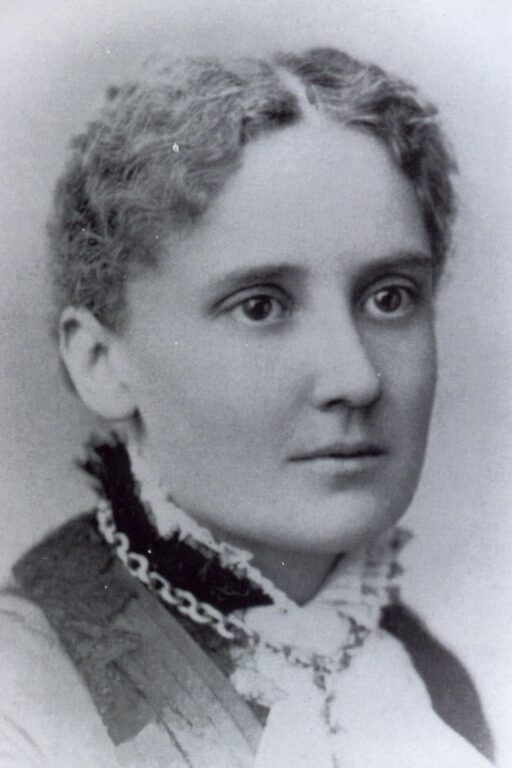
Elizabeth Pond. Courtesy of Noah Webster House & West Hartford Historical Society
Nonetheless, the Democrats were surging across Connecticut and after he won the nomination (arguably harder than the general election itself), he won the election to the Connecticut Senate. There, he was appointed to the Senate Finance Committee in 1875. This was a central role in state taxation, debt management, railroad oversight, and fiscal response to the economic depression. He was renominated and won multiple times in the 1870s in the wake of this crisis; however, West Hartford was a decisively Republican town and even voted against him personally in 1876.
He won district-wide though because his power base extended beyond the home front and Pond was able to navigate the reputational risks. Part of this came down to timing; some came down to his own ascendancy. In the 1870s, he was among the highest assessed property owners in West Hartford and he had influence and legitimacy with the elites with his stock breeding and ties to Charter Oak Park. He was valuable to the state government in a time of crisis, using his corporate background in his favor, but there were many that hated him and his ties to monopoly. Railroads were consolidating heavily in this era and by 1877, he was a member of the board of the New York, New Haven & Hartford Railroad, itself a result of a merger in 1872. The company leased more and more and eventually formed a virtual monopoly. Cornelius Vanderbilt, also a member of the board, died a week before the meeting in which Pond was elected to it. Cornelius’ son William Vanderbilt was elected in his place.
One could make the argument that Pond left politics and stuck with the railroads when he could no longer combat the perception of his business interests against the backdrop of the political climate. The Democrats could afford someone of his stature when they were surging in the depression era, but in 1880, things swung back to the Republicans. Pond was brought up as the Democratic candidate for Connecticut’s Lieutenant Governor at the 1880 convention, but he lost the nomination.
The attack line this time used his residence in West Hartford against him. The Republican-leaning paper in Springfield, Massachusetts wrote: “He was the first of the rich men to move out into West Hartford, where the taxes are so happily insignificant. Mr. Pond can throw his cigar stumps into Hartford from his front gate, but his house, supplied with Hartford water and gas, is just over the line in West Hartford, and so he saves about two-thirds in the matter of taxes.”
This was a typical partisan attack, but it was being used in the city as well and the argument that West Hartford east-enders were escaping the city’s burdens while enjoying its benefits became much more pronounced in the coming decades. Pond would not live long enough to experience the bitterness of that fight.
In the middle of the 1880s, Pond’s health deteriorated and he was compelled to resign from the board of directors of the consolidated railroad in 1887 after he had been unable to attend meetings for quite some time. He had followed his father onto the board and at its consolidation in the 1870s, he had entered the board of the new company. Then, in 1891, his wife Elizabeth died at the age of 50. She had been disabled for a number of years, but she died from pneumonia. Charles continued to suffer from his own poor health and he went off to Florida in the winter of 1893-94 to perhaps recover. This was unsuccessful and so he took a trip out to England for six weeks, returning back feeling better.
Unfortunately, he was struck by spinal meningitis in the summer of 1894 and he died on August 30 at the Pond house on Prospect Avenue. The couple did not have children. A year prior to his death, he made a plan with Rev. Francis Goodwin of Hartford, a member of the Board of Park Commissioners, to leave his estate to the city for the development of a public park. Pond’s father was himself a Park Commissioner and it seems this legacy carried over just as much as his railroad and agricultural interests.
Pond’s will left the Prospect Hill farm to the city for the park, as long as it was named after his wife Elizabeth. The transition was not so smooth though; his brother Anson contested the will, arguing that Charles did not have the power to sell the farm outside of the Pond family. Anson argued that in his final years, Charles was under the influence of alcohol, morphine, and other narcotics and had become “broken down nervously, his natural affections were prevented, and he had become so greatly impaired and enfeebled in mind.”
His ambitious plan for a public park was not new though. More than 20 years before, Pond had met with Frederick Law Olmsted, the famous landscape architect and co-designer of Central Park, to discuss creating a public park out of his own estate. Pond’s friends and associates came out to defend his state of mind, arguing that he had been a deep advocate for this project for many years, even if it had not come to fruition until after his death. In 1897, after the will was successfully admitted and the estate distribution made, the City of Hartford accepted the gift of the farm and crafted Elizabeth Park out of the ashes.
The featured photograph is of Elizabeth Park’s pond, which was dug by hand in 1898. This history is simply one angle of the creation of Elizabeth Park. It is a story of the American economy, of political divisions, of family legacy, and of West Hartford’s role in the Gilded Age. The Pond family played a role in this changing world with all of its economic expansion and crisis, political intrigue, and dramatic rhetoric. Capitalism in the form of the railroad industry and elite social networks that linked agriculture and land development created the foundation for the creation of Elizabeth Park.
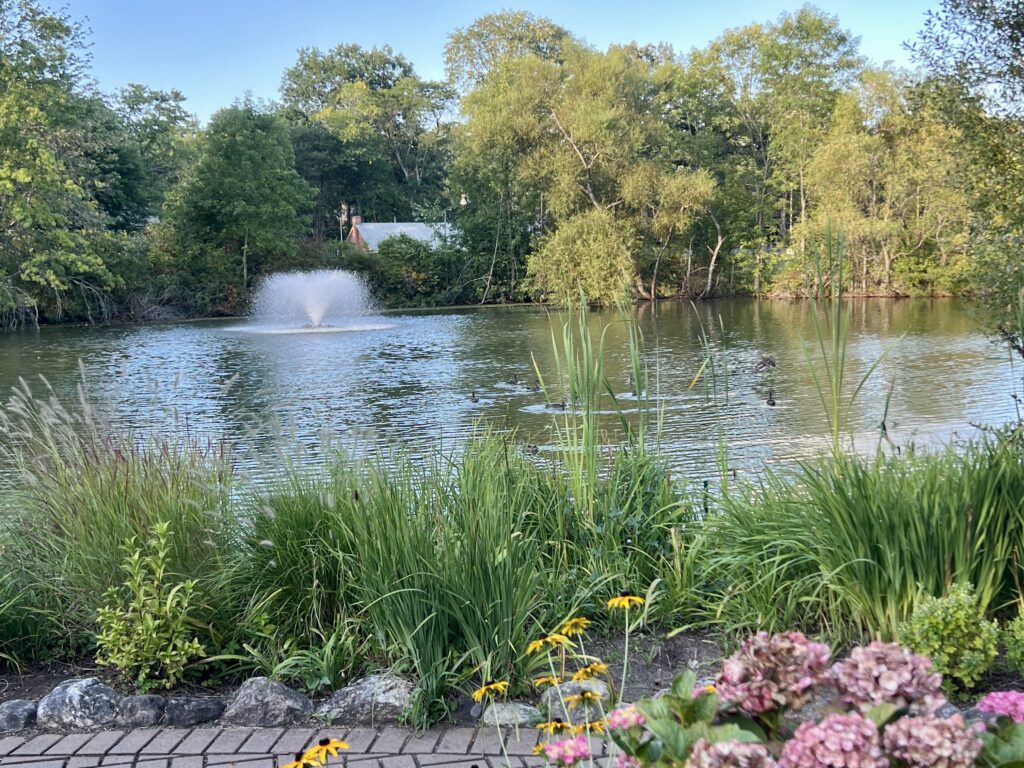
Elizabeth Park pond, August 2025. Photo credit: Ronni Newton
Jeff Murray was born and raised in West Hartford and has been involved with the Noah Webster House & West Hartford Historical Society since 2011 when he was a high school student and won the Meyer Prize for his essay on local history. Jeff routinely volunteers as local history researcher uncovering information for numerous museum programs such as the West Hartford House Tour and West Hartford Hauntings. Jeff works as a data analyst at Pratt & Whitney.
Like what you see here? Click here to subscribe to We-Ha’s newsletter so you’ll always be in the know about what’s happening in West Hartford! Click the blue button below to become a supporter of We-Ha.com and our efforts to continue producing quality journalism.



The photo captioned “Charles M. Pond” is clearly of a woman.
You are correct and my apologies for using the wrong caption! That is Elizabeth Pond and it has been corrected.
I love these essays on West Hartford history.