
College Bound: Should I Wait on the Waitlist?

Audio By Carbonatix
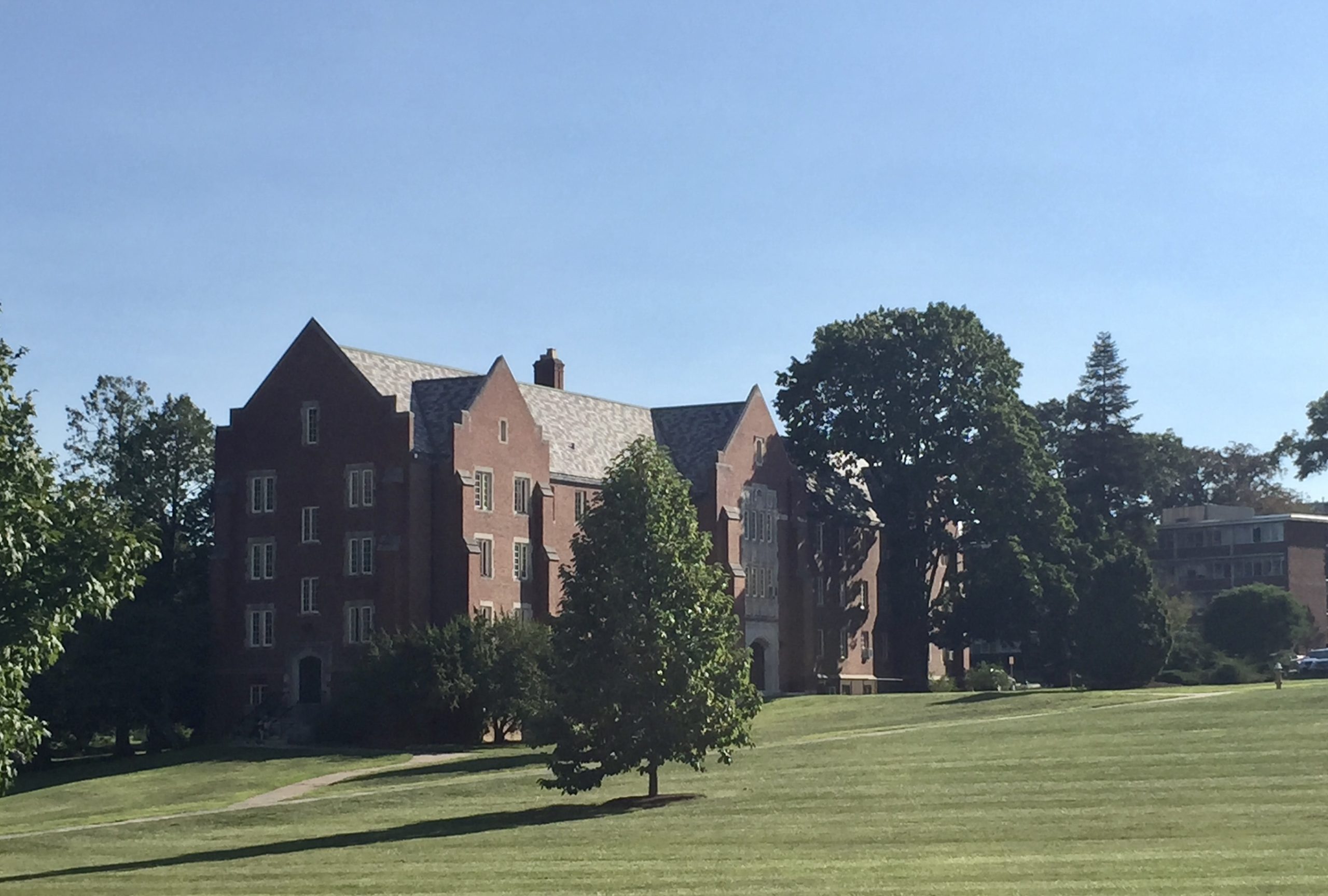
Photo credit: Ronni Newton (we-ha.com file photo)





We-Ha.com will be publishing a series of essays/blogs/reflections on the issue of going to college – primarily a set of thoughts and musings, along with some practical advice, intended to support students and parents as they embark on this journey. While many of our readers are experts in this topic, many others are less knowledgeable and have little outside support. We hope this is helpful to all readers as they go through the various stages of getting into and getting something out of college.

Adrienne Leinwand Maslin. Courtesy photo
By Adrienne Leinwand Maslin
When I attended high school in the latter half of the 1960s we were allowed to apply to five colleges only.
It was a different time back then. (At this point, if my son were reading this, he would tell what we refer to in my house as “old” jokes. Something along the lines of “You mean when there were still horses and buggies?” Or “Did you go to a one-room schoolhouse?”) We did not have the Common App and had no computer technology to allow high school guidance counselors and college advisors to write one letter of recommendation that could be printed out whenever necessary to send off to college after college.
Our graduating class was somewhere between 1,100 and 1,200 – the number 1,189 sticks in my head – and when you have five or so counselors working with that many students, they had to limit our choices so they could process all of our applications.
Of my five applications, I was accepted at two colleges, turned down at two, and waitlisted at one. I was thrilled with my two definite choices – UVM and Oberlin College – and incensed that a college would waitlist me. How dare they! My brilliance wasn’t immediately apparent? The fact that I was waitlisted had me more upset than having been turned down at the other two colleges.
The problem with the waitlist is that it leaves you in limbo. It is neither here nor there, up nor down. If you were accepted at your first choice college, then the waitlist doesn’t matter. But what if you weren’t? What if the waitlist school was your first choice? Then you have a dilemma and the idea that the issue of college attendance is still unresolved is unsettling.
According to act.org: “Being waitlisted is neither an acceptance nor a rejection. It indicates that the student meets the admission criteria, but the acceptance offer is on hold due to space availability. If spaces in the incoming class become available, students on the waitlist may be offered admission, usually after May 1st.”
My take, based on my own experience in college admissions, although it was in the mid-1970s, is a little different. If the above were true, does one student get admitted straight away and another put on the waitlist by a flip of a coin? Because their last name is in the last third of the alphabet? There is a reason a student is waitlisted and it is not entirely because there is not enough space. Usually the admitted students either have something particularly exciting about them – something the college needs – or their grades are slightly higher than waitlisted students. In my last we-ha.com column I wrote about early decision (https://we-ha.com/college-bound-is-early-decision-the-right-decision-for-you/) and said that early decision allows colleges to look for students who have some kind of special talent – an outstanding swimmer, oboe player, actor, etc. Many times waitlisted students do not have any of these attributes. Waitlisted students are highly competent students who study hard, get very good if not the absolute top grades, and participate in a variety of extracurriculars but otherwise keep a lower profile. Does this sounds like you?
Before I continue, let me be clear about one thing. Many students who are waitlisted worry that the college believes they may not be able to handle the work. That is typically not the case. Colleges do not want to see their students fail. They want students who will be successful, bring recognition to the college, and contribute financially as alumni when they are able. They do not want to see students fare poorly at their institution. If you are waitlisted and choose to remain on the waitlist – more on that below – have confidence that the college has confidence in you.
So, you’re waitlisted. What now? From a very practical standpoint, if you want to attend the college where you were waitlisted, indicate to the college your desire to remain on the waitlist and, concurrently, put a deposit down to confirm your attendance at one of the schools that accepted you. Your deposit will be nonrefundable so it is very important to know that if you eventually give up your spot – for whatever reason but presumably because you were admitted to your waitlist school – you will most likely be losing money. The chart below gives you a sense of the range of required enrollment deposits.
| NYU | $250 |
| Stanford | $200 |
| Colby | $300 |
| UVM | $500 |
| University of New Hampshire | $600 |
| Wesleyan University | $250 |
| University of Connecticut | $550 |
| Columbia University | $200 |
| Cornell University | $400 |
| Dartmouth, Harvard, Princeton, University of Pennsylvania, Yale | $0 |
So first, you need to decide that you are willing to forgo the enrollment deposit if you are ultimately admitted to and choose to attend your waitlist school. If this is not the case, then although you may be less enthusiastic, you should put a deposit down on your second choice school and begin to psych yourself up for a great experience.
One action you might take to improve your chances of being admitted from the waitlist is to write a letter to the waitlisted college’s admissions office to let the staff know of your continued interest in being a member of their community. This action should be taken promptly so the college will know right away of your strong desire to attend. You should take this opportunity to inform the admissions staff of any new interests you have developed, new extracurricular activities or volunteer work you are participating in, why they are meaningful to you, and ways in which you might share these interests with the college community if accepted. This gives you another opportunity to show the college just how special you are.
Some colleges rank their waitlists but others do not. If you are waitlisted at a college that does not rank the waitlist, your application will be reviewed again if the college needs to admit additional students. A letter such as the one just described will be a very helpful addition to your application file.
Another thing you can do is ask your high school counselor to write a letter on your behalf. In that letter she can explain the ways that your quieter demeanor translates into qualities that are just right for that college. Most likely she has done this already when you initially applied but a freshly worded follow-up letter would not hurt.
This article from Ivy Coach, an admissions counseling consulting company (https://www.ivycoach.com/the-ivy-coach-blog/college-admissions/waitlist-admission-chances/) has some excellent tables that will give you information about the number of students who are admitted from the waitlist. The data are from the 2023-2024 admissions cycle but it will still give you a good idea of how many waitlisted students are accepted. In general, Ivy Coach says about 10% are admitted from the waitlist each year. Another excellent article is this one: How to Increase Your Odds of Getting Off an Ivy League Waitlist (https://www.forbes.com/sites/christopherrim/2025/03/27/how-to-increase-your-odds-of-getting-off-an-ivy-league-waitlist/). It provides more information about how you can improve your chances and additional data about how many students are admitted from waitlists.
When I was waitlisted I was so annoyed at the waitlist institution that I began to seriously dislike the college. I was in a real huff. And so I made the decision to forgo the waitlist and enroll at UVM. Sometimes this is the better way to handle it. Make a decision you are satisfied with – perhaps not ecstatic about but satisfied with – and decide to be excited about it.
I have said repeatedly in this column over the years, there is no one right college for any student. Most students can be happy at many colleges.
Several years ago a student at Middlesex Community College – now CT State Middlesex – told me how upset she was that she couldn’t afford anything more than a community college for the time being. Her mom passed along some wisdom: “Bloom where you’re planted.” And the student did. She worked hard, did very well in her classes, joined Student Senate and participated in other extracurricular activities, and eventually attended a four-year institution.
If you’ve been reading we-ha.com for many years you might recall a letter to the editor from a Northeastern University student who had attended Hall High School (https://we-ha.com/letter-what-i-wish-i-had-known-about-applying-to-college/). I responded with a letter to the editor of my own (https://we-ha.com/letter-there-are-many-colleges-where-students-can-bloom-and-grow/). The themes were the same: there are many colleges at which we can bloom and grow.
I know it can be excruciatingly disappointing to be turned down or waitlisted at your first choice school. If you have the emotional fortitude to stay on the waitlist and choose to do that, I applaud your decision. But blooming where you’re planted can be a healthy and satisfying option as well. Much luck to all of you!
Adrienne Leinwand Maslin recently retired from a 45-year career in higher education administration. She has worked at public and private institutions, urban and rural, large and small, and two-year and four-year, and is Dean Emerita at CT State-Middlesex. She has held positions in admissions, affirmative action, president’s office, human resources, academic affairs, and student affairs. Adrienne has a BA from the University of Vermont, an MEd from Boston University, and a PhD from the University of Oregon. She is presently writing a series of graphic novels on life skills and social issues for 8-12 year olds believing that the more familiar youngsters are with important social issues the easier their transition to college and adulthood will be. Information about this series as well as contact information can be found at www.adrienneleinwandmaslin.com.
Like what you see here? Click here to subscribe to We-Ha’s newsletter so you’ll always be in the know about what’s happening in West Hartford! Click the blue button below to become a supporter of We-Ha.com and our efforts to continue producing quality journalism.