
Consumer Diary: Disappointed Delivery, Coffee

Audio By Carbonatix
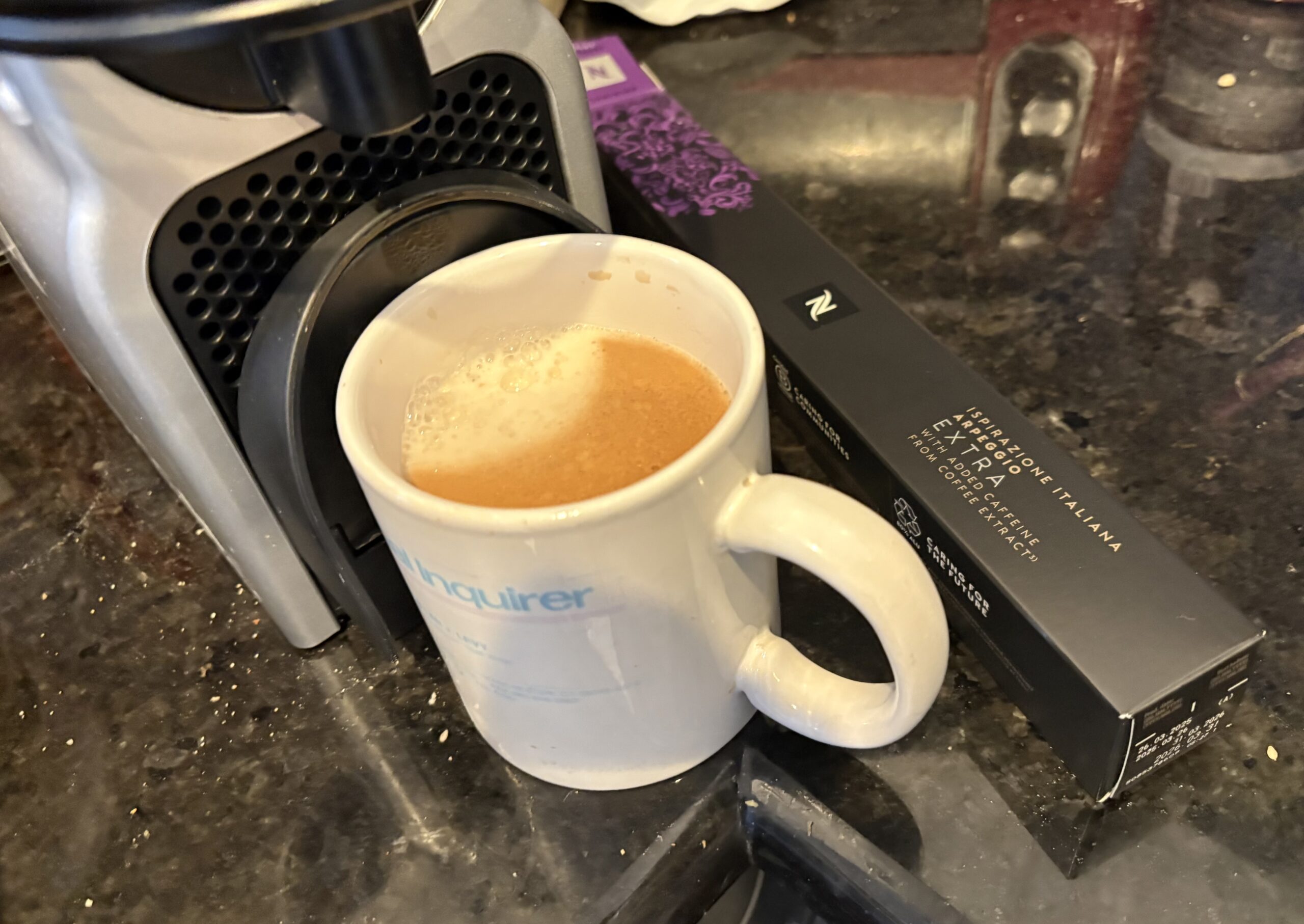
A recent study finds that 2 to 3 cups of caffeinated coffee daily can stave off dementia. This my second cup of the day. Photo credit: Harlan Levy





Consumer columnist and West Hartford resident Harlan Levy has more than 20 years of experience writing stories about everyday experiences that anyone could encounter.

Harlan Levy. Courtesy photo
By Harlan Levy
I’m surprised how often product sellers screw up. Recently, we had that experience when our usually reliable prepared-meal provider messed up, as follows:
For the past nine months, my wife has ordered an array of meals weekly on Wednesdays for both ourselves and our son’s family. The company that supplies them delivers fresh, chef-prepared meals to most of the continental U.S. from hubs in New York, LA, Chicago, Austin, Seattle, Atlanta, Miami, and Toronto. We receive our order every Monday.
Last week, before going to visit our daughter and grandchildren in Manhattan for the week, my wife changed the delivery address from our house to our son’s nearby home. The bag is just too heavy – after my vertebrae-fracturing escalator fall – for me to lug over his dinners. Our son will now drive our meals to us instead.
My wife made sure to order enough meals for me and them for the six nights she would be away. So she was distressed to hear from our daughter-in-law late Monday night that our order had never arrived.
My wife immediately started a live chat on the company’s website. An agent, Sheyna, investigated the case and explained that the order had evidently been canceled, because my wife had changed the delivery address. Exasperated, my wife noted that she had gotten neither a text nor email indicating this. In fact, the last contact she had received from them was a confirmation email that we would get our usual delivery on Monday.
Sheyna explained that “whenever you make a change in your account, it’s necessary to recreate the order and confirm it at checkout. Otherwise, the changes won’t be saved and the order will be canceled.”
“I have never had to re-confirm an order before,” my wife replied. Why hadn’t there been an email asking her to do that?
Sheyna said that cancellation emails aren’t sent. My wife, incensed, explained that she was out of town, I had suffered a recent accident, and she had been counting on the service for me and our family. Might we still be able to get a delivery within the next day or two?
Sheyna said no, there was no possibility to get anything for the rest of the week. That’s when my wife requested to speak to a manager, stating that there were many other meal delivery services we could turn to instead. Sheyna agreed to “escalate” the case.
The next day, company spokeswoman Samantha emailed her, saying, “As a goodwill gesture … I’ve added the promotion 10% off for 1 week automatically applied to your next order.”
“That’s it?” we wondered. A 10% discount would amount to only around $15. My wife was a bit hesitant to continue haggling but then reconsidered when our daughter-in-law opined that we should actually get our next order free.
So she wrote back to Samantha, noting, “I am still enormously upset about the situation. I made every effort to make sure my family would receive their meals during my time away, and I did not learn from them until late last night that my order never arrived… If there were an order cancellation, then you seriously should have sent me an email, or text, or called. You have all my contact information. I am not hard to find.”
This was a glitch in their system that they needed to fix. “I feel now as if I am the one who failed my family,” she wrote to Samantha. “Yet I am aware that your company is actually the one who failed us – your loyal longtime customers.”
They had been reliable until now, so we were prepared to give them another chance, rather than defecting to one of their competitors. Before she responded to the customer survey the company had sent her, however, my wife texted, “Perhaps you want to reconsider your offer, less than commensurate with how much we were failed and distressed.”
Samantha soon emailed back. “In light of your continued loyalty and the significant inconvenience you’ve experienced,” she said, “we have enhanced the goodwill gesture. As a token of our sincere apology, we have applied a 20% discount for your next two weeks. We hope this better reflects our commitment to making things right.”
We agreed that it did. Time to move on. Besides, we like many of their wide range of offerings. Here are two lessons:
- Always find out a service company’s cancellation policy and what’s required to make a change.
- Don’t accept poor service, and don’t settle for the first offer of compensation you receive. No one wants a disgruntled customer, especially if you make clear that you could write a negative online review. Lucky for me, my wife easily expressed being disgruntled and is an expert in getting satisfaction.

After a delivery company screw-up due to information failure our meals finally arrived on Monday, a week late. Photo credit: Harlan Levy
Coffee
I usually drink a large decaf coffee every morning, but I suddenly switched to caf after reading a report released Jan. 9 in the Journal of American Medical Association.
The report described a 43-year study which found that drinking two to three cups of caffeinated coffee daily reduced the occurrence of dementia and cognitive decline.
That was enough for me, and we immediately ordered high-caffeine coffee pods from Nespresso.
- Study findings: In a prospective cohort study of 131,821 individuals from two cohorts with up to 43 years of follow-up, 11,033 dementia cases were documented. Higher caffeinated coffee intake was significantly associated with lower risk of dementia. Decaffeinated coffee intake was not significantly associated with dementia risk.
- Results: Among the 131,821 participants (mean age 46.2 years in one cohort and 53.8 years in the second), higher caffeinated coffee intake was associated with better objective cognitive performance. Higher intake of tea showed similar associations with these cognitive outcomes, whereas decaffeinated coffee intake was not associated with lower dementia risk or better cognitive performance.
Now you know. Back to my second cuppa Java.
NOTE: If you have a consumer problem, contact me at [email protected] (“Consumer” in subject line), and, with the power of the press, maybe I can help.
Like what you see here? Click here to subscribe to We-Ha’s newsletter so you’ll always be in the know about what’s happening in West Hartford! Click the blue button below to become a supporter of We-Ha.com and our efforts to continue producing quality journalism.


Thanks for both those insights. I’m gonna have a second cup of the True Java this pm.