
Consumer Diary: Seniors’ Scam Losses, Virtual Casting Call

Audio By Carbonatix

Image provided by West Hartford Police (we-ha.com file photo)





Consumer columnist and West Hartford resident Harlan Levy has more than 20 years of experience writing stories about everyday experiences that anyone could encounter.

Harlan Levy. Courtesy photo
By Harlan Levy
I was shocked to read the Federal Trade Commission’s Dec. 1 report showing a major increase in the number of older adults reporting losses of over $100,000 to scams that totaled about $2.4 billion in 2024, the last full reporting year. I hope any reader is not among them.
Key findings include:
- Total fraud losses reported by adults ages 60 and over increased about fourfold from 2020 to 2024, skyrocketing from about $600 million in 2020 to $2.4 billion in 2024. This increase was largely driven by reports of losses over $100,000, often to investment scams, romance scams, or impersonations.
- In 2024, older adults reported losing far more money to investment scams than to any other fraud type, often reporting that the scammers targeted them on social media.
- Older adults continued to report much higher median individual dollar losses than younger adults, especially people 80 and over, whose median reported loss exceeded $1,600.
- Older adults were much more likely than younger adults to report losing money on tech support scams, prize, sweepstakes, and lottery scams, romance scams, and government impersonation scams. Older consumers reported $159 million in losses to tech support scams in 2024. Or their significant scams involved debt relief schemes, tech support scams, false and unsubstantiated health and product claims, and undisclosed fees for senior housing.
C’mon senior citizens: Always be skeptical of social media offers. Research every offer or check their online biographies, and check with the state Department of Consumer Protection for comments about these too-good-to-be-true “opportunities.” Losing your savings is a tragedy.
Hot scam
It’s the virtual casting call.
“We’ve heard from people who’ve gotten text messages from a ‘talent scout’ offering auditions for a well-known movie like ‘The Devil Wears Prada 2’ or a TV show like ‘Ted Lasso.’”
The unexpected text message might ask if you’re still available tomorrow for a virtual open call, not that you never were. If you respond, you might end up in a virtual “audition” that’s actually a high-pressure sales pitch to sign up for bogus photo shoot as or fake acting classes.
Then there’s the plot twist: There’s always a reason you have to pay or hand over bank information before you participate in the casting. Paying to get a job is always a sign of a scam. Real companies won’t ask you to pay anything upfront.

Courtesy of Harlan Levy
NextMed fraud
Have any of you dealt with telemedicine outfit NextMed and its weight-loss programs? Hope not.
The FTC has just given final approval to an order against NextMed and its principals, requiring them to stop deceptively advertising weight-loss programs and to stop using deceptive and unfair billing and cancellation practices.
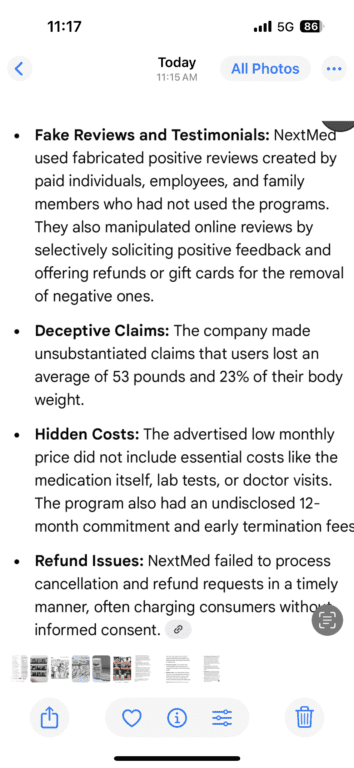
The FTC charged NextMed, Robert Epstein, and Frank Leonardo with exploiting skyrocketing interest in prescription glucagon-like peptide 1 agonist (GLP-1) weight-loss drugs like Wegovy and Ozempic. The FTC alleged they sold weight-loss programs with undisclosed costs and membership commitments, making unsubstantiated claims about the weight loss achieved by their clients, using fake testimonials, and unfairly distorting consumer reviews. The firm and its principals also failed to process cancellation and refund requests in a timely manner and failed to obtain express informed consent before charging consumers or making recurring debits, according to the complaint.
Courtesy of Harlan Levy
The final order requires NextMed, Epstein, and Leonardo to pay $150,000, which is expected to be used to provide refunds to consumers.
The final order also prohibits them from misrepresenting the cost of telehealth services; requires competent and reliable evidence to support claims about the average or typical results users will achieve; prohibits misrepresentations that reviews are truthful or from real consumers; prohibits manipulation of reviews; requires them to obtain informed consent before billing consumers and authorization to use any electronic fund transfer; and requires them to clearly disclose important terms relating to refunds or cancellations before consumers are asked to pay, provide a simple way for consumers to request cancellations or refunds, and to promptly honor any cancellation or refund requests that comply with policies that were in effect at the time of purchase.
Instead, just get prescriptions from your doctor, and avoid tsuris (aggravation).
Now you know.
NOTE: If you have a consumer problem, contact me at [email protected] (“Consumer” in subject line), and, with the power of the press, maybe I can help.
Like what you see here? Click here to subscribe to We-Ha’s newsletter so you’ll always be in the know about what’s happening in West Hartford! Click the blue button below to become a supporter of We-Ha.com and our efforts to continue producing quality journalism.



