A West Hartford Life That Long Surpasses 100 Years

Audio By Carbonatix
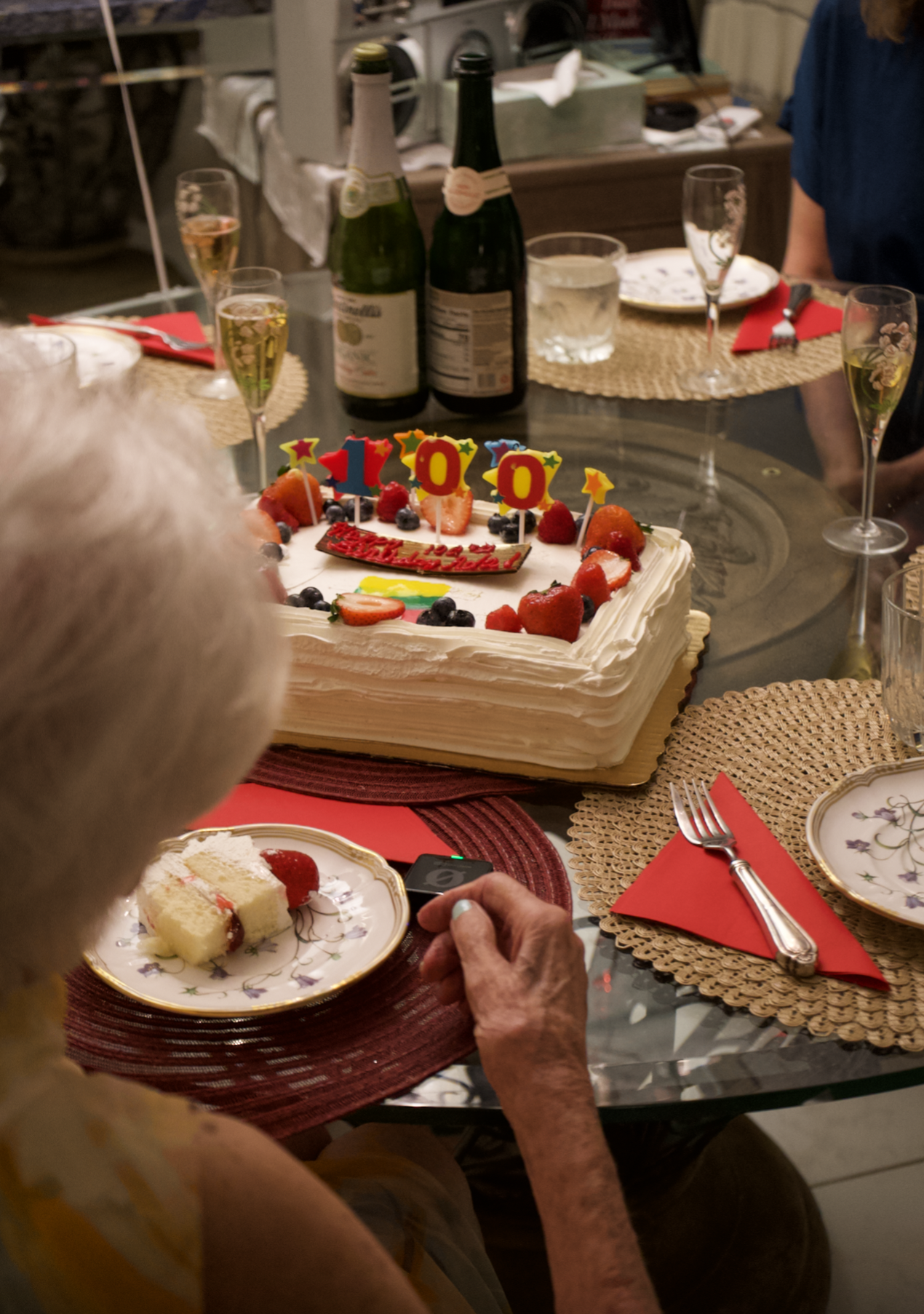
Ada Gens-Ustjanauskas 100th birthday. Courtesy Photo





Ada Gens-Ustjanauskas turned 100 on Oct. 9, 2026. But a century is hardly enough to capture the life of a woman who survived war and displacement, worked across continents, helped shape American diplomatic history and spent 65 years in West Hartford helping immigrants build lives of their own.
By Mia Jaworski
Her story began in Lithuania, the country her parents had fought to make independent. It would take her through postwar Europe, Australia and France before she arrived in Connecticut in 1953. And truly, that was only the beginning.
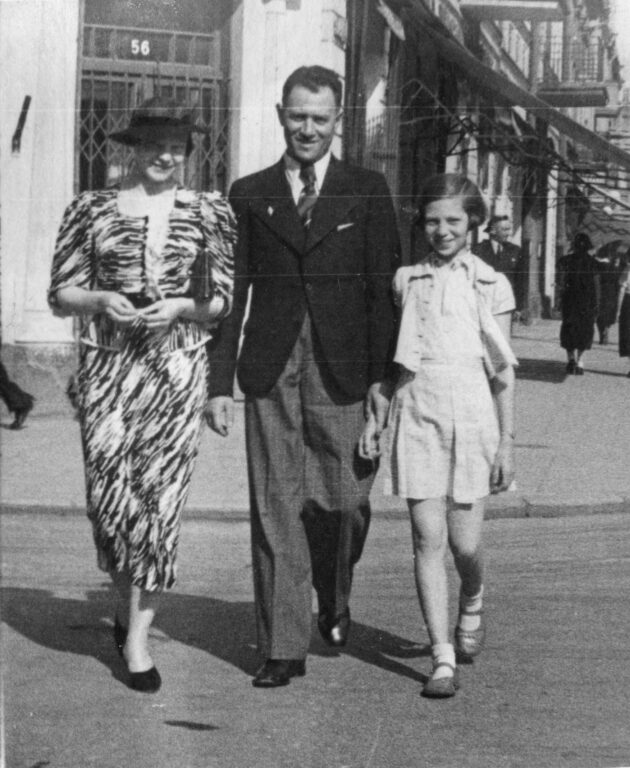
Ada with parents in Lithuania 1935. Courtesy photo
Ada was born in Smalininkai, Lithuania, to parents who had fought for the country’s independence following World War I.
Her father, Jacob Gens, served as a military officer before becoming head of the Jewish police in the Vilna Ghetto during the Holocaust. His leadership remains a subject of historical debate, shaped by the impossible choices imposed on Jewish leaders under Nazi rule.
For Ada, the history was deeply personal. Her father was executed by the Gestapo in September 1943, shortly before the ghetto was liquidated. The world of her childhood was shattered, and she and her mother were forced to flee.
“She was told she had ten minutes to pack her things and go as far as she could,” said Ada’s grandson Alexander Phibbs.
By the time she was 20, Ada was fluent in seven languages, a remarkable skill that would shape her life and career.
A young woman in a displaced world
After the war, Ada worked for international organizations assisting refugees and displaced people, including the United Nations Relief and Rehabilitation Administration and the International Refugee Organization.
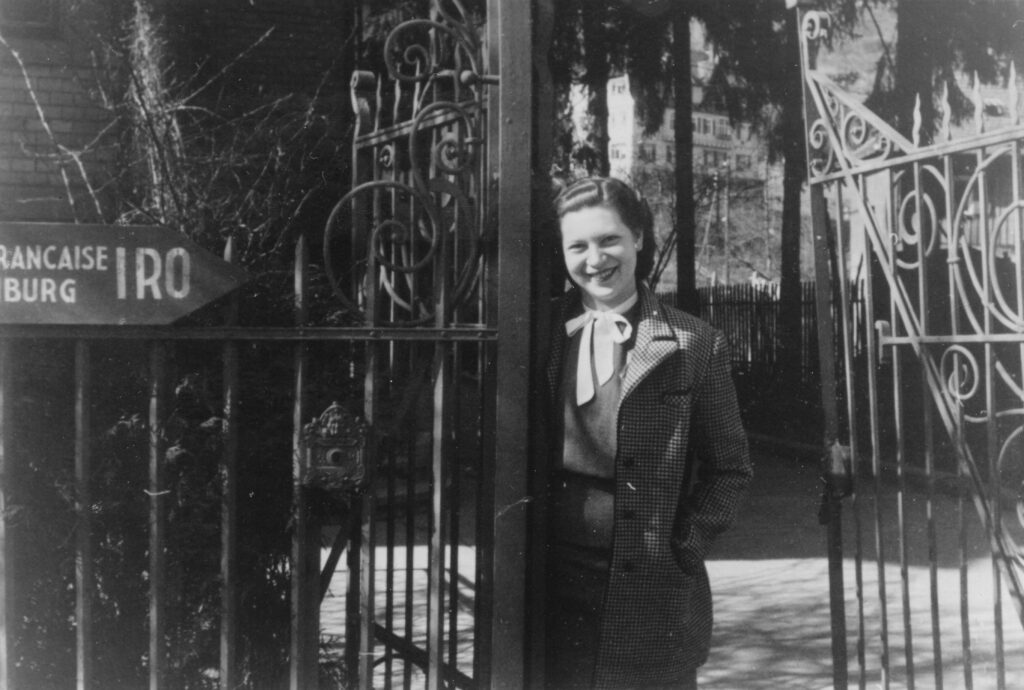
Ada in French zone Germany working for International Refugee Organization. Courtesy image
Ada’s command of seven languages gave her a valuable role in communicating across nationalities and helping people negotiate an uncertain future, the nature of the work was to help displaced families and survivors to navigate resettlement and uprooted life.
Her work with the International Refugee Organization took her across borders, including to Germany, Australia and France.
The organization’s headquarters were located in the French zone of occupied Germany, Phibbs said, a connection he cites in explaining how Ada became a lieutenant in the French Army at such a young age.
Working with displaced people in postwar Germany and elsewhere in Europe, she used her language abilities to help people navigate an uncertain world still recovering from the devastation of war.
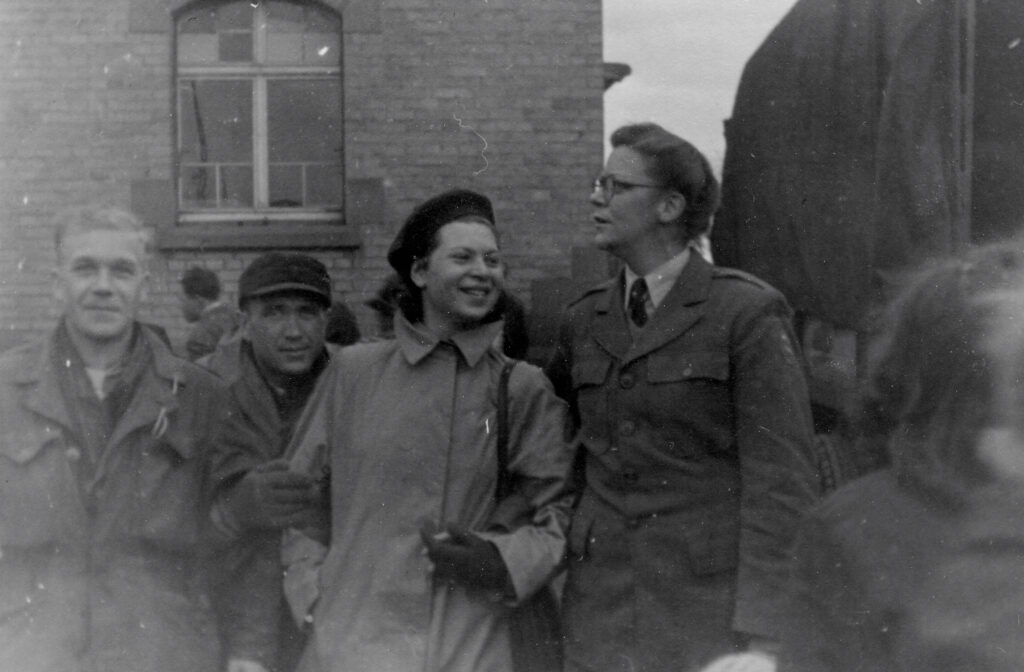
Ada in French zone Germany working for International Refugee Organization. Courtesy image
In May 1946, while living in postwar Germany, Ada attended a concert by the Ex-Concentration Camp Orchestra at St. Ottilien, a community for displaced people.
She also attended the Nuremberg trials, where Nazi leaders were being prosecuted for their crimes. These experiences placed her at the intersection of two defining realities of postwar Europe, the lives survivors were trying to rebuild and the pursuit of accountability for the atrocities they had endured.
In Australia, Ada married Antanas Ustjanauskas. In 1953, the couple arrived in Hartford, beginning a new life in Connecticut. They would make West Hartford their home for the next 65 years.
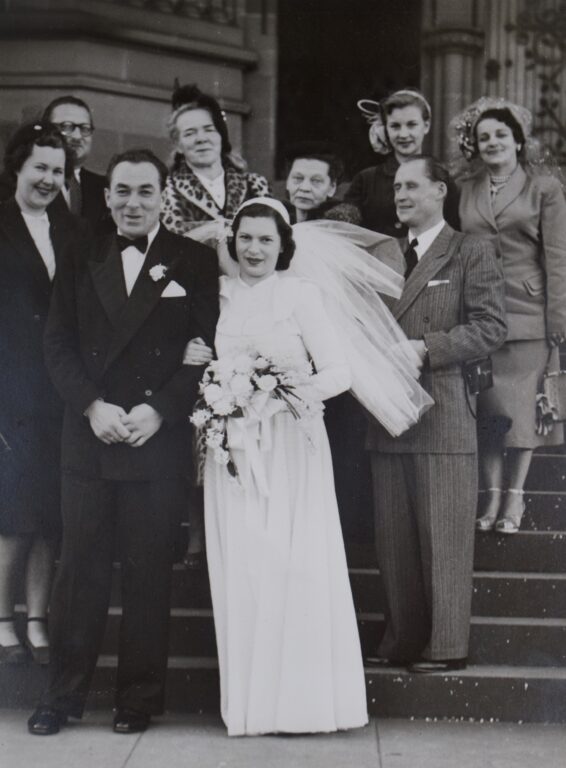
Ada Gens and Antanas Ustjanauskas’ wedding. Courtesy photo
A market with a mission
For Ada, arriving in Connecticut meant more than establishing a new home. After years of displacement and uncertainty, she finally felt safe, Phibbs said.
That sense of security became a foundation for giving back.
Ada and Antanas settled on Whiting Lane in West Hartford and eventually built a life that connected them to people from across the world.
They operated an international grocery store on Farmington Avenue, offering Indian, Middle Eastern and European goods to customers looking for familiar ingredients and neighbors eager to explore different cuisines.
But the market was only part of the story.
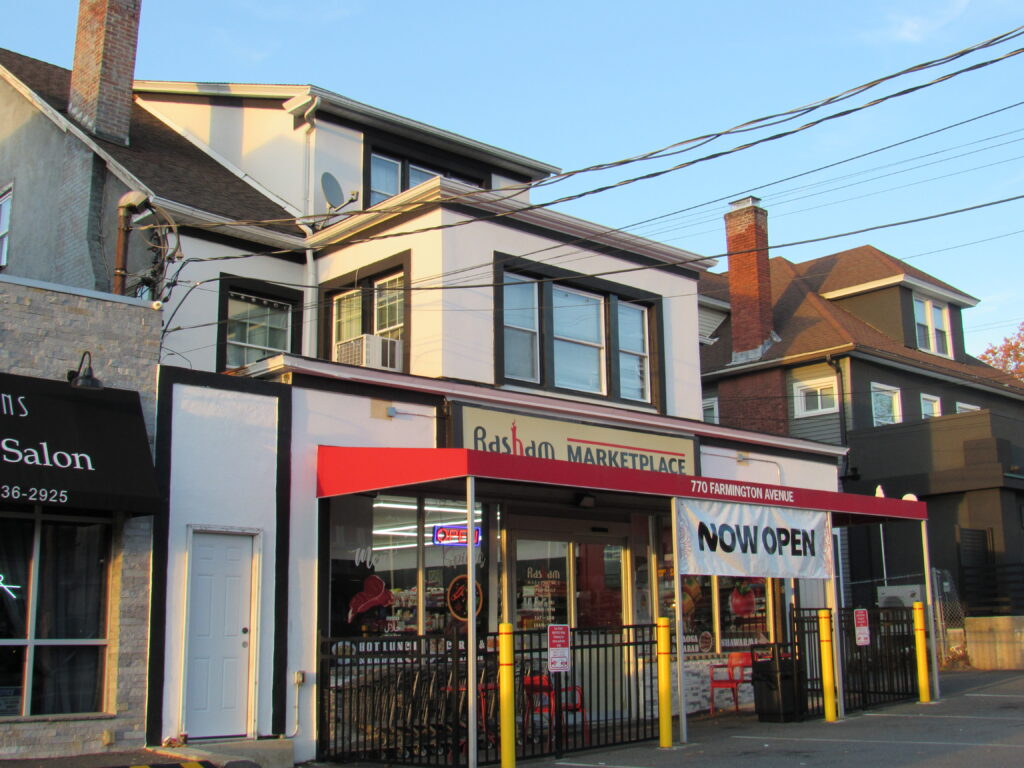
Exterior of Ada and Antanas Ustjanauskas’ Cosmos International grocery store, now Rasham Marketplace on Oct. 12, 2026. Photo credit: Mia Jaworski
Upstairs, Ada established an immigration office, helping people navigate paperwork, translations and the often complicated formalities of making a life in the United States.
Her work was practical and personal. A visit to Cosmos International grocery store could become a conversation about immigration documents, a translation or a question about how to navigate an unfamiliar system.
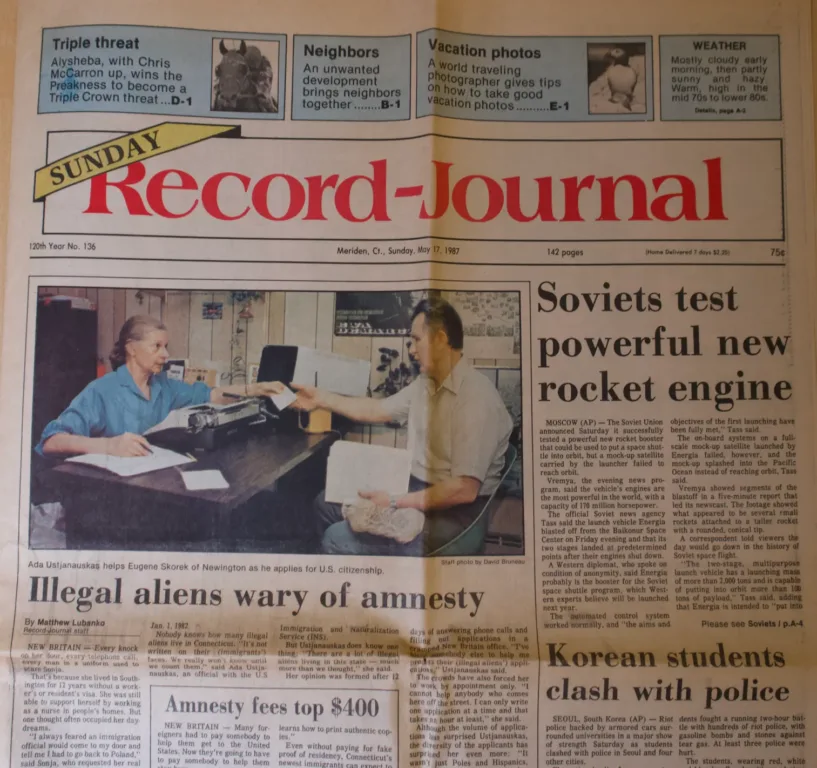
Ada on cover of Record-Journal May 17, 1987 issue doing immigration-amnesty work. Photo from Gens Family Archive.
The same language skills that had served her in postwar Europe and international diplomacy were now helping families find their footing in Connecticut.
The couple’s community involvement extended well beyond the grocery store and immigration office. In 1967, Antanas founded the Hundred Club of Connecticut, an organization that supports the families of police officers, firefighters and correctional officers killed in the line of duty.
They also helped establish the Puerto Rican Youth Basketball Club of Hartford, creating another connection to families in the greater Hartford community.
The projects were different in purpose, but they reflected a common impulse, to build something useful for people around them.
The couple had arrived in Connecticut after years of upheaval and displacement. Once they had established a home, they devoted themselves to creating opportunities and support for others.
In August 1972, Antanas died suddenly of a heart attack at just 57.
Ada was left to carry on the work they had built together, manage the family businesses and raise their six children, most of whom were teenagers. The responsibilities could only be imagined and extremely immense, but she continued serving the community through the businesses and immigration work that had become part of daily life in West Hartford.
A return to Lithuania’s freedom
In March 1990, Lithuania declared the restoration of its independence from the Soviet Union.
For Ada, this was more than a geopolitical turning point. Her father had fought for Lithuanian independence as a young man. She had lived through the occupations that destroyed that freedom and transformed her family forever.
In December 1990, Ada served as an interpreter during Lithuanian leader Vytautas Landsbergis’s meeting with President George H. W. Bush at the White House.
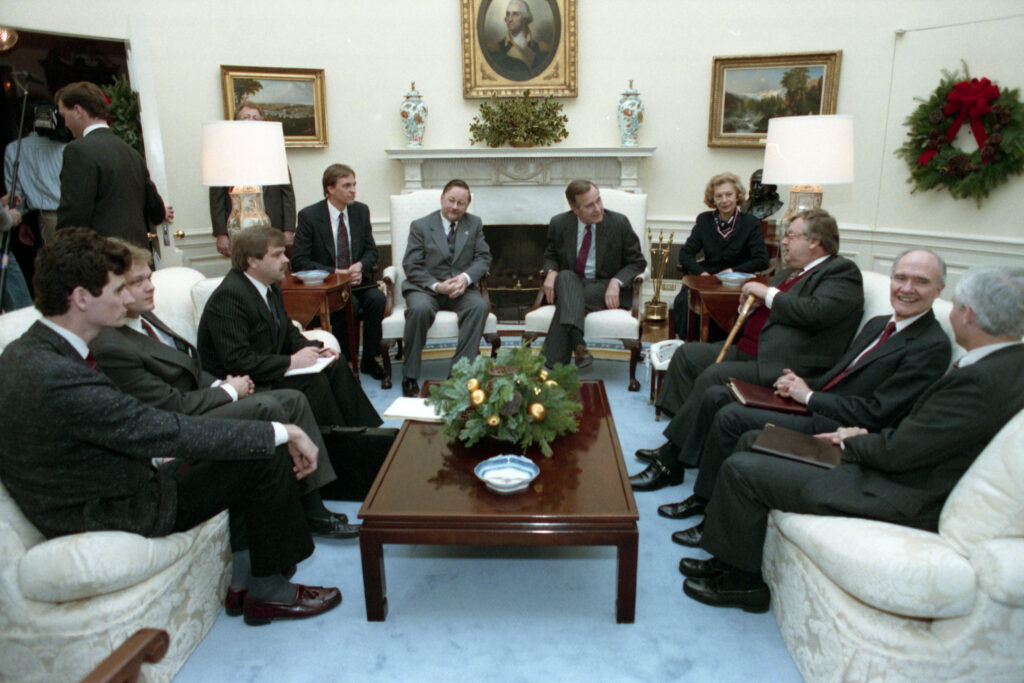
P18278-21 President Bush meets with Lithuanian President Landsbergis in the Oval Office. U.S. participants include Lawrence Eagleburger, Brent Scowcroft, Robert Gates, and Nicholas Burns. 10 December 1990 Photo credit: George H.W. Bush Presidential Library and Museum
The meeting came as Lithuania sought American support in its struggle to secure independence.
In February 1992, she returned to Vilnius, Lithuania with Vice President Dan Quayle, interpreting during his visit and the opening of the U.S. Embassy. She stood alongside Quayle as he addressed the Lithuanian people in Independence Square, translating a message of support for a country emerging from decades of Soviet rule.
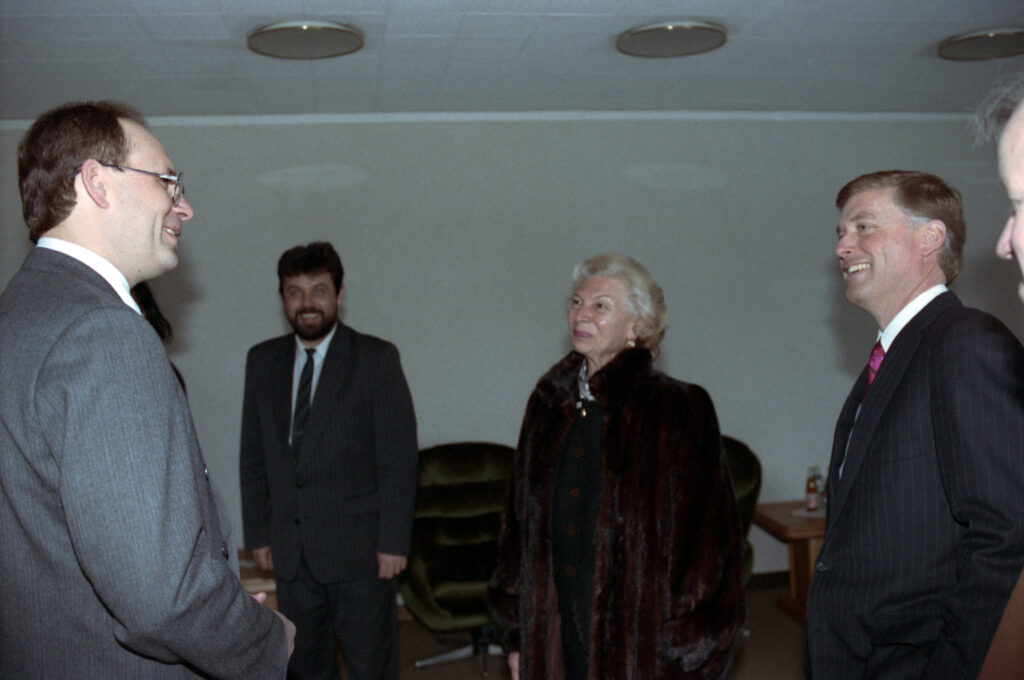
V10816-12 Vice President Quayle meets with Lithuanian Prime Minister Vagnorius. 7 February 1992. Photo credit: George H.W. Bush Presidential Library and Museum
For Ada, the moment carried the weight of generations. The speech took place less than a mile from where her family had lived, her grandson said.
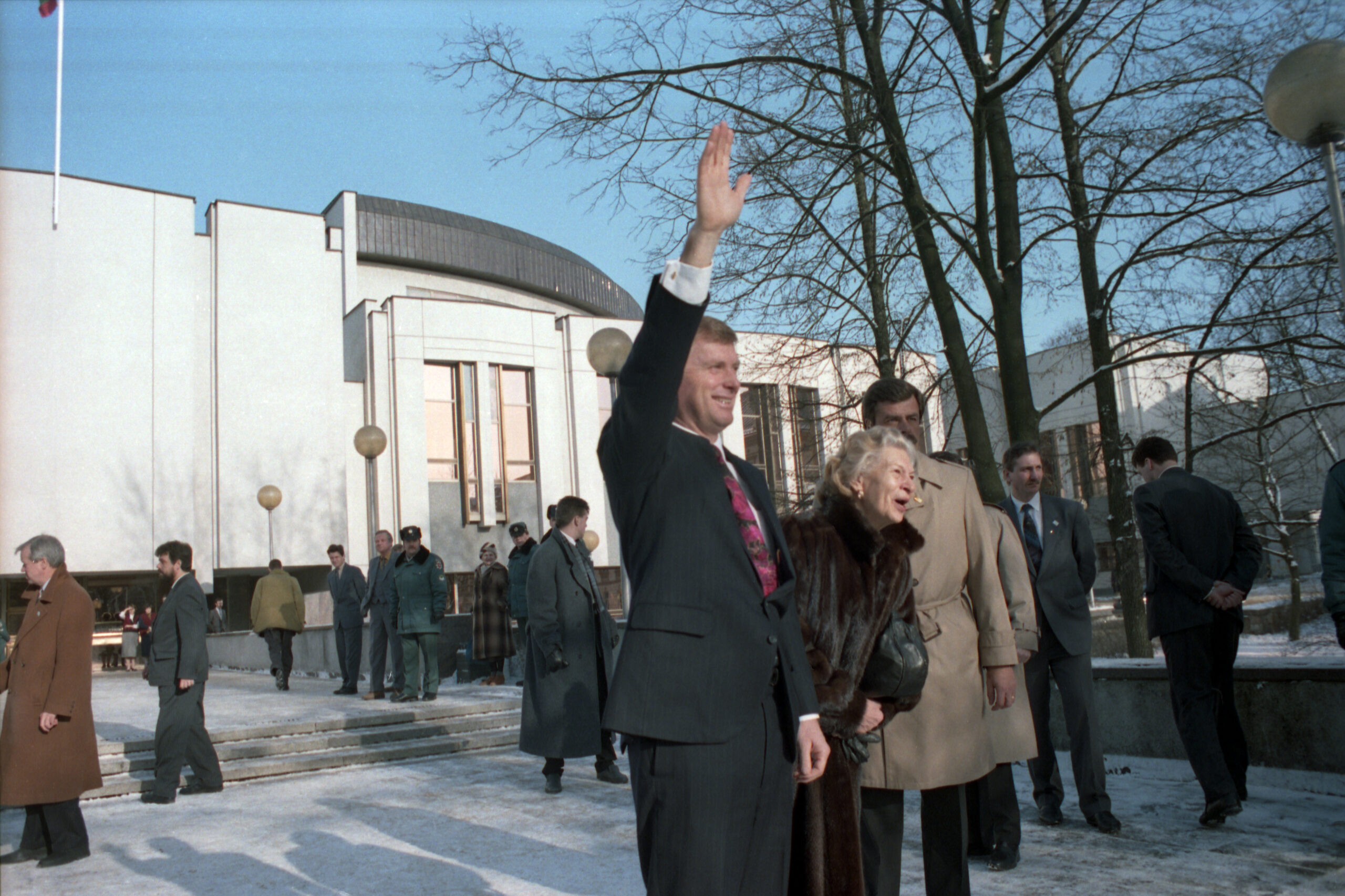
V10815-15 Vice President Quayle greets the crowd gathered outside his working lunch with Lithuanian President Landsbergis. 7 February 1992
Photo credit: George H.W. Bush Presidential Library and Museum
More than half a century after her father’s fight for Lithuanian independence, Ada was back on the streets of her childhood, helping communicate a message of support for the country whose freedom her family had once fought to secure.
A century of service, still unfolding
Ada’s connections to Lithuania and its history continued long after those diplomatic milestones.
In 2008, she recorded an extensive oral-history interview with the United States Holocaust Memorial Museum, preserving her memories of her family, her childhood and the events that changed her life.
Ada lived in West Hartford for 65 years, first on Whiting Lane and later on Stoner Drive. During the COVID-19 pandemic, Ada moved to Boca Raton, Florida.
Even there, at 100, she has continued to put her language skills to use, helping Ukrainian immigrants in her neighborhood.
She celebrated her centennial with family and friends in Florida, marking a milestone that encompasses far more than longevity.
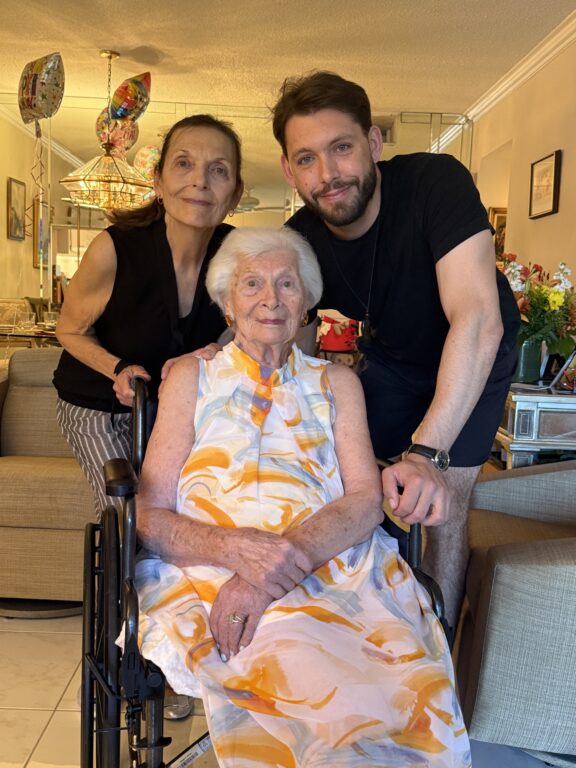
Ada and family at her 100th birthday party in Florida on Oct. 9, 2026. Courtesy photo
Her family’s Gens Family Project continues to explore the history of Lithuanian Jewry, the Holocaust and the lives touched by those events through archival research, oral histories and documentary films, including The Commandant’s Daughter and Girl from Freedom Avenue.
Ada’s life has connected countries, languages and generations. For her 100th birthday, she received letters and video messages from U.S. Sen. Richard Blumenthal, West Hartford Mayor Shari Cantor, former Vice President Dan Quayle, U.S. Sen. Dick Durbin and Lithuanian parliament member Emanuelis Zingeris, with whom she worked during Lithuania’s struggle to restore its independence in the early 1990s.
The tributes reflected the breadth of a life that has touched communities in Connecticut and abroad, from local immigrant families to leaders involved in Lithuania’s return to independence.
A century after her birth in Lithuania, Ada’s story remains one of survival, reinvention and a lifetime spent helping others find their place in the world.
For someone who has lived through so much history, crossed so many borders and touched so many lives, 100 years seems almost too short to contain it all.
-
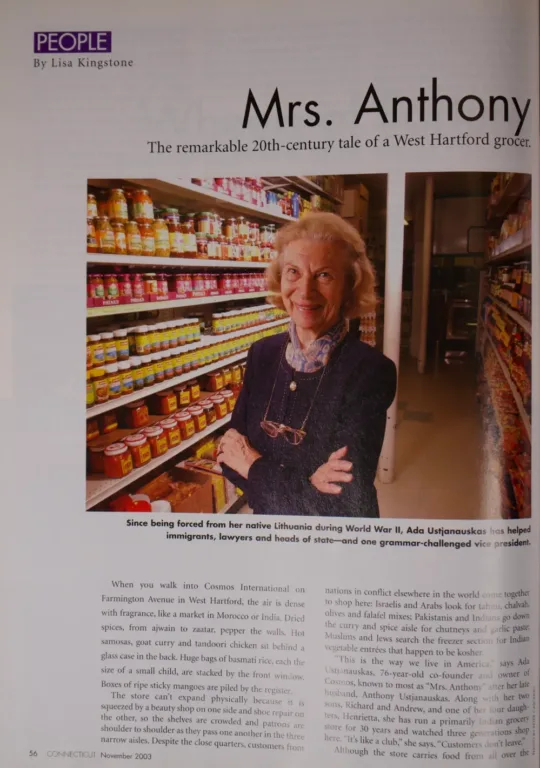
- Ada Gens-Ustjanauskas in Connecticut Magazine 2003 issue from Gens Family Archive.
-
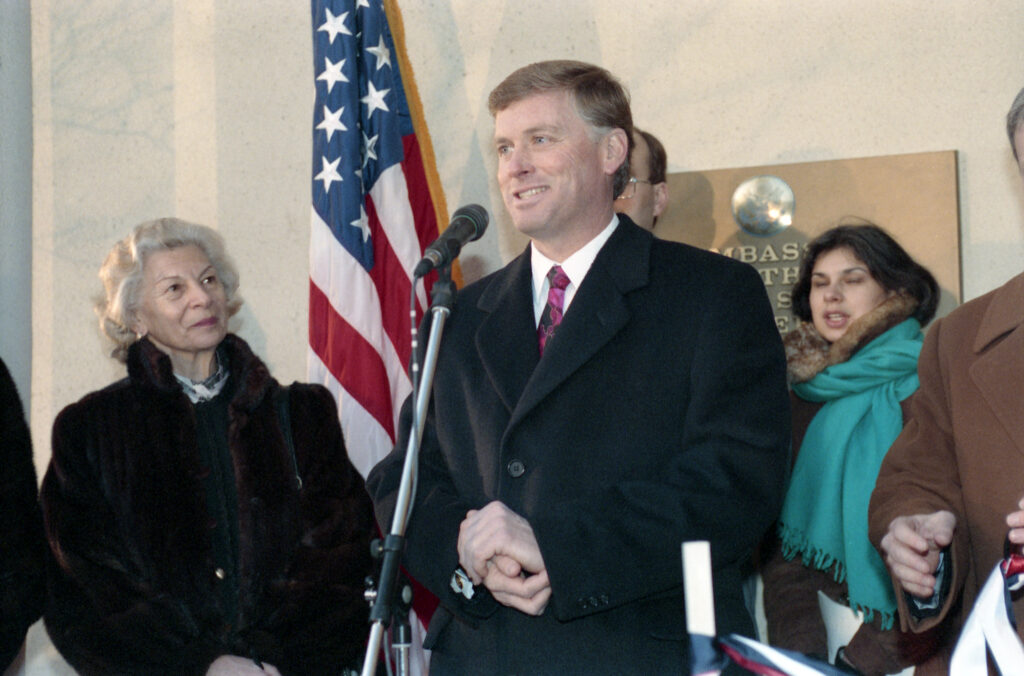
- V10818-11A Vice President Quayle attends the opening of the U.S. Embassy in Lithuania. 7 February 1992 Photo credit: George H.W. Bush Presidential Library and Museum
-
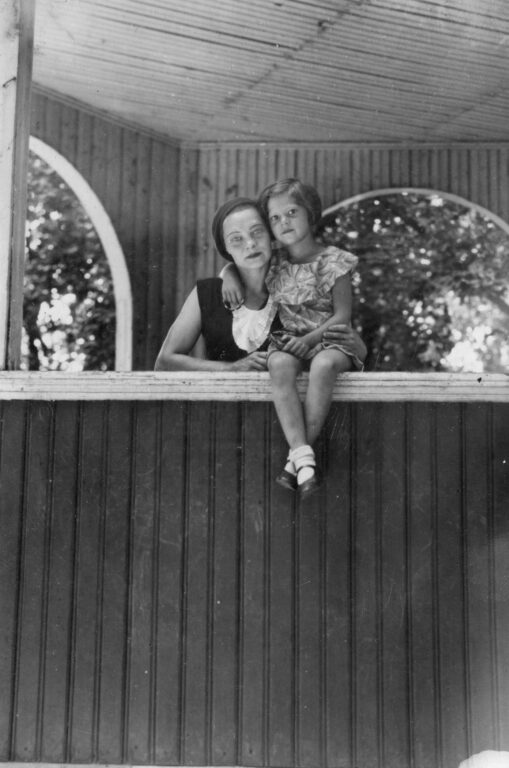
- Ada and mother Elvyra 1930. Courtesy photo
Gens Family Project
The Gens family has created a website for those interested in learning more about Ada’s life, Jewish life in Lithuania and the history of the Gens family.
It was only after West Hartford resident Alexander Phibbs, Ada’s grandson, traveled to Lithuania that he began to understand the full extent of his grandmother’s family history and its ties to the country. He discovered that his great-grandfather, Jacob Gens, was among the most extensively documented Lithuanian Jewish figures of his time, and that the family’s story was deeply connected to the history of the region.
Since returning to the United States, Phibbs has worked to share Ada’s story and raise awareness of his family’s history and the history of Lithuanian Jewry. The family’s website features two documentaries about Ada’s life, The Commandant’s Daughter and Girl from Freedom Avenue, both of which are also available on YouTube.
Like what you see here? Click here to subscribe to We-Ha’s newsletter so you’ll always be in the know about what’s happening in West Hartford! Click the blue button below to become a supporter of We-Ha.com and our efforts to continue producing quality journalism.