
College Bound: Emotionally Ready for College?

Audio By Carbonatix
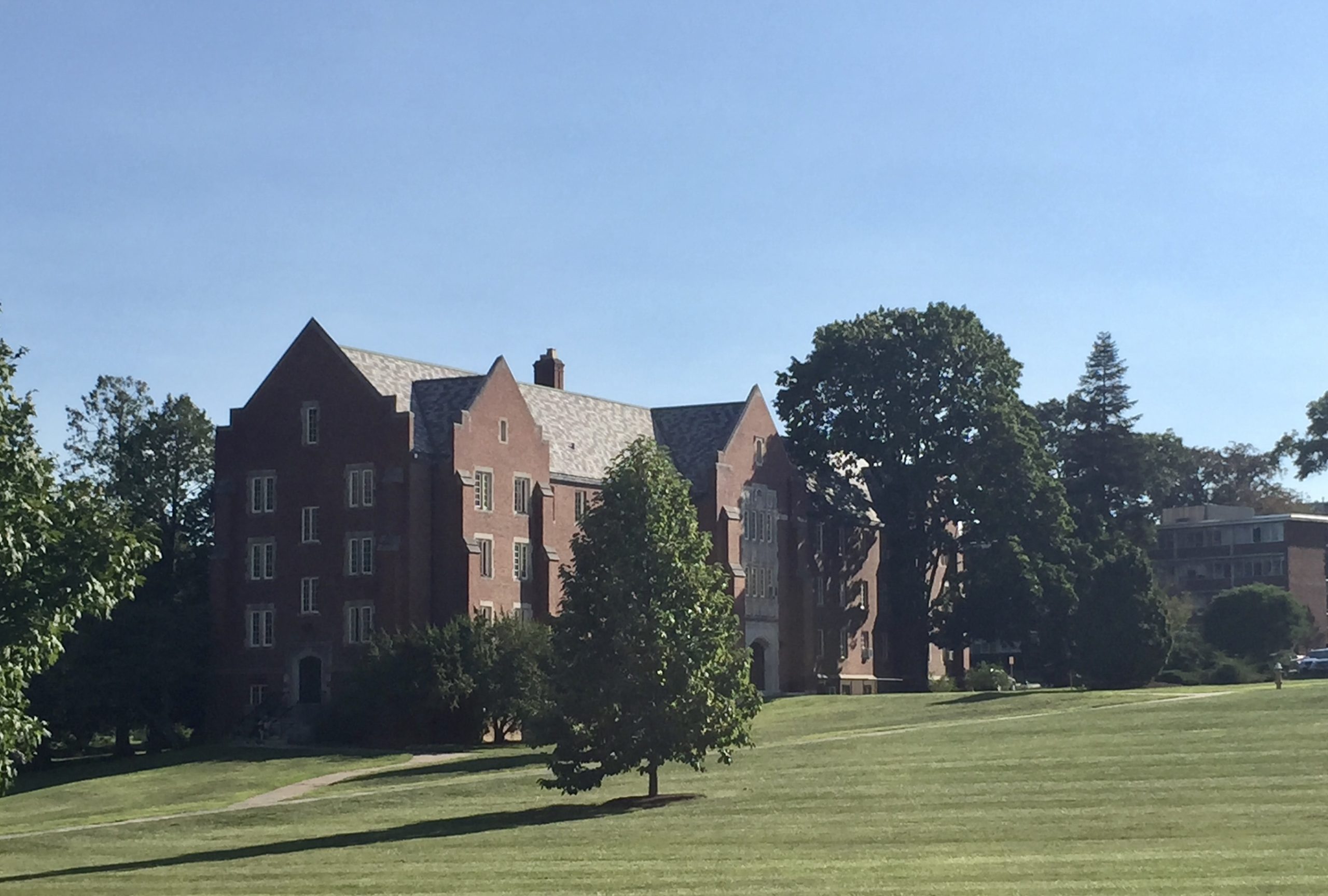
Photo credit: Ronni Newton (we-ha.com file photo)





We-Ha.com will be publishing a series of essays/blogs/reflections on the issue of going to college – primarily a set of thoughts and musings, along with some practical advice, intended to support students and parents as they embark on this journey. While many of our readers are experts in this topic, many others are less knowledgeable and have little outside support. We hope this is helpful to all readers as they go through the various stages of getting into and getting something out of college.

Adrienne Leinwand Maslin. Courtesy photo
By Adrienne Leinwand Maslin
When I was the chief student affairs officer at Middlesex Community College a student came in to see me one day. As I typically did, regardless of the issue of concern, I took a look at his transcript before his scheduled appointment. Transcripts are very revealing. Not only do they provide information on classes taken, grades earned, and GPA, but I can see the high school a student attended, whether the student started college immediately upon graduation or if there was a gap, whether they are full-time or part-time, if they took any skill-building/developmental classes in English or math, if they are close to being put on probation or dismissed for academic reasons, if they repeated any classes, etc. It often proves helpful to know these things before meeting with a student.
This particular young man was taking an introductory chemistry class for the second time. In his case he had failed the class the first time.*
After our conversation about whatever issue he came to see me for, I asked him generally how his classes were going. He told me his chemistry class – this was now his second attempt at it – was not going well. I expressed my concern, especially in light of the fact that he had failed the course once already. I asked him what he thought was going wrong. He responded that he had missed several of the lab sessions. “Why?” I asked. He said there was a student in the class who scowled at him every time he walked into the classroom. This was apparently a deterrent; that threshold was just too much for him and it was causing him to be close to failing the class for the second time.
Much time has passed and I don’t remember how that particular situation was resolved. There are several ways, however, a conversation like that can go. One is to discuss whether he thinks he has an anxiety disorder and to tell him the ways the college can help him. Another is to discuss the ramifications of failing the class – and there are many. A third is to discuss why he was so intimidated by a single student with a scowly face. That is the part that has stuck with me after all these years; the student was not able to deal with a single individual who looked at him with a scowl and he was on the verge of failing a class for the second time because of it.
Another issue I dealt with and that remains with me to this day was a behavioral one. It involved two female students; one of them threw the other’s cell phone into some shrubbery during an argument. (I can see your eyes rolling!) It is one of the most juvenile things I can imagine one doing at college. The two students had been fooling around but the fun turned into an argument and one student’s form of revenge was to throw the other’s phone into the bushes.
And yet another situation, one that was not uncommon, involved a female student who could not seem to break off a friendship that was toxic. I can understand how difficult it is to distance oneself from someone who may have been in your life for many years, or from a recently formed friendship which, despite the toxicity, is satisfying in some ways. Perhaps it gives you someone to hang with on a Saturday night. Or it gives you a sense of importance: “Look who I’m friends with!!”
These situations all have something in common. They all involve students who never acquired the emotional intelligence needed to have a positive college experience. The most succinct yet comprehensive definition of emotional intelligence I’ve come across comes from Google AI:
“Emotional intelligence (EQ) is the ability to understand, use, and manage your own emotions, as well as recognize and influence the emotions of others. It’s a set of skills that help individuals navigate social situations, build relationships, and make sound decisions.”
Key Components of Emotional Intelligence:
- Self-Awareness: Recognizing and understanding your own emotions and how they affect your thoughts and behavior.
- Self-Regulation: Managing your emotions in a healthy way, controlling impulses, and adapting to change.
- Social Awareness: Empathizing with others and understanding their emotions.
- Relationship Management: Using your understanding of emotions to build and maintain positive relationships, communicate effectively, and resolve conflicts.
College students are not yet fully formed adults. They are not expected to handle every challenge that comes along on their own. That is why having a good support system at home, even if the student attends college a good distance away, is so important, and is the reason colleges have staff who can help students through many of the difficult issues they encounter. But, there is an expectation that students who enter college have reached a certain level of maturity and have a certain amount of emotional intelligence to respond to challenges in appropriate and productive ways whether they handle an issue on their own or seek guidance from a staff member.
I was fortunate that both my parents were college educated and I had a college-educated older sister so I knew what to expect. I understood the ratio between study time and class time – about 2-3 hours of studying for each hour spent in class – was aware that sometimes you don’t get along with your assigned freshman year roommate, knew the dining hall food wouldn’t be like mom’s, knew I wouldn’t like every professor I had, and thought I might get a grade or two I wasn’t so happy with.
Some students do not have these advantages and are not as prepared as I was for the college experience. Some students who were top of their class in high school become one of many average students in college and it feels like a come down. Others blossom socially in college and have difficulty maintaining their academics while experiencing a new, more social, self. Some students get homesick, some simply don’t like the environment the way they thought they would, and some decide college isn’t for them. According to psychologist Lindsey Giller, PsyD, and clinical advisor for the Child Mind Institute, “What we’re seeing is a lot of kids are getting through middle school and high school doing okay, but they go off to college and it’s too much. Some kids are just overwhelmed by organization and time management issues, increased academic pressure and managing their lives independently – the emotional roller-coaster of a new social universe.”
How can parents and students better prepare for the road ahead? Here are some suggestions.
- If you’re a parent, don’t try to solve every problem for your child. Instead, says psychotherapist David Romano, let your kids know you understand they are struggling or anxious and that you are there for them but let them figure out how to handle the situation.
- Help your child establish good self-care routines including healthy eating habits, good sleep habits, and being cautious about alcohol and drugs. Many parents warn their children about drugs and alcohol before going off to college because we all know how devastating it can be – on a personal as well as academic level – if our child drinks too much and gets involved with drugs. What many parents don’t know, however, is that the ages of 18-21 is when most eating disorders develop. And depriving oneself of sleep is also common as students try to grab extra hours for study. So focusing on these issues is just as important.
- Work on “coping ahead.” Parents and children can brainstorm the possible scenarios the student might encounter in college before they leave home. It is, of course, impossible to identify every incident that might occur but some common ones include:
- Roommate problems
- Not liking dining hall food
- Not finding your friend group
- Feeling unprepared for the academic rigor
- Feeling homesick
- Technology problems
- Getting a bad grade
- Being the victim of sexual assault (For more information, please see my Sept. 23, 2022 article, “Sexual Assault and the Red Zone”).
All of these issues might throw a new college student for a loop. Discussing them beforehand can reduce the number or magnitude of problems later on.
Giller also recommends discussing positive coping strategies with your student for when they feel overwhelmed. What are your child’s most effective ways of self-soothing? Going for a run? Listening to music? Talking with a close friend? Strumming a guitar? All of these can be good coping strategies when the going gets tough.
If your child has mental health issues, be sure you know what services are available and how to access them prior to sending your child off to college. (For more information on addressing mental health needs at college, please see my April 24, 2023 article, Taking Care of Your Mental Health at College).
Emotional readiness for college is something I have dealt with my entire career. The incidents and issues I described at the opening of this article are not restricted to community colleges. I have worked at many different kinds of institutions and have witnessed the lack of emotional intelligence everywhere. To address this I have been writing a series of graphic novels for 8-12 year olds that focus on many of the situations that arise during one’s college years. It is my hope that the young people who read my books will encounter these same concepts again as they reach their teens so that by the time they enter college they will have more confidence in their ability to handle the difficult situations that may arise. The first book, New Dog in School, which focuses on anxiety and hazing, is available on Amazon, Barnes&Noble, and BookBaby. The second book, College Knowledge, will be out this spring.
*Students may occasionally repeat a course, even if they did not fail it, in an attempt to earn a higher grade for the purpose of being accepted into a particular program, either at MxCC or at another community or four-year college, that has a GPA requirement for entry.
Adrienne Leinwand Maslin recently retired from a 45-year career in higher education administration. She has worked at public and private institutions, urban and rural, large and small, and two-year and four-year, and is Dean Emerita at CT State-Middlesex. She has held positions in admissions, affirmative action, president’s office, human resources, academic affairs, and student affairs. Adrienne has a BA from the University of Vermont, an MEd from Boston University, and a PhD from the University of Oregon. She is presently writing a series of graphic novels on life skills and social issues for 8-12 year olds believing that the more familiar youngsters are with important social issues the easier their transition to college and adulthood will be. Information about this series as well as contact information can be found at www.adrienneleinwandmaslin.com.
Like what you see here? Click here to subscribe to We-Ha’s newsletter so you’ll always be in the know about what’s happening in West Hartford! Click the blue button below to become a supporter of We-Ha.com and our efforts to continue producing quality journalism.