
Consumer Diary: Japanese Beetles, Cucumbers

Audio By Carbonatix
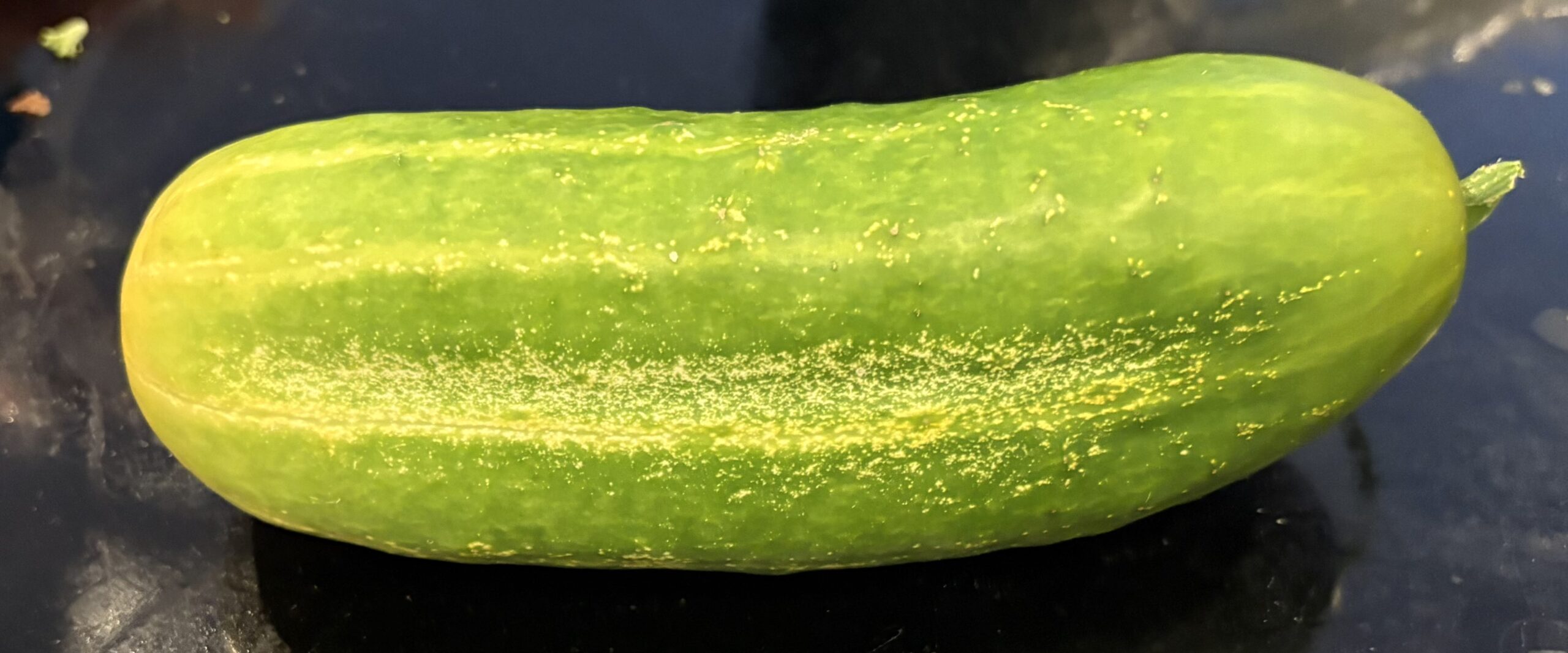
Our son grows a plentiful supply of cucumbers, and here’s a jumbo he gave to me. Cucumbers are incredibly good for you! Photo credit: Harlan Levy





Consumer columnist and West Hartford resident Harlan Levy has more than 20 years of experience writing stories about everyday experiences that anyone could encounter.

Harlan Levy. Courtesy photo
By Harlan Levy
Before I get to my main topics – Japanese beetles and cucumbers – here’s another scam making the rounds like the credit card scam I wrote about last week:
“Security Alert: Unusual Account Activity Detected
Our monitoring system has identified recent activity on your Apple Account that deserves your attention. A transaction in the amount of $936.74 has been processed. For your security, please verify whether you recognize and authorized this payment. If this transaction was made by you: No further action is required. If you do not recognize this activity: Contact our official customer support immediately at +1 (833) 514 2159.”
DO NOT CALL! Calling that number leads to a request for Apple information and other information that will cost you. Apple’s valid customer support phone number is 800-275-2273.
Japanese beetles
For the second time – last week and Monday – I spotted the dreaded Japanese beetle, both last week’s and Monday’s now-deceased bugs (no obit scheduled).
So here are the facts – from the UConn Home and Garden Education Center:
- History: The Japanese beetle (Popollia japonica) was first seen in the United States in 1916 at a nursery in New Jersey, most likely arriving on plants from its native Japan. Since then it has spread across the eastern United States into almost every state east of the Mississippi River.
- Activity: They’re active in Connecticut right now. As adults they emerge every summer near the Fourth of July and stay active for four to six weeks through the summer, feeding on the leaves, flowers, vegetables, and fruit of more than 300 ornamental and agricultural plant types, including roses, grapes, and zinnias.
- Identification: Adult beetles are metallic brown on their wing covers and green on the thorax. They are approximately 3/8-inch long. They raise two legs up to ward off predators with their sharp spined feet when approached.
- Life cycle: “Japanese beetle adults start to emerge from the ground the first week of July and can be spread out for several weeks, remaining active for about two to three months. They will immediately start to feed and mate. The first adults to arrive emit a pheromone odor that attracts others onto the same plant. Once mated, females drop to the ground, usually in turf around the garden, and burrow about three inches into the soil. She lays 1 to 5 eggs at a time. After a day or so the female will return to the garden to feed and mate again. This process is repeated until the female lays 40 to 60 eggs. Once eggs hatch the grubs start feeding on grass roots and will do so until the ground turns cold in the fall. The grubs then dig deeply into the soil to spend the winter. The grubs return to continue feeding on grass roots when the ground warms in spring. This feeding is rarely as damaging as the fall feeding though. Grubs pupate into adults in June, completing only one lifecycle per year.”
- Removal: Drop them by hand into a bucket of soapy water early in the morning when they are slow.
“If you control the population in your yard but no one else in the neighborhood does, you will still have beetles next year. … Talk to neighbors and try to develop an area-wide integrated pest management plan. Realize that this pest will not be eradicated. Minimizing damage is the best that can be expected.
Pheromone lure or bag-a-bug traps can be used to eliminate the pest or just measure the insect pressure. Place the trap far away from the garden plants you are trying to protect. If the bag fills slowly you don’t need to do anything else.
- Chemicals: There are several insecticides labeled for beetle control but they should be used only as a last resort. Spraying garden plants, especially flowers, has unintended consequences such as killing beneficial insects like lady beetles and parasitic wasps. Many insects, like honeybees, feed on flowers and when those flowers are sprayed the bees are exposed to the pesticide and killed.
- Beneficial organisms: Parasitic nematodes can control beetle grubs. Purchase fresh and apply right away, best in a light rain or a cloudy day after rain. Also, get Tiphia vernalis Rohwer (Hymenoptera Tiphiidae), a wasp also known as the spring Tiphia, a small parasitic wasp that attacks the older larvae or grubs of the Japanese beetle.
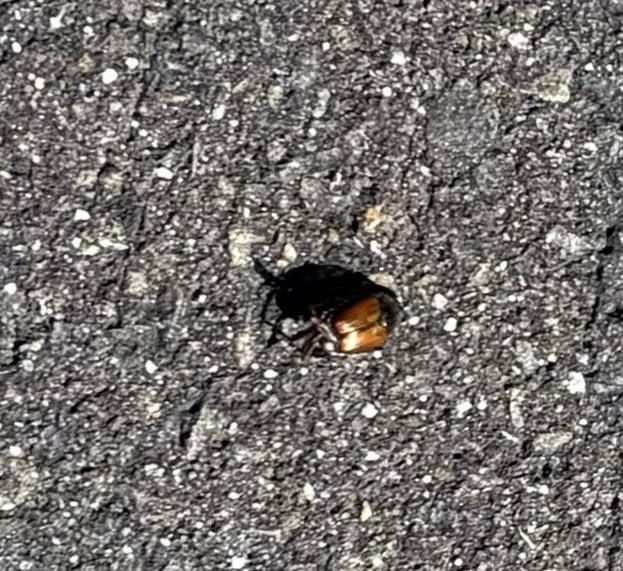
Here’s the Japanese beetle I spotted on our driveway. These destructive bugs started working their plant devastation this month. Photo credit: Harlan Levy
Cucumbers
I never liked cucumbers. To me they had an odd, cool, unappetising taste. Our son, his wife, and their two daughters eat a lot of cucumbers that our son (a.k.a. “Farmer Aid”) grows in their backyard. I’ve actually enjoyed crunchy cut up cucumbers in salad and gazpacho. So I was pleased when he gave me a big one (“Is that a pickle in your pocket?” – Mae West) on Sunday. And I decided to learn about cucumbers – from the UConn Home and Garden Education Center and other sources:
- Contents: Cucumbers are about 96% water (just 16 calories per cup,) providing essential nutrients and antioxidants that help reduce inflammation, regulate blood sugar, and support healthy digestion.
- Benefits: They’re one of the best foods to keep your body and skin hydrated. They’re full of vitamins and minerals, including vitamin K, vital for bone health.
- Supports weight loss: Because they are voluminous yet low in calories, you can eat large portions that keep you feeling full.
- Their skin contains antioxidants and flavonoids that help protect cells from oxidative stress and chronic disease.
- For the most nutritional benefit, be sure to eat them unpeeled. And store them in the refrigerator in a plastic bag for up to one week.
Now you know.
NOTE: If you have a consumer problem, contact me at [email protected] (“Consumer” in subject line), and, with the power of the press, maybe I can help.
Like what you see here? Click here to subscribe to We-Ha’s newsletter so you’ll always be in the know about what’s happening in West Hartford! Click the blue button below to become a supporter of We-Ha.com and our efforts to continue producing quality journalism.