
‘Everyone Pays the Price’: Rising Cost of Fire Trucks Affects Firefighters, Residents, and Taxpayers

Audio By Carbonatix
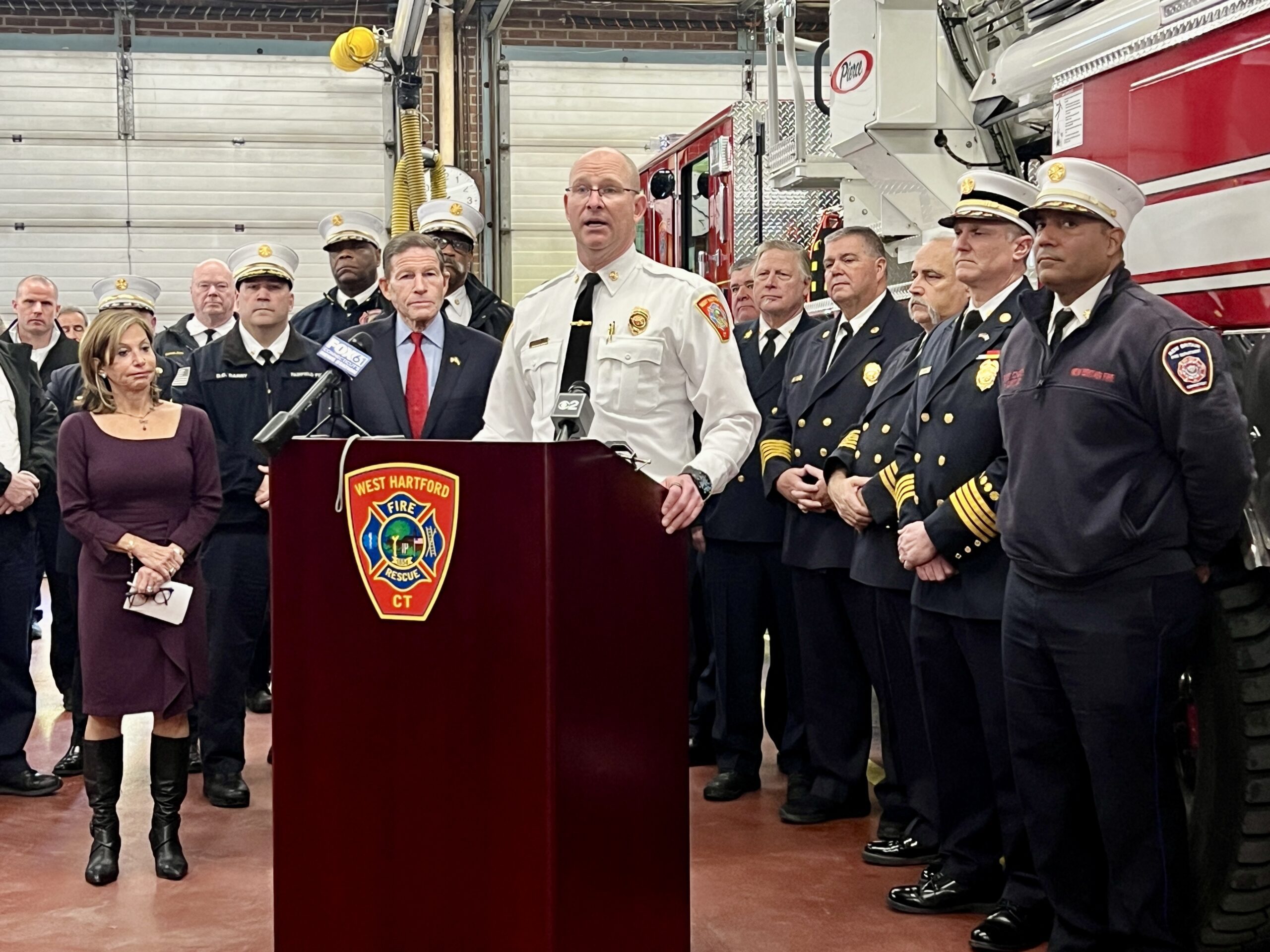
West Hartford Fire Chief Greg Priest, surrounded by chiefs from many other departments and officials, speaks at Station 4 where a press conference was held on Tuesday, Jan. 20 regarding the skyrocketing cost of fire apparatus. Photo credit: Ronni Newton





At a press conference in West Hartford on Tuesday, Jan. 20, fire chiefs from throughout the state, Mayor Shari Cantor, and U.S. Sen. Richard Blumenthal discussed the impact resulting from fewer suppliers, longer delays, and unexpected increases in the cost of fire apparatus.
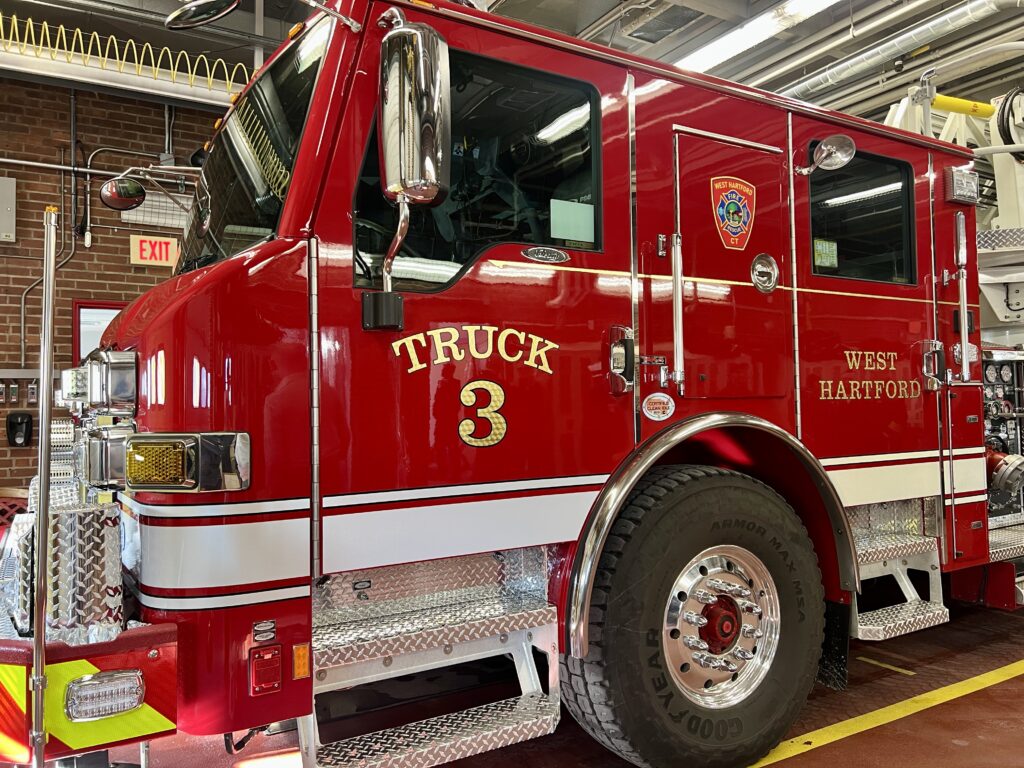
West Hartford’s newest fire apparatus, ordered in 2023 and delivered in late 2025, cost $2.1 million. Photo credit: Ronni Newton
By Ronni Newton
The West Hartford Fire Department hosted U.S. Sen. Richard Blumenthal, fire chiefs from around the state, and other officials on Tuesday to bring attention to an issue that has broad impact to not only firefighters, but ultimately all taxpayers and the safety of communities.
West Hartford Fire Chief Greg Priest, who is also the vice president of the Connecticut Career Fire Chiefs Association and chair of the Joint Council of Fire Service Organizations, flanked by roughly 20 other chiefs, stood in front of a shiny new piece of apparatus at West Hartford’s Fire Station 4 in Bishops Corner. The new tower ladder truck was ordered in 2023 and arrived in late 2025. The estimated – budgeted – cost was $1.6 million, but the final cost was $2.1 million, not because the town added any extra features that weren’t in the original plans.
The Town of West Hartford had to find the extra $500,000 in the budget for the new truck, which replaced a 2009 version that had cost $985,000. Parked out front was Ladder 4, with slightly fewer features, but which had cost $1.1 million in 2020.
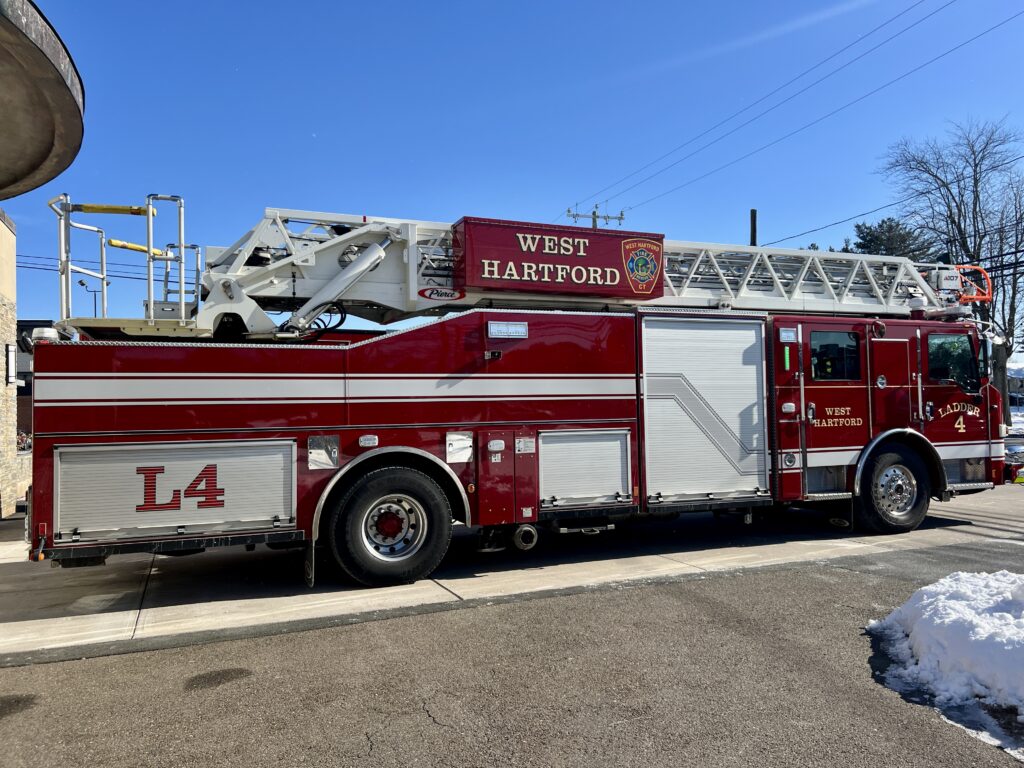
West Hartford Fire Department Ladder 4, received in 2020, cost $1.1 million. Photo credit: Ronni Newton
“Apparatus purchasing, service, and repair are not optional for us,” Priest said. “We need reliable and affordable equipment to do our jobs,” he said, and that applies to communities served by volunteers and career firefighters alike, and is a bipartisan public safety need.
The “rising costs, delayed deliveries, and limited options in today’s fire apparatus market” are among the many challenges facing fire departments today. “When a fire truck apparatus purchase is delayed – as a community determines how to fund the unprecedented or unbudgeted costs or due to delivery time – the risk is not theoretical,” Priest said. Keeping aging equipment longer than is ideal can be unsafe, and the cost and delay issues have a negative impact on municipal budgets.
“Everyone pays the price,” Priest said, and he invited Blumenthal – known as a champion for accountability, consumer protection, and first responders – to draw attention to the issue and help facilitate solutions.
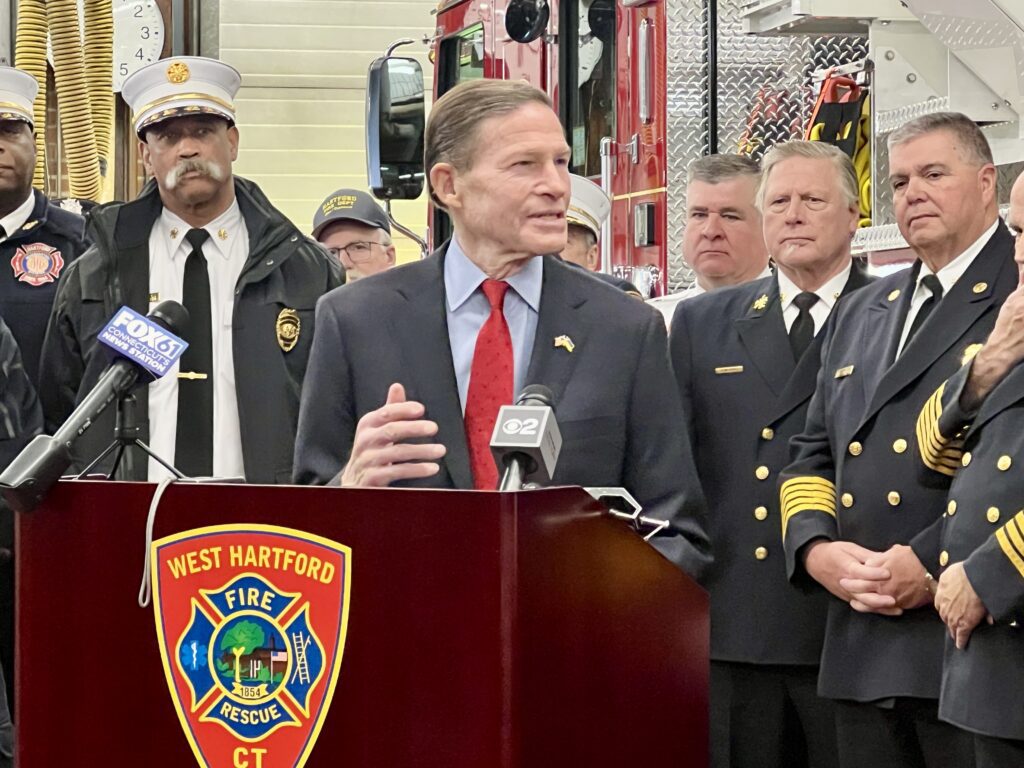
U.S. Sen. Richard Blumenthal speaks at West Hartford Fire Station 4 where a press conference was held on Tuesday, Jan. 20 regarding the skyrocketing cost of fire apparatus. Photo credit: Ronni Newton
Blumenthal said the dramatic cost increases and the length of time for delivery of apparatus, that was formerly 18 months and is now three or four years, is a problem. “And no longer are fire departments able to specify different kinds of structure or additions. It’s much more cookie cutter,” he said. “And often, the prices charged are floating prices,” that can be changed after the equipment is ordered.
“All these factors means equipment is delayed, fire trucks are often out of service, parts are more difficult to obtain. firefighters are put at risk and that is unconscionable, as are the dangers to the people they serve.”
The reason behind the cost increases and delays, Blumenthal said, is that “Wall Street investors, private equity, has bought big holding companies that then have consolidated the market, so that where there there used to be tens of manufacturers, now three produce 80% of all fire trucks available.” Those three companies are Oshkosh Corp. (owner of Pierce Manufacturing which is the brand of West Hartford’s new truck), REV Group, and Rosenbauer, and they have bought many of the former fire truck manufacturing mainstays.
“They have decided they’re just gonna charge more, whatever they think the market will bear, because it is no longer the kind of competitive market.” Blumenthal said what is needed is for the Federal Trade Commission to intervene and ensure fair competition, and for Congress to act.
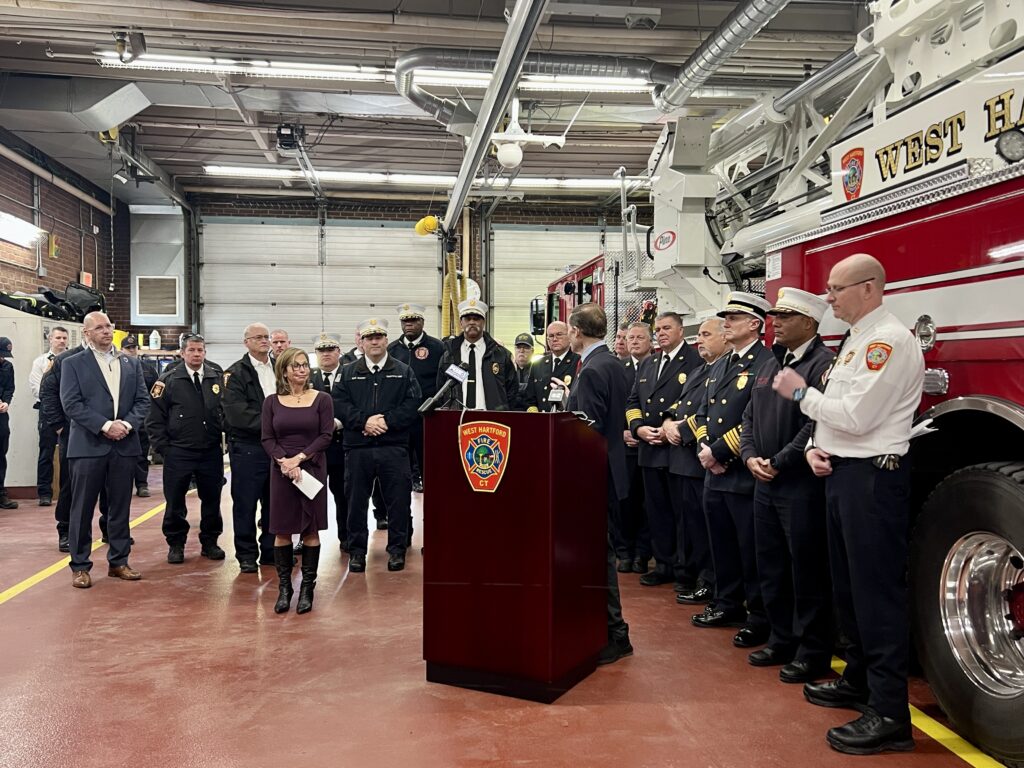
Press conference at West Hartford Fire Station 4 on Tuesday, Jan. 20 regarding the skyrocketing cost of fire apparatus. Photo credit: Ronni Newton
Blumenthal said he wrote to the FTC in late December but has not heard back yet. He said he also plans to enlist his colleagues in what should be a bipartisan, non-partisan effort to resolve what is a crisis.
“We’re not trying to deny anyone a fair profit,” Blumenthal said. “But they ought to deliver affordable, on-time, quality products that our firefighters deserve.”
From the standpoint of a municipality, all of the community’s fundamental needs must be balanced,” West Hartford Mayor Shari Cantor said. “We work on our budget, and we try to make it as lean and efficient as we can, but meeting the public safety needs – that’s the fundamental need of our community, government’s priority to protect and preserve the pubic safety of our residents, and that is absolutely the foundation,” she said.
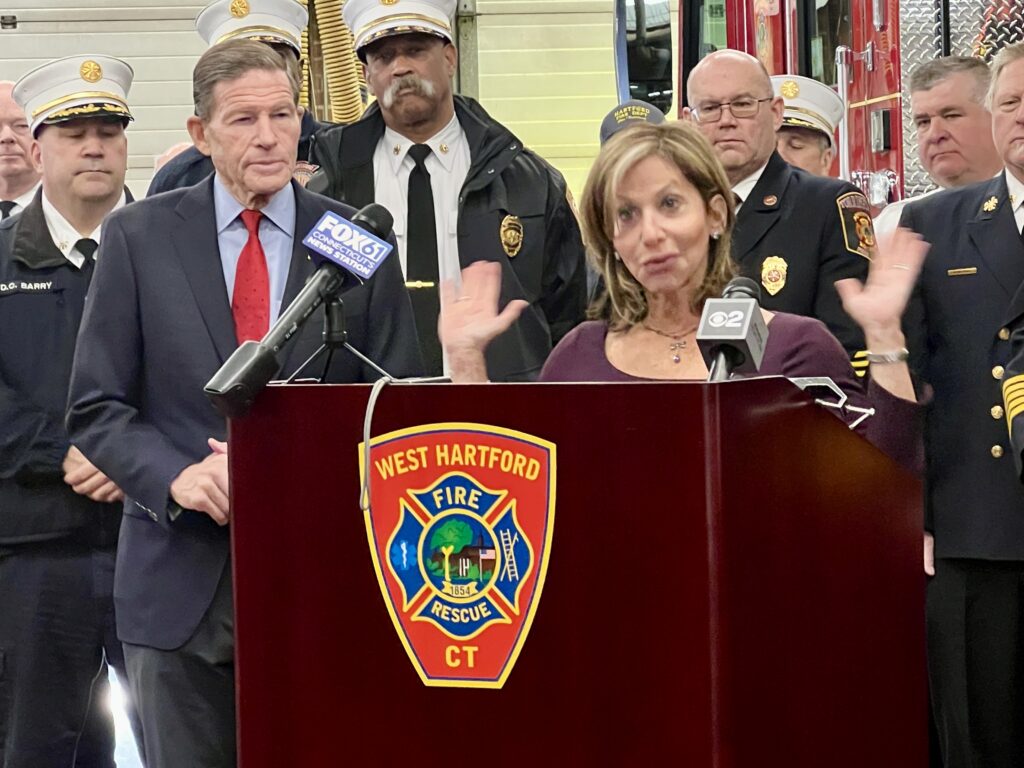
Mayor Shari Cantor speaks at West Hartford Fire Station 4 where a press conference was held on Tuesday, Jan. 20 regarding the skyrocketing cost of fire apparatus. Photo credit: Ronni Newton
“And we try to do it as efficiently and expeditiously as we can, but we can’t do it when we have unexpected increasing costs, costs that double over a couple of years, and costs that you have to plan for three to five years in advance when the economy is changing under your feet,” Cantor said. Every fire department has different needs, and in addition to the costs and delays, there are now also fewer options for customization.
The town had to find the extra half million dollars for the long-delayed new ladder truck, which will finally go into service on Friday after extensive training has been completed.
In Connecticut, most municipal budgets are primarily funded by residential property taxes – which means these costs for public safety, driven by profit and not public interest by an unfair monopoly – are pushed down to residents, Cantor said.
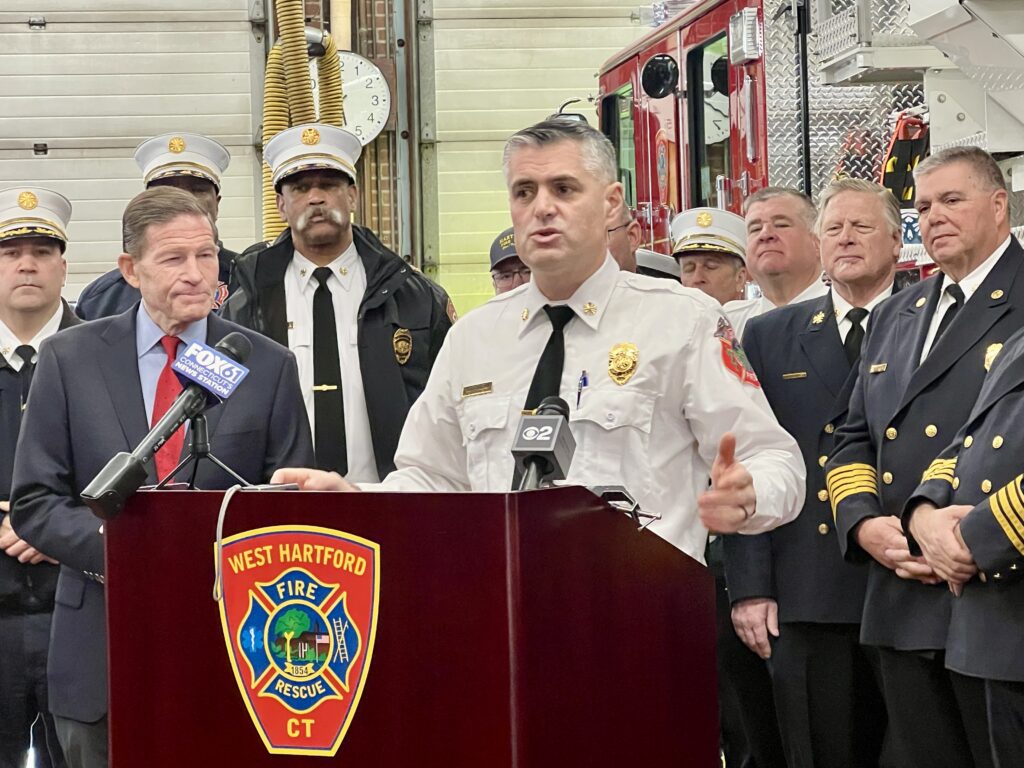
East Hartford Fire Chief Kevin Munson speaks at West Hartford Fire Station 4 where a press conference was held on Tuesday, Jan. 20 regarding the skyrocketing cost of fire apparatus. Photo credit: Ronni Newton
East Hartford Fire Chief Kevin Munson, who is treasurer of the Connecticut Career Fire Chiefs Association and a former longtime member of the West Hartford Fire Department, echoed the other speakers’ comments.
“We’re not naive, we understand that this is a for-profit industry,” Munson said. They respect that, but fire trucks are not optional equipment.
“We can’t get to the problem if we don’t have fire trucks. And the one thing that we’re having trouble getting right now is fire trucks,” Munson said. Some chiefs in the room have been forced to have firefighters go to calls in pickup trucks.
“We don’t have fire trucks. That’s unacceptable in my mind,” Munson said. While lead times can be adjusted, “we can”t adjust to 200% price increases in three years. We can’t adjust to manufacturers sending us letters, demanding more money, just to build our fire trucks.” Investment should be in human capital, not machinery.
The East Hartford Fire Department ordered a fire truck before Munson became chief in 2021. “We have yet to see that fire truck,” he said. Another example he shared was that two pumpers were ordered in 2019, and two years later the manufacturer demanded another $178,000 before building the trucks. The cost of parts are being impacted, too.
Fire departments try to work within their budgets. “We don’t have the that luxury when 90% of our budget is on our poeple. We don’t have the room to come up with this extra money for parts just for the greed of certain manufacturing corporations,” Munson said. It affects the entire American public.
Like what you see here? Click here to subscribe to We-Ha’s newsletter so you’ll always be in the know about what’s happening in West Hartford! Click the blue button below to become a supporter of We-Ha.com and our efforts to continue producing quality journalism.




Smaller fire apparatuses will cost less money. Only in North America are our fire trucks so big. The rest of the world uses much smaller trucks. Other advantages to smaller trucks, beyond cost, is they are more maneuverably and can get through traffic easier, making for faster response times. I suggest WHFD look into the style of trucks used in the rest of the world.
Smaller fire trucks will also enable our vision zero goals, by allowing improved traffic calming, separated bike lanes(that fire trucks could use in emergencies to skirt traffic). https://www.wired.com/story/sanfrancisco-smaller-firetrucks/