
Consumer Diary: Dishwasher Protocol

Audio By Carbonatix
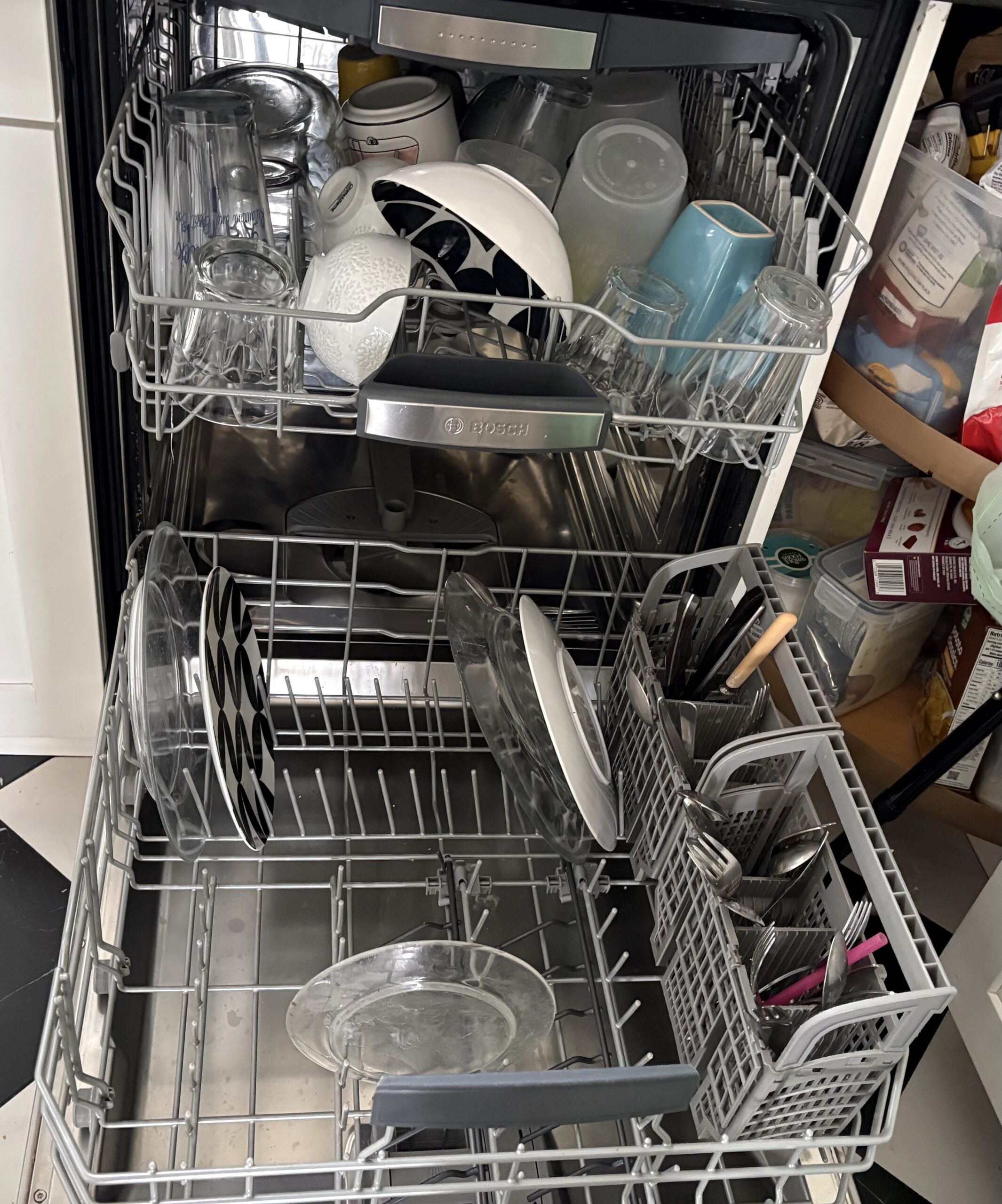
Most dishwashers spray water from the center outward through rotating arms. That means the dirty faces of your plates, bowls, and pans should be angled toward the center of the machine, where water pressure is strongest. Many people line them all up facing the same way. If all your plates face the same direction, the ones in back are shielding the ones in front. Face them toward the center spray. You should mix your silverware so nothing nests together. Photo credit: Harlan Levy





Consumer columnist and West Hartford resident Harlan Levy has more than 20 years of experience writing stories about everyday experiences that anyone could encounter.

Harlan Levy. Courtesy photo
By Harlan Levy
I never thought in the last few decades that I – the consummate post-dinner clean-up dad – was loading our dishwasher wrongly and completely counter-productively. Then my wife emailed me a surprising article from recipeheaven.com detailing what I was doing wrong and what I need to do correctly:
Stop pre-rinsing your dishes.
“This is the big one,” the author said. “If you stand at the sink scrubbing dishes under running water before loading them into the dishwasher, you’re making the machine worse at its job. I know it sounds backwards. It sounds like the responsible thing to do. But every appliance expert, manufacturer, and cleaning specialist agrees on this point.”
Here’s why: Modern dishwashers have soil sensors that measure how dirty the water is at the start of a cycle. When you pre-rinse everything until it’s practically spotless, those sensors read the water as clean and switch to a lighter cycle. Your dishwasher literally does less work because you tricked it into thinking there’s nothing to clean. The result? Invisible residue, cloudy film on glasses, and food particles that should have been blasted off but weren’t.
On top of that, dishwasher detergent contains enzymes specifically formulated to cling to food particles. Amylases break down starches. Proteases handle proteins. Lipases go after fats and oils. When you rinse everything off, you’re removing the very thing the detergent needs to do its job.
And the water waste is staggering. According to Consumer Reports, you can burn through 1.7 to 6 gallons per minute of pre-rinsing. Two minutes of rinsing equals up to 12 gallons, while an Energy Star dishwasher uses as little as 3 gallons for an entire cycle. You’re using four times more water before the machine even starts. Over a year, that adds up to thousands of gallons down the drain for absolutely no benefit.
What you should do instead:
Scrape large food scraps (rice, pasta, bones, big chunks) into the trash or compost. That’s it. No water. No scrubbing. Just scrape and load.
You’re blocking the detergent dispenser and don’t even know it.
That little compartment on the inside of the dishwasher door where you put your detergent pod or powder needs a clear path to open and release its contents during the wash cycle. If you park a cutting board, large plate, or baking sheet right along the front of the bottom rack it can block the dispenser entirely.
When that happens with pods, the pod literally can’t release from the compartment. It just sits there, sealed behind whatever you jammed in front of it. Your dishes get nothing but hot water, and you open the door to find everything still greasy and gross, with a half-dissolved pod stuck to the door.
The fix is simple: keep cutting boards, baking sheets, and casserole dishes along the sides, in the corners, or toward the back. Never along the front of the bottom rack near the door.
Overloading is the most common mistake.
Overcrowding is the number one reason dishes come out dirty. After reloading with breathing room, everything came out spotless. Water needs to physically reach every surface of every dish. When plates are pressed together, the water just runs off the outside edges and the insides stay coated in whatever was on them.
When bowls and spoons “nest” together, the problem gets even worse. Nesting means items are cupped or stacked so closely that water can’t get between them at all.
Your plates are facing in the wrong direction.
Most dishwashers spray water from the center outward through rotating arms. That means the dirty faces of your plates, bowls, and pans should be angled toward the center of the machine, where water pressure is strongest. Many people (like me) line them all up facing the same way.
If all your plates face the same direction, the ones in back are shielding the ones in front. Face them toward the center spray instead. Angle soiled surfaces slightly downward so water and detergent hit the dirty part directly and drain off. Large pots and pans should go on their sides, not face down. A face-down pot acts like a shield that blocks water from reaching everything underneath it.
Mixing your silverware.
You should mix your silverware so nothing nests together. When you toss all the forks in one slot and all the spoons in another – my modus operandi – they interlock and stack. Water can’t get between them. GE Appliances officially states that the best results come from mixing silverware types and distributing them evenly across the basket. Some forks here, a knife there, a couple spoons mixed in. Some handles up, some handles down. It sounds chaotic, but it works because it prevents that nesting problem. And knives always go blade down with handles sticking up. Your nice sharp knives probably shouldn’t be in the dishwasher at all. The heat and jostling dulls them over time. Hand wash those.
You’re putting the wrong things on the wrong rack.
The bottom rack is closest to the heating element. That’s where your heavy, durable stuff goes: dinner plates, mixing bowls, pots, pans, serving dishes. The top rack is for lighter, more delicate items: glasses, mugs, small bowls, and anything plastic.
The pods go in the dispenser, not the bottom of the tub.
A lot of people just toss the dishwasher pod into the bottom of the machine and close the door. The problem is that the pod dissolves immediately when the pre-wash cycle starts, and by the time the main wash cycle kicks in, all the detergent is already gone. The dispenser exists specifically to release detergent at the right moment during the main cycle.
Before you hit start, turn on your kitchen sink faucet and let the water run until it’s hot.
This way, the dishwasher fills with hot water right from the beginning instead of spending the first several minutes heating up cold water from the pipes. It’s a small thing that makes a real difference in how clean everything gets, and almost nobody does it.
Clean your filter.
Most dishwashers have a manual filter at the bottom of the tub that catches food particles. If you’ve never cleaned yours, it’s probably clogged, and that means dirty water is recirculating onto your “clean” dishes. It usually just twists out and rinses under warm water. Once a month is all it takes.
Now you know.
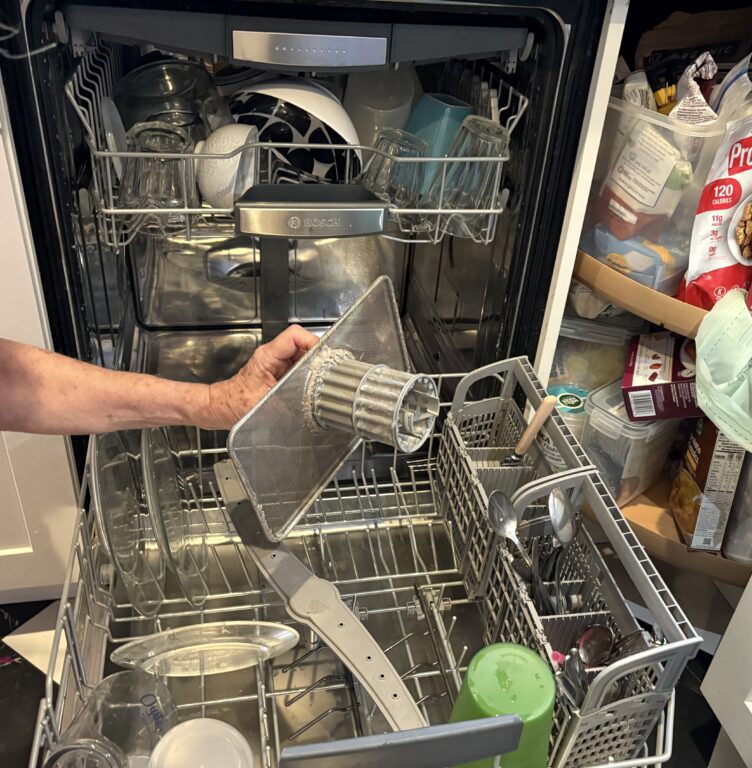
Most dishwashers have a manual filter at the bottom of the tub that catches food particles. If you’ve never cleaned yours, it’s probably clogged, and that means dirty water is recirculating onto your “clean” dishes. It usually just twists out and rinses under warm water. Photo credit: Harlan Levy
NOTE: If you have a consumer problem, contact me at [email protected] (“Consumer” in subject line), and, with the power of the press, maybe I can help.
Like what you see here? Click here to subscribe to We-Ha’s newsletter so you’ll always be in the know about what’s happening in West Hartford! Click the blue button below to become a supporter of We-Ha.com and our efforts to continue producing quality journalism.




Very useful in several ways, including water conservation; many thanks!