
Consumer Diary: Tomatoes, Eggshell “Clacker”

Audio By Carbonatix
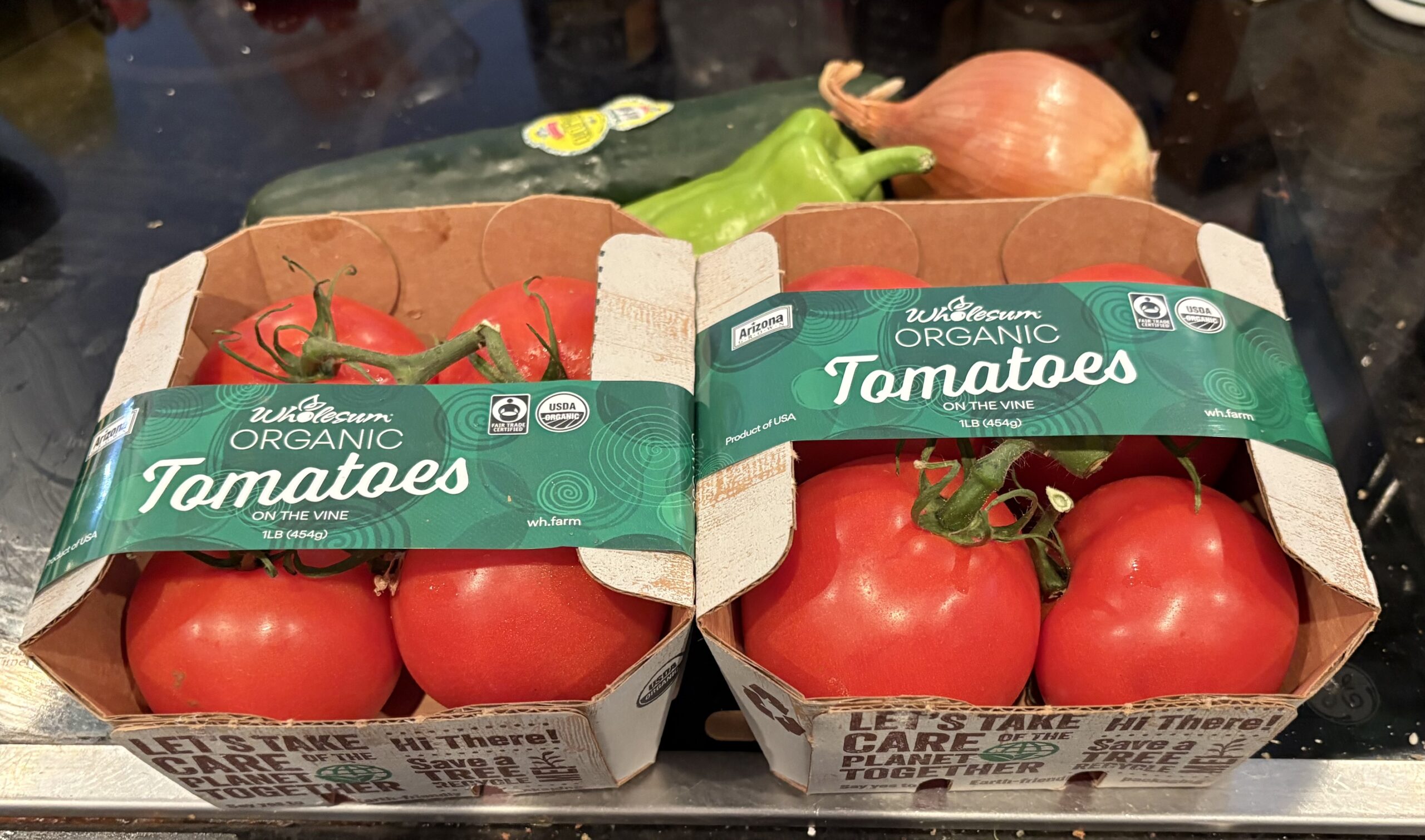
To successfully store tomatoes do not refrigerate! Photo credit: Harlan Levy





Consumer columnist and West Hartford resident Harlan Levy has more than 20 years of experience writing stories about everyday experiences that anyone could encounter.
By Harlan Levy

Harlan Levy. Courtesy photo
Our most recent kerfuffle involved the major national Constitutional question: How to store tomatoes.
[But first a needless digression: As I typed “kerfuffle” I wondered where that word came from. Hereʼs the etymology — The core root is fuffle: First recorded in the 1530s as a Scottish verb meaning to dishevel or ruffle. By the late 15th to 16th centuries, speakers added the prefix cur- or car- from Scottish Gaelic car (meaning “twist,” “bend,” or “wrong/awkward”) or relates to the Irish term cior thual (meaning “confusion”). By 1813, the terms carfuffle and curfuffle appeared as nouns describing a state of agitation or being ruffled.]Sorry. Okay. Back to tomatoes.
Tomato Storage
I used to put tomatoes in the fridge, supposedly to keep them fresh. But my wife said, emphatically, No! I must never put them in the fridge. So I did some research.
From Betterreport.com, I learned that where you should store your tomatoes depends on a few factors:
First, determine how ripe the tomatoes are and when you plan to use them.
The refrigerator is one of the worst places for fresh tomatoes. In the fridge, tomatoes become mealy and lose flavor, becoming sour. This is part of why farmers market tomatoes are preferable to supermarket tomatoes, because they haven’t been chilled for transport and therefore haven’t lost taste and texture.
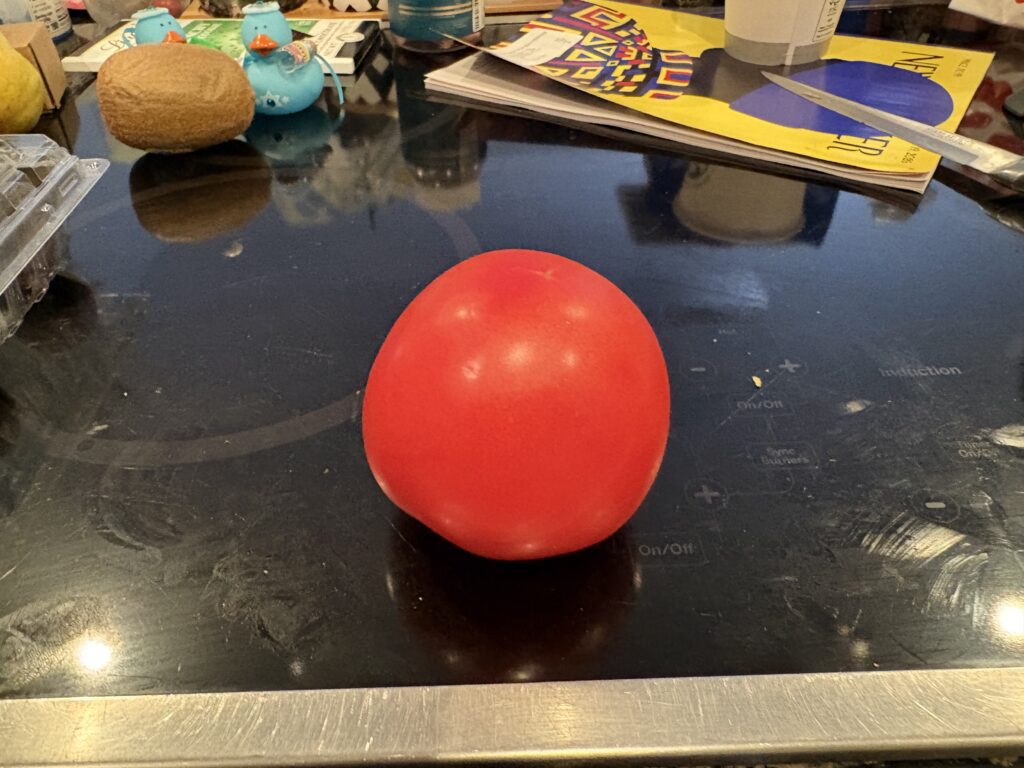
To most effectively store tomatoes, place them upside down on a counter. Photo credit: Harlan Levy
If you’re planning to make a meal with your tomatoes quickly, or if they need time to ripen, you can keep them in a dry area of the counter, stem-down — this prevents bacteria from entering the fruit and keeps them juicy. You can also put tape over the stem to keep them fresh. They should be out of direct sunlight and at a temperature between 60 and 70 degrees Fahrenheit. Counter storage works for larger tomatoes and for smaller grape or cherry tomatoes as well, even though they’re in a container.
Facts: Fresh tomatoes last two to five days on the counter. Check them daily to ensure they don’t go bad — you’ll know your tomato is ripe when it is uniform in color and tender to the touch. An overripe tomato will be soft and possibly will start leaking.
When to put a tomato in the fridge: Any cut tomatoes that aren’t fully used should be stored in the fridge. They should be covered with cling wrap so they don’t dry out, and placed in an airtight container before being put in the refrigerator. There, they will last for a day or two and should be safe from bacterial growth.
Ripe tomatoes that are about to become overripe can also go in the fridge, where they may last up to two weeks.
Ripe: For ripe tomatoes that you don’t want to eat yet (or that have been in the fridge), you can make a red sauce or turn them into soup, or freeze them whole and use them later.
Don’t just throw them in the freezer. Take the time to blanch the tomatoes. Drop them into boiling water for 30 seconds, then put the slightly cooked tomatoes in dated freezer bags. When you unfreeze these tomatoes later, it’s best to use them for recipes that require cooking.
Now you know. Hope your not fuffled.
Eggshell cracker
A few weeks ago we had a delightful, fascinating tour of the famous architect Philip Johnson’s Glass House and estate in New Canaan. Afterward, we shopped in the gift room, where our friend recommended buying the ingenious hard-boiled eggshell remover the German-made Eierschalensollbruchstellenver
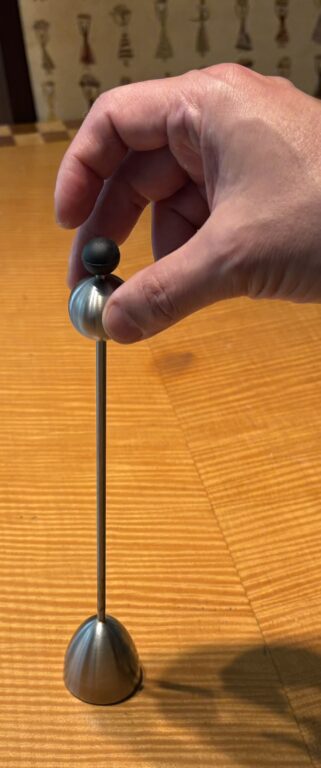
Eierschalensollbruchstellenverursacher a deviced used to remove eggshells easily from a hard-boiled egg. To use, put the clacker bottom — with its razor-sharp edge — over a boiled egg sitting in an egg cup. Then drop the weighted ball to force the bottom to cut the egg top. Photo credit: Harlan Levy
This device is used to create breaking points in eggshells in order to easily remove the top part of an egg without causing the shell to splinter.
Here’s how it works:
First, you boil an egg for 7 minutes. After boiling, you place it in a tight egg cup. After it is fitted in its cup, you place your “clack” — which has a razor-sharp edge — on the top of the boiled egg. Then you lift the steel ball to the top of the device’s rod and drop it. Bingo! You remove the top of the egg by tilting the “clack” or by covering the bottom of the resulting perforation, both methods allow for a clean lift of the shell top. The egg can then be removed from its cup and can be placed on toast or an English muffin to lastly enjoy your breakfast. See photos to see it in action.
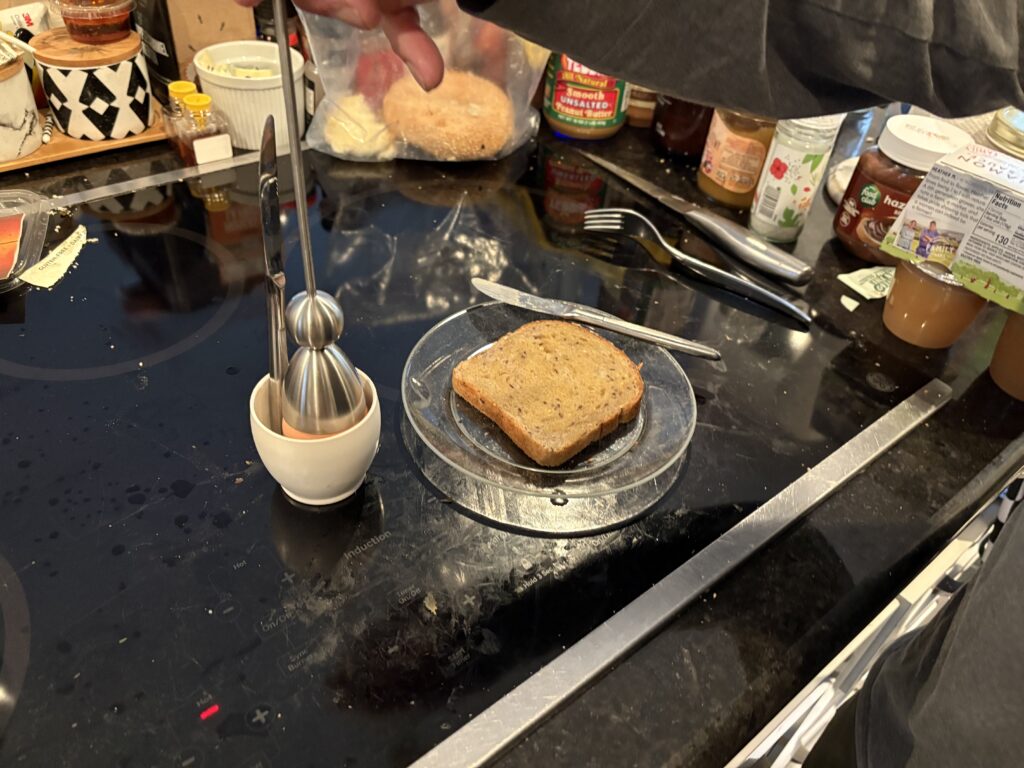
The clacker swill cut the eggshell after the weight drops on it. Photo credit: Harlan Levy
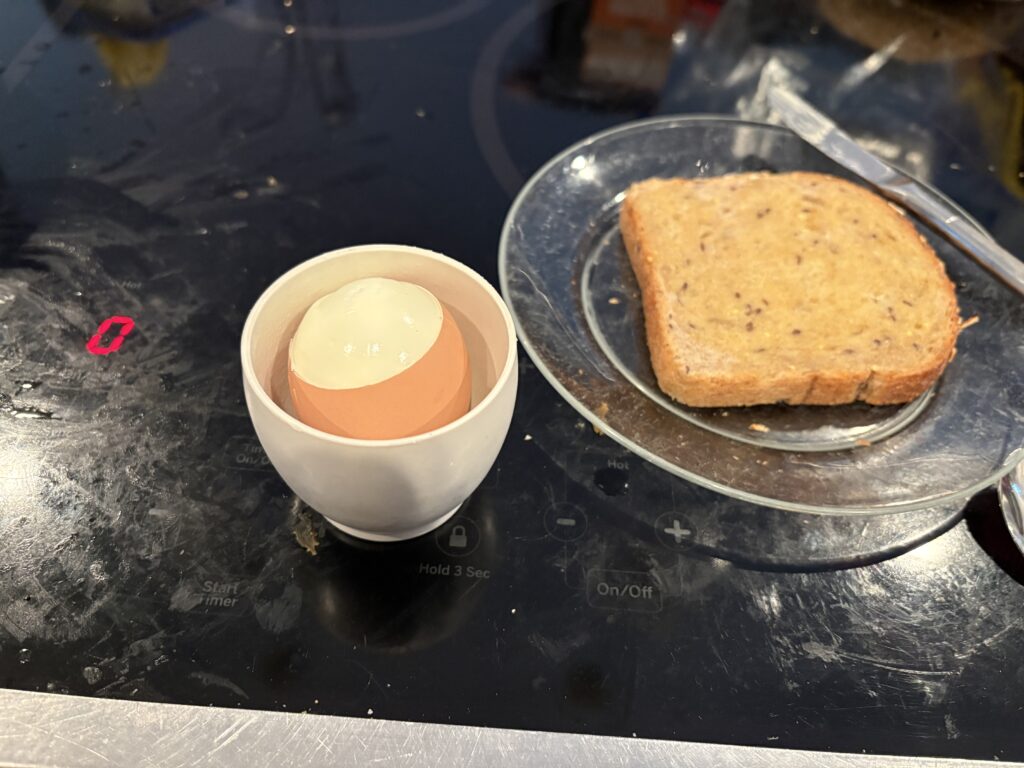
The clacker has removed the eggshell top without breaking the egg. Photo credit: Harlan Levy
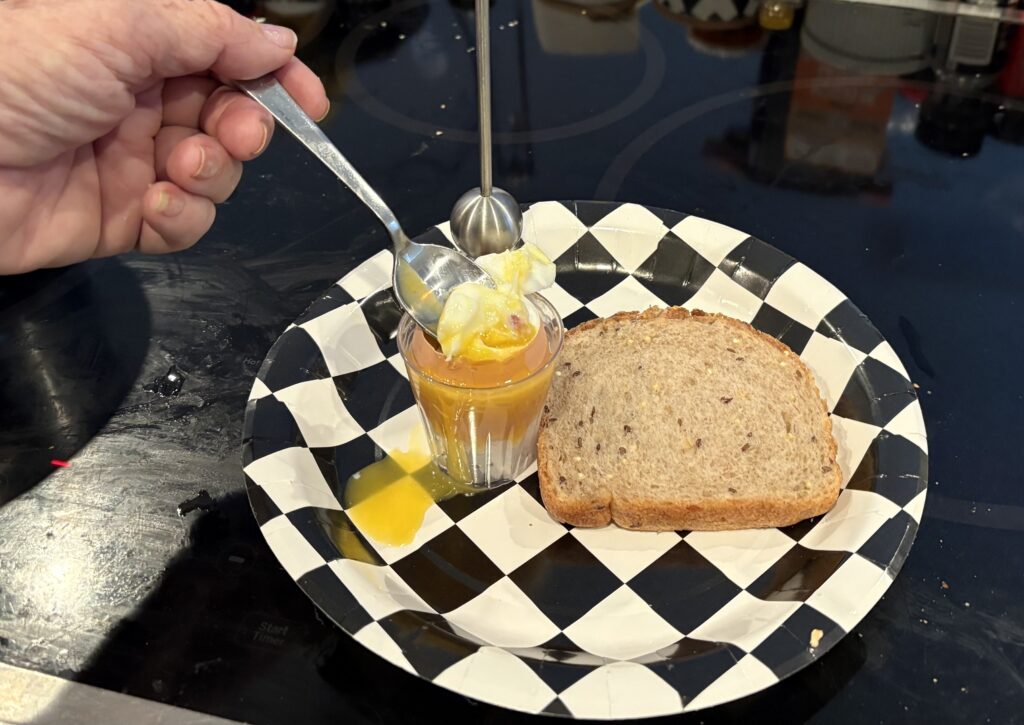
Egg and toast breakfast. Eggshell top was broken with the Eierschalensollbruchstellenverursacher. Photo credit: Harlan Levy
That’s it for this week.
NOTE: If you have a consumer problem, contact me at [email protected] (“Consumer” in subject line), and, with the power of the press, maybe I can help.
Like what you see here? Click here to subscribe to We-Ha’s newsletter so you’ll always be in the know about what’s happening in West Hartford! Click the blue button below to become a supporter of We-Ha.com and our efforts to continue producing quality journalism.