Less Stress, More Joy: A New Approach to the College Process

Audio By Carbonatix
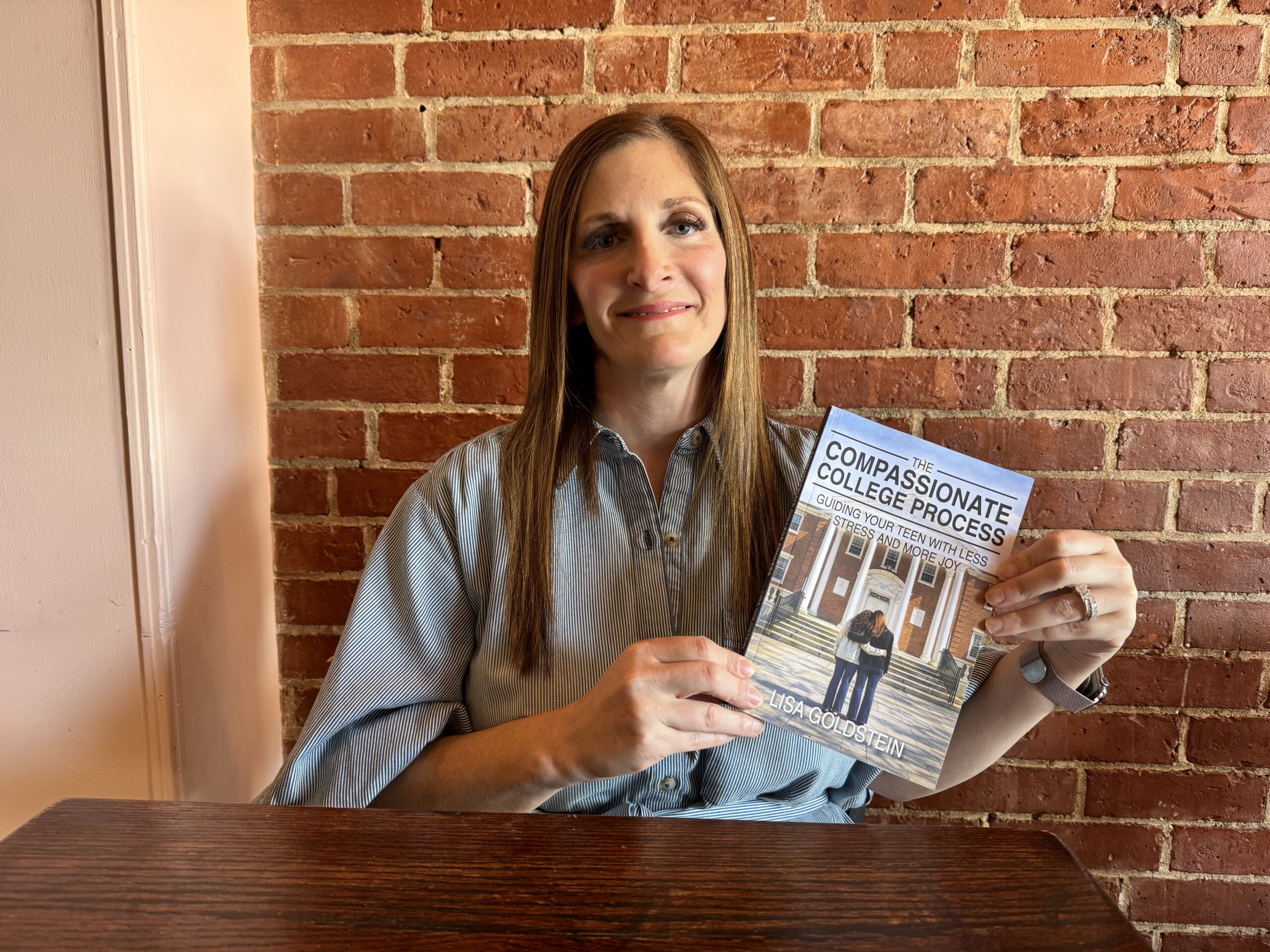
Lisa Goldstein, author of The Compassionate College Process: Guiding Your Teen with Less Stress and More Joy sat down to chat with Melissa Cole at Cafe Sofia. Photo credit: Melissa Cole





A West Hartford college consultant’s guide to a less stressful college process with her new book The Compassionate College Process: Guiding Your Teen with Less Stress and More Joy.
By Melissa Cole
If you have a senior in high school right now, chances are you’re in the thick of the college process. Whether it’s narrowing down the list of schools, deciding on an essay topic, or filling out applications, it can be a stressful time for both parents and teens – who are also juggling schoolwork, part-time jobs, and after-school activities.
But what if the college process could be a little less stressful?
A new book written by a West Hartford college consultant and former school counselor aims to do just that.
Lisa Goldstein’s new book, The Compassionate College Process: Guiding Your Teen with Less Stress and More Joy, was written to help parents and teens navigate the college process so it doesn’t feel quite so daunting or overwhelming.
“In the last few years, especially, I think there’s been a change. The college process itself has gotten so much more competitive. And I was seeing my students, that it was impacting their physical health and mental health. The parents are so anxious. There is so much pressure on everyone,” Goldstein said.
“And honestly, it was just breaking my heart. I don’t think it has to be that way.”

West Hartford resident Lisa Goldstein, college consultant and former school counselor wrote The Compassionate College Process: Guiding Your Teen with Less Stress and More Joy. Courtesy photo
Goldstein says the book is primarily for parents, offering them tools and guidance for navigating the college process alongside their children without adding to the anxiety of an already stressful time.
“How can we go about it in a compassionate way so that we’re kind of coming together, we’re connecting, we’re even finding joy in this? We’re learning about our children, rather than giving them extra things to do, and trying to tackle more activities, so that they look good for college.”
Goldstein encourages parents to think outside the box when it comes to choosing which colleges to apply to. There isn’t just that “one school” – there are plenty of options.
“When we have this idea of the dream school, all the eggs are in one basket. And again, especially if it’s a super competitive school, that is really meant for 1% to 2% of the population. It’s unlikely you’re going to get in there. And that is okay. I try to spread the message of there’s many schools you can be happy at. There isn’t just one dream school.”
Goldstein also advises parents not to put too much emphasis on college rankings. Instead, she encourages families to focus on finding schools that fit their child’s interests and personality.
“Marine biology, let’s say. It’s a very specific major. If the school doesn’t have that or doesn’t have a very big program, then it doesn’t matter how highly it is, right? It’s just not gonna be a fit for your child,” Goldstein explained.
“If it’s a huge school, a major city, and your child would do better in a more rural environment with 5,000 students rather than 15,000, again, the ranking doesn’t really matter. It’s more about what is the best fit for your child.”
Also in the book, she says that the language parents use throughout this process can have a lasting impact on their teens, especially the word: “should.”
“So when we tell our kids, ‘You should get a 1400 on your SAT,’ the message is, if you don’t get that, you’re a failure, and you’re not getting into the school you want,” Goldstein said.
The same can be true when parents suggest a college based on someone else’s experience.
“You should apply to so-and-so because your cousin did, and he loves it there. Again, we don’t know if that’s the right fit for your child. Just because your cousin went there, doesn’t mean that’s a good fit for you.”
Instead, Goldstein encourages parents to rephrase those “should” statements into open-ended questions. Asking questions creates an opportunity for conversation, rather than the child feeling like they are being told what to do.
There are plenty of tools and “nuggets” like these available in Goldstein’s book, The Compassionate College Process: Guiding Your Teen with Less Stress and More Joy, which is available through her website and on Amazon and Barnes and Noble.
Goldstein hopes families will walk away from the college process with exactly what the title suggests: more joy and less stress.
And one last piece of advice for parents, she says, is make sure your child knows just how proud you are of them.
“One of the statements that I think are helpful in the beginning of the college process is telling your child, ‘I am proud of you no matter what. No matter how this goes, no matter where you get in, no matter where you wind up, I’m proud of you,’” Goldstein said.
“That’s a strong message. And they might not respond right away, but that sinks in. You know, that no matter what happens, my parents are proud of me.”
Like what you see here? Click here to subscribe to We-Ha’s newsletter so you’ll always be in the know about what’s happening in West Hartford! Click the blue button below to become a supporter of We-Ha.com and our efforts to continue producing quality journalism.