
Op-Ed: The Future of Flock Cameras and AI-Surveillance in West Hartford

Audio By Carbonatix
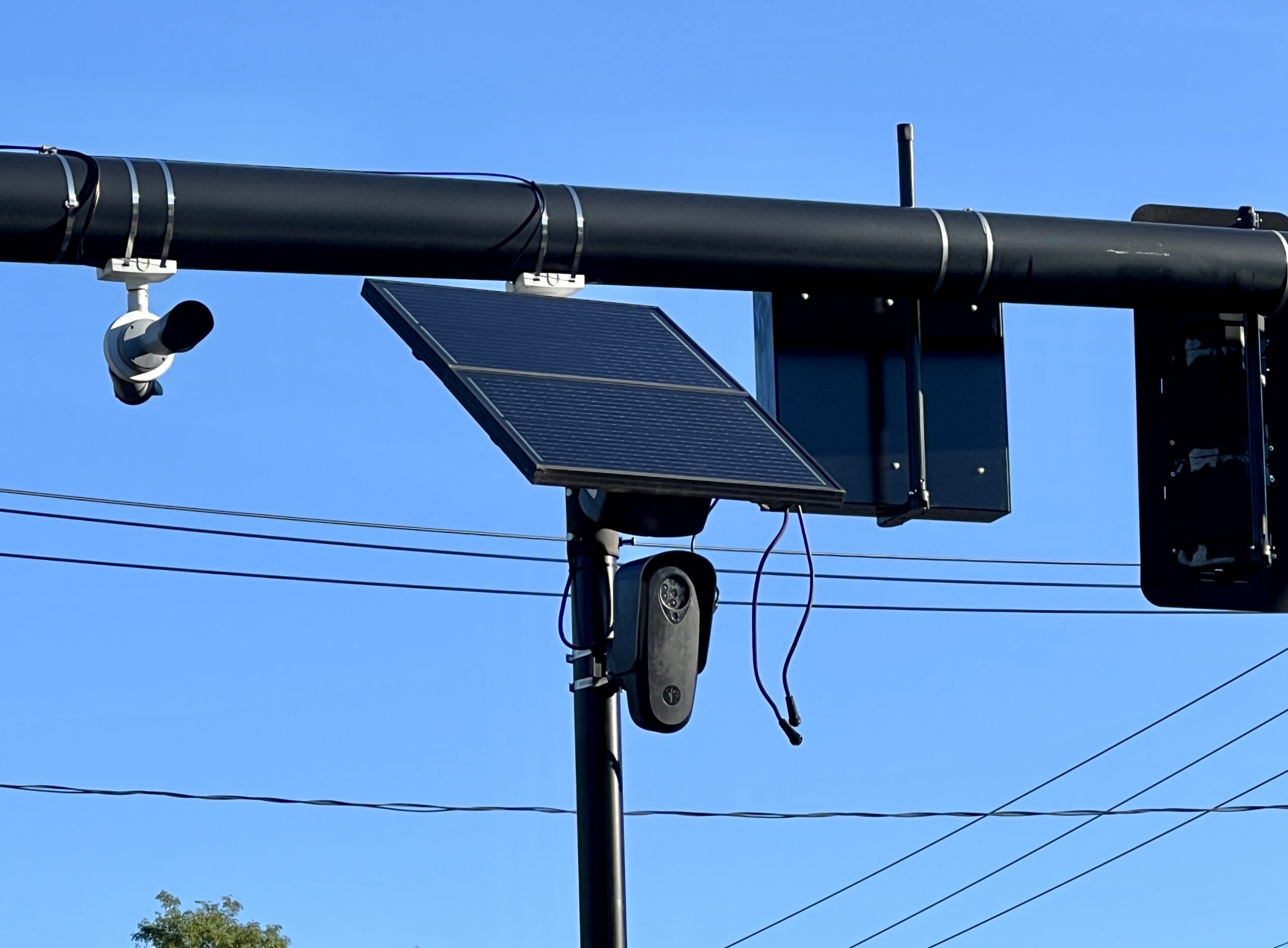
Flock camera on a fixed pole in West Hartford. Photo credit: Ronni Newton





Members of Deflock West Hartford are requesting several actions by the town, including pausing use of existing Flock Safety cameras.
Submitted by Scott Gamester on behalf of Deflock West Hartford
“Deflock West Hartford” is a grassroots group of West Hartford residents concerned about the use of AI-surveillance technology in the town. We are teachers, attorneys, students, engineers, data scientists, social workers, volunteers, activists, retirees, and open to all. We are non-partisan, solution-focused, and committed to a robust democratic process.
Many West Hartford residents are only recently learning about the town’s 34 surveillance cameras called Automated License Plate Readers (also called ALPRs, LPRs, or Flock cameras for the surveillance industry’s dominant vendor).
There is no state-mandated approval process for ALPRs unlike the strict approval process for red light cameras and speed cameras. So when Flock ALPRs were introduced in West Hartford in 2022, it seemingly went unnoticed. After careful review, we did not find record or evidence of any public input prior to the installation of ALPRs in West Hartford.
Our first concern about West Hartford’s ALPRs is the lack of public input. We believe that town residents should have notice and an opportunity to provide input on consideration of any AI-surveillance technology.
Our second concern with ALPRs generally is the way data is collected and shared. While speed and red light cameras only photograph vehicles for an infraction (speeding or running a red light), ALPRs record and track every vehicle that comes into view.
Each image is time-stamped with location and captures make and model, bumper stickers, scratches and dents, along with license plate information. The network of cameras tracks where your vehicle travels over time. This is known as a “heat map.”
Our data is currently shared with adjoining states. While we may (and do) trust our local police, that trust may not extend to other law enforcement agencies with data access or to private ALPR companies that control data on millions of Americans.
The Institute for Justice has cataloged over 200 incidents of ALPR abuse including stalking exes and love interests, wrongful stops and detentions and other types of misconduct.
Unauthorized searches have targeted protesters, immigrants, and those seeking gender affirming care or reproductive healthcare.
Our third concern has to do with trust in the ALPR vendors themselves. Flock Safety, the largest ALPR vendor, is a privately held company with a checkered history.
A representative from Flock Safety participated in the Aug. 4 Public Safety Committee meeting and assured the Town Council that “Flock Safety does not sell the data” and that “The town owns the data.”
Flock Safety’s history of misrepresentation to customers led the American Civil Liberties Union (ACLU) to write a commentary entitled: “Flock Safety Credibility Lost as it Repeatedly Lies to City Councils, Police Departments and Public.” Recently, Racine Co., WI officials learned that Flock has been selling their data through the company’s “Traffic Analytics” product marketed to other government and private customers. As a result, more than a dozen Wisconsin cities disabled their cameras.
Governor Lamont and separately two state senators have called for a voluntary moratorium on new ALPRs out of concern that CT’s new ALPR law (to take effect Oct. 1) is inadequate to protect privacy and data. Florida and Texas have proposed bans and a bipartisan group of US Congress members have introduced a Flock-Off Act.
Opposition to ALPRs broadly is widespread and bi-partisan and is not focused on just one company – Flock Safety. AI surveillance technology has clearly gotten ahead of public policy and the public’s understanding or acceptance.
We are advocating for the following actions:
- Adoption of an ordinance in West Hartford outlining a clear process for consideration of any AI-surveillance technology (ALPRs, drones, audio detection, Bluetooth sensors, biometric devices, etc.) This must include public input. East Hartford has an ordinance that may serve as a model.
- A pause on use of existing Flock Safety cameras or turning off the sharing feature until there is a forum for public input.
- West Hartford to respond to multiple Freedom of Information (FOI) requests for information related to the fixed Flock Safety ALPRs operating in West Hartford since 2022. Our concerns are focused on out-of-state entities searching or using West Hartford data and for what purposes.
With strong town leadership and a trusted police department, we think West Hartford is well-positioned to take a lead with respect to rapidly changing AI surveillance technology.
We-Ha.com will accept Op-Ed submissions from members of the community. We reserve the right to edit all submitted content.
Like what you see here? Click here to subscribe to We-Ha’s newsletter so you’ll always be in the know about what’s happening in West Hartford! Click the blue button below to become a supporter of We-Ha.com and our efforts to continue producing quality journalism.



Great piece: thank you for highlighting this. We have to ask whether solving crimes faster is worth giving up our Fourth Amendment rights. Warrantless, dragnet location tracking turns the presumption of innocence on its head. Assuming that Flock, a private vendor, won’t misuse or sell our data is naive, especially when federal agencies like ICE can easily access these networks through third-party sharing agreements.
When the town installed these in 2022 (without public input!) the tech and political landscape was very different. Today, pairing mass data collection with AI tools under a federal administration willing to push constitutional boundaries creates unprecedented risks. Handing our movement data and images of our plates to a private company with a questionable record was a mistake. it’s time for the town to step back, re-evaluate, and put our privacy and rights first.
Such an important article and I agree we need an ordinance, public forum, and response to FOI requests so we know how this surveillance data is being used ( ie, potentially misused!)
It’s not a matter of IF the ALPR information gets shared, but WHEN. It will, regardless of any contractual agreements with the companies. Indeed, a Texas sherrif’s office got hold of Washington and Illinois Flock data (in 2025) to prosecute a woman who had gone out of state for an abortion. Granted, ALPRs might help mitigate some crimes (like car thefts), but they will also aid and abet authoritarian government behavior.
I was on board with the speed and red light tracking, but I am absolutely NOT on board with ALPR cameras everywhere else. I was shocked to realize we had them in our town. It just isn’t worth it.
I completely agree with the facts and opinions stated in this op ed piece.
As many agree, this is something that we knew nothing about and there should be input by town reseidents.
Flock is evil.
And the WH PD and town council have made all residents into human traffickers.
Shame.
And flock doesn’t just track cars. It follows Bluetooth signals as well. So even walking down the street big brother knows exactly where you are at all times.
There is a Flock off forum Sat Sep 26 , 1-3 pm. Unitarian Society of Hartford, 50 Bloomfield Ave
Come out to get the rundown on CT’s Fight Against Flock Surveillance, ALPs and Big Tech companies in our communities.
How has FOIA data been instrumental in demonstrating what these devices are used for in
CT? What role do fusion centers and joint task force partnerships play in sharing our data with federal agents? What are local people doing across CT to get Flock and other surveillance companies out of their towns?
deflock.org
CTCivilLibertiesDefense.org/SOS
FlockOff.io