
West Hartford School Board Weighs Technology Use As New School Year Begins

Audio By Carbonatix
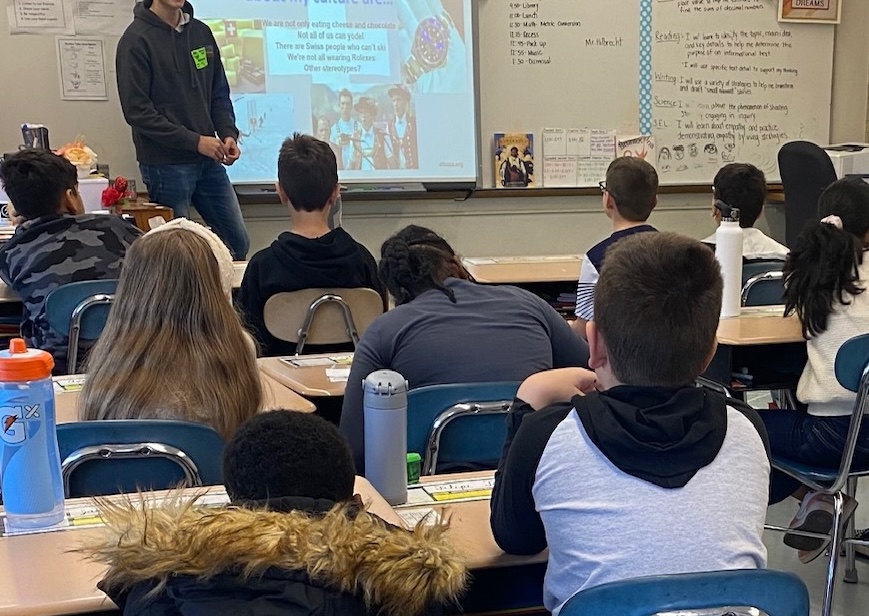
AFS exchange students visit Webster Hill Elementary School. Courtesy photo (we-ha.com file photo)





West Hartford Public Schools began the 2026-27 school year with slightly lower enrollment, new investments in special education and school facilities, and a renewed focus by the Board of Education on how technology should be used in classrooms.
By Mia Jaworski
One of the most closely watched discussions at Tuesday night’s West Hartford Board of Education’s opening-of-school meeting was a draft position statement on the “purposeful integration” of educational technology.
Board members agreed that technology is an important part of modern education but differed on how specifically the board should address screen use and other digital tools.
The technology debate
“Technology is not learning within itself. … Technology is a tool. … We want to prevent the over-reliance on the tools,” Superintendent Paul Vicinus said.

Superintendent of Schools Paul Vicinus in his office at West Hartford Town Hall. Photo credit: Ronni Newton (we-ha.com file photo)
The draft statement says the rapid growth of personal devices, social media, and artificial intelligence has outpaced the development of shared practices for their healthy use in schools.
The statement warns that excessive or developmentally inappropriate technology use could displace sustained attention, face-to-face interaction, collaboration, physical activity, play, creativity, reflection, and engagement with peers and adults.
Board member Miriam Bleich asked for a clearer position, noting that school districts around the country are adopting policies governing technology use from preschool through high school.
Board member Jason Gagnon advocated limiting screen time when appropriate, while Board member Jonathan Weiner said the pace of technological change makes detailed policy difficult.
“Things are moving so fast it is difficult for us to legislate at a policy level,” Weiner said, adding that the Board can establish an expectation of “balance and purposeful use.”
Board member Jennifer Herz said the board’s role should be to provide direction and overall guidance rather than prescribe specific classroom practices.
The Board expects technology use to vary by age, with different approaches for students in kindergarten through second grade and students in high school. Administrators and educators will help determine how those principles are applied in classrooms.
“Better or worse, it is a start,” Board member Ethan Goldman said.
The district’s instructional leadership team began examining the issue over the summer, with the goal of distinguishing technology that enhances learning from technology that creates distraction or unnecessary screen exposure.
While no formal policy is in place, the Board said it intends to remain proactive and revise its position statement as technology and research evolve.
In an interview with We-Ha.com prior to the start of the 2026-2027 school year, Vicinus said, “We will do a close examination of the amount of screen time students have, with the overall goal of reduction.” He said the Board of Education would be reviewing a three-phase plan looking at technology use at the beginning of the school year, suggested changes to make by the spring to ensure the “purposeful integration of technology,” and then an outlined response for changes to make for the next school year.
Enrollment falls, class sizes remain a concern
The district reported 8,560 students in grades K-12 on the first day of school Aug. 26, down 95 students from the previous year and 96 below projections.
Elementary enrollment fell by 37 students to 3,875.
The average elementary class size is 19.1 students, down from 19.4 last year. The district said all elementary sections remain within its class-size guidelines.
Class size nevertheless emerged as a concern during public comment.
West Hartford resident Jacob Campbell spoke about his three children’s experience at Charter Oak International Academy, a school which reports the highest class sizes. He said larger class sizes can make it more difficult for students to receive individualized attention.
Campbell said his family specifically chose Charter Oak because of its diverse student population rather than sending their children to their neighborhood school, Braeburn.
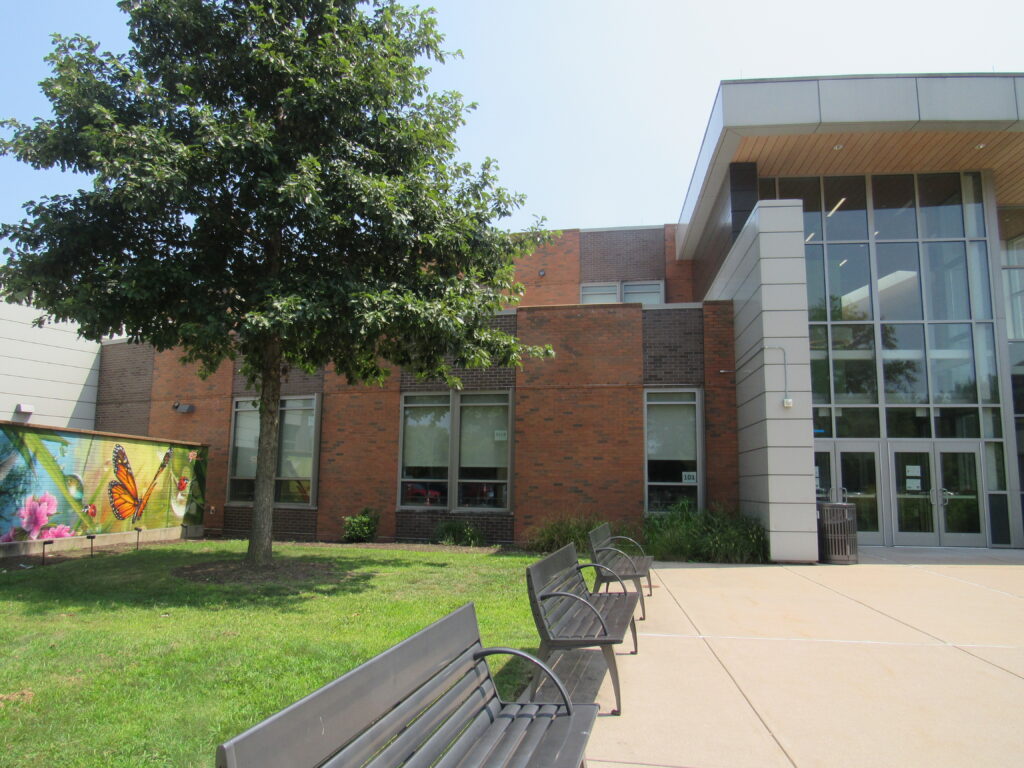
Completed mural at Charter Oak International Academy, celebrating community, nature, and student creativity. Photo credit: Mia Jaworski (we-ha.com file photo)
“It’s one of the things we love most about our school,” Campbell said of the diversity.
Middle-school enrollment increased by 23 students to 2,026.
High-school enrollment declined more significantly. Conard has 1,290 students and Hall has 1,311, with additional students enrolled in the Reach and Strive programs. Total high-school enrollment is 2,659, compared with 2,740 last year.
The district said enrollment can change during September and plans to present an official Oct. 1 enrollment and class-size analysis to the Board of Education in November.
Special education needs continue to grow
Special education remains another major area of investment as the district starts the year with 1,838 students with individualized education programs and 1,042 students with Section 504 plans.
In the report presented Tuesday, the district said it continues to see an increase in students entering the schools with special education needs, including students requiring highly specialized programming.
West Hartford received the full amount of a state High Quality Special Education Grant. The funding will support an expansion of elementary push-in and co-teaching services, including two additional full-time special education teachers and a Board Certified Behavior Analyst.
The district said the goal is to help students transfer skills learned in specialized settings into general education classrooms and reduce achievement gaps for students with disabilities.
Two specialized programs also received new names: Aspire, formerly known as Intensive Academic, and R.I.S.E., formerly known as Intensive Behavior.
The district reported that it received the state’s highest special education determination, “Meets Requirements,” based on 2023-24 data. It also reported no areas of racial or ethnic disproportionality in special education for the most recent school year.
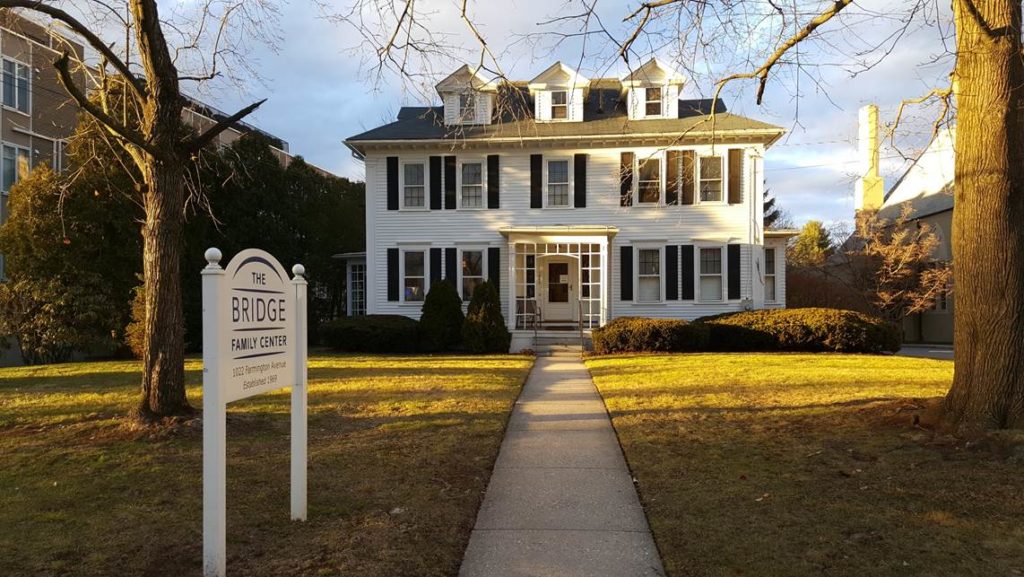
The Bridge Family Center. Courtesy photo.
Mental health services are expanding as well. The Bridge Family Center will open a high school mental health clinic serving students at both Conard and Hall, following an existing middle-school partnership. A state mental health grant will also support a clinician serving Bristow and King Philip middle schools, with an emphasis on reducing absenteeism and increasing student engagement.
Schools receive summer upgrades
-
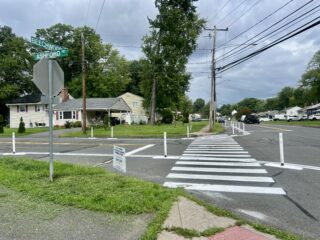
- As part of the Vision Zero initiative, curb extensions have been added at intersections near Conard High School, including at Beechwood and Ashford roads. Photo credit: Ronni Newton
-
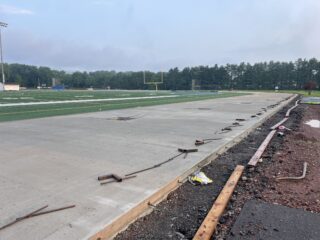
- Progress on Hall High School track as of Aug. 13. Courtesy of Brooke Kokus
-
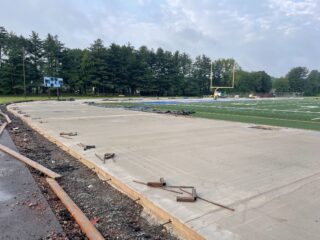
- Progress on Hall High School track as of Aug. 13. Courtesy of Brooke Kokus
-
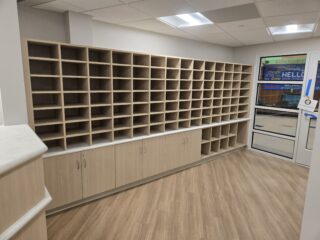
- New Wolcott Elementary School main office. Courtesy photo
-
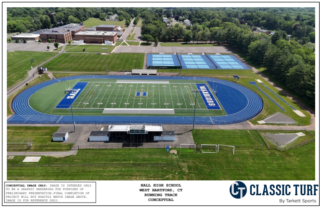
- Rendering of new Hall High Schol track. Courtesy image
-
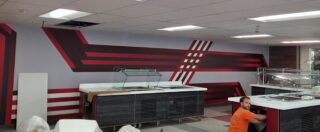
- Conard High School’s servery has been renovated. Courtesy photo
-

- Conard High School’s servery has been renovated. Courtesy photo
-
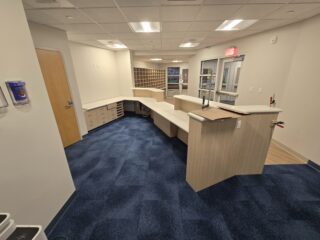
- New Wolcott Elementary School main office. Courtesy photo
Students returned to schools following a series of facility improvements across the district, highlighted during Tuesday’s Board meeting.
Aiken Elementary received repaving of its main driveway, bus drop-off area, and additional parking areas. Conard’s cafeteria and servery were renovated, while its main gym floor was refinished.
Hall High received a new outdoor running track and athletic-field irrigation system, upgraded auditorium lighting, classroom flooring replacements, and drainage improvements near the main entrance designed to prevent winter icing.
Wolcott Elementary completed a new main office addition and site reconfiguration. Other schools received flooring, classroom, library, modular-building, and hot-water-system improvements.
Districtwide, schools were thoroughly cleaned, playground mulch was installed and life-safety and emergency systems were inspected and repaired.
Transportation and staffing
The district expects to transport about 5,175 students on 96 buses across 230 runs this school year. Buses are equipped with cameras, GPS tracking, and a child-check system requiring drivers to walk through buses after routes.
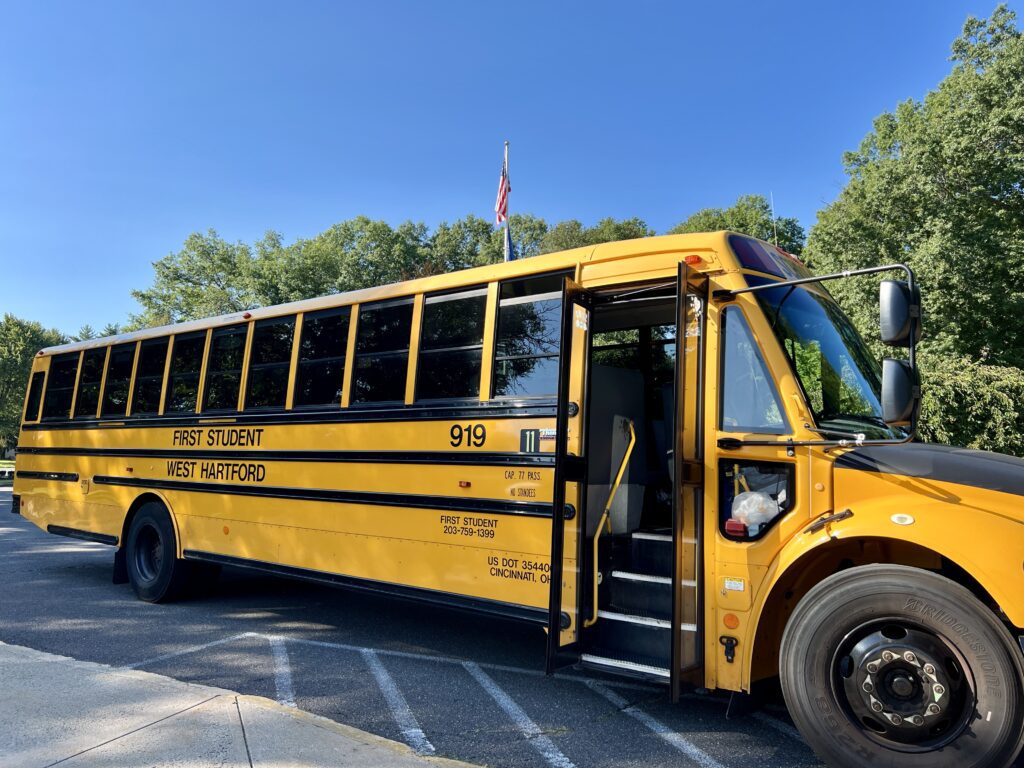
First Student bus. Photo credit: Ronni Newton (we-ha.com file photo)
The district welcomed 30 new contracted staff members and nine interim staff members, including six new administrators of which three are new principals. The district reported a turnover rate of about 4%, down from 6% the previous two years.
About 2,588 people applied for staff positions this year, an increase of more than 500 applicants compared with two years ago, according to the district.
Technology investments extend beyond the classroom
The district secured $226,757 in federal E-Rate funding to help replace network switches and routers, along with another $13,800 toward internet service costs.
Two-factor authentication is being rolled out to all staff Google accounts by Oct. 1 to strengthen cybersecurity.

Two-factor authentication.
Another technology upgrade converting older analog lines used by elevator and fire alarm systems to digital is expected to save approximately $200,000 over five years, according to the district.
The district’s broader goals for the year include improving achievement and reducing disparities, supporting students’ academic and emotional well-being, creating safe and inclusive schools, and recruiting and retaining high-quality staff.
About 70 people attended the Board of Education meeting, with a long line of residents waiting to speak during public comment.
While some commented on technology and class size, a majority of comments were about Board Vice Chair LaToya Fernandez Yagaloff – some calling for her to resign her position and others supporting her. Most of those comments referenced a public post she made on her personal Facebook page on July 3 this year regarding America’s 250th birthday. In that post Fernandez, who is Black, said that slaves were not freed when the country declared its independence and said to her that was “like celebrating a nightmare that built the country that created the conditions for white privilege that allow you to turn a blind eye and be annoyed that I even mentioned it.” The post continued, asking the question: “Would you celebrate the historic beginning of the Holocaust or other Genocides and atrocities?!”
The meeting also introduced and included newly-appointed student representatives Jacob Jackson of Conard High School and Savannah Singh of Hall High School.
The Board’s next scheduled meetings are Sept. 15, Oct. 6 and Oct. 20, all at 7 p.m. in Room 314 at West Hartford Town Hall.
Click here watch the full Board of Education meeting.
Like what you see here? Click here to subscribe to We-Ha’s newsletter so you’ll always be in the know about what’s happening in West Hartford! Click the blue button below to become a supporter of We-Ha.com and our efforts to continue producing quality journalism.