West Hartford Mayor: ‘I’m So Proud of Our Town’

Audio By Carbonatix
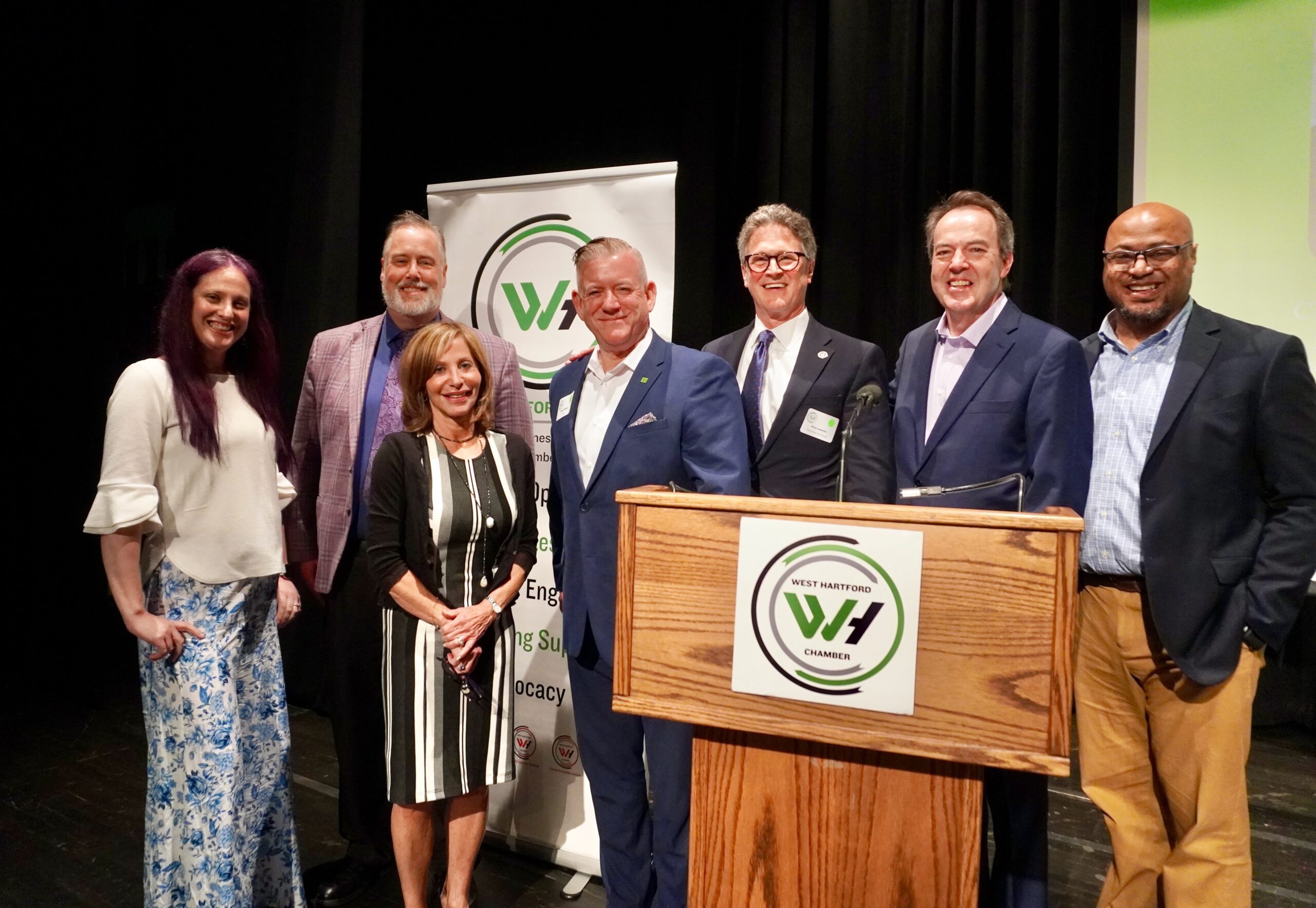
West Hartford State of the Town. April 15, 2026. Photo credit: Ronni Newton





West Hartford’s 2026 State of the Town was held on April 15, 2026, at the Mandell JCC.
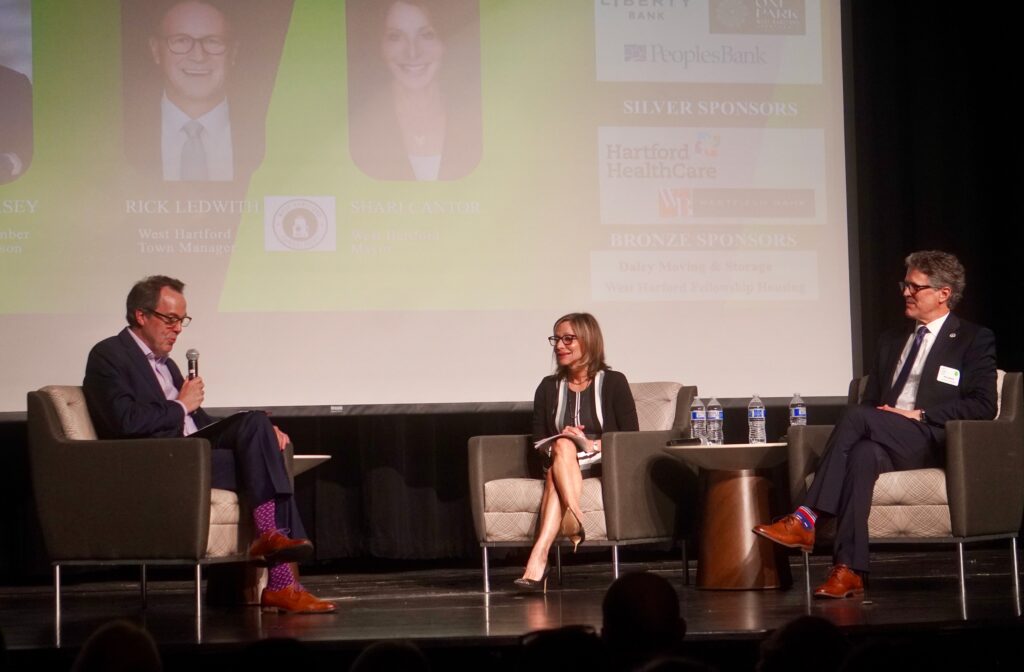
Chuck Coursey (left) moderated a discussion with Mayor Shari Cantor and Town Manager Rick Ledwith. West Hartford State of the Town. April 15, 2026. Photo credit: Ronni Newton
By Ronni Newton
West Hartford’s 2026 State of the Town address was held in a completely new format, and rather than a speech by the mayor it was a moderated conversation that also included the town manager.
Roughly 125 people – members of the business and nonprofit community, town leaders, and residents – attended the annual event, sponsored by the Chamber of Commerce. “We’re excited about this approach because it reflects something that defines West Hartford: collaboration,” Chamber President and CEO Chris Conway said, noting that the spirit of collaboration is also at the core of the Chamber’s partnership with the town.
Chamber First Vice Chair Chuck Coursey served as moderator, posing questions to Mayor Shari Cantor and Town Manager Rick Ledwith about critical topics such as housing, the “cost squeeze,” education, and national uncertainty.
Cantor became mayor in the spring of 2016, and this is her 10th State of the Town. She said rather than giving a speech that’s a one-way regurgitation of all of the work that is done, she welcomed the new format as a great opportunity to “really talk about, in this sort of conversational way, why we do certain things, and what’s been happening, and where we’re going. … Things are complicated right now, and we thought this would be a really good time to have a conversation and connect.”
Also, Cantor noted that Ledwith “is the right-hand person to everything” since under West Hartford’s charter the Town Council – of which she is president – technically serves as a policy board that sets the vision and policy direction. “I don’t think I’m a weak mayor,” said Cantor with a laugh. While she’s famous for her perfectly executed cartwheels, running, and dedication to fitness, “but the form of government is weak,” she said. It’s Ledwith is the “cog in the wheel” who actually administers the work of running all of the town departments in this top ranked community.
Last May, U.S. News & World Report ranked West Hartford the No.1 in the state and No.19 nationally on its list of “Best Places to Live,” both high schools are ranked in the top 3% nationally and Conard was just named the top high school in the state. And while after eight straight years ranked as the No. 1 town in the state on Niche.com’s “Best Places to Live” West Hartford is now No. 2 – the top town this year is Old Greenwich, which is a section of Greenwich and not even an actual town, and has a population of less than 7,000. “So I think we still rank No. 1,” Cantor said.
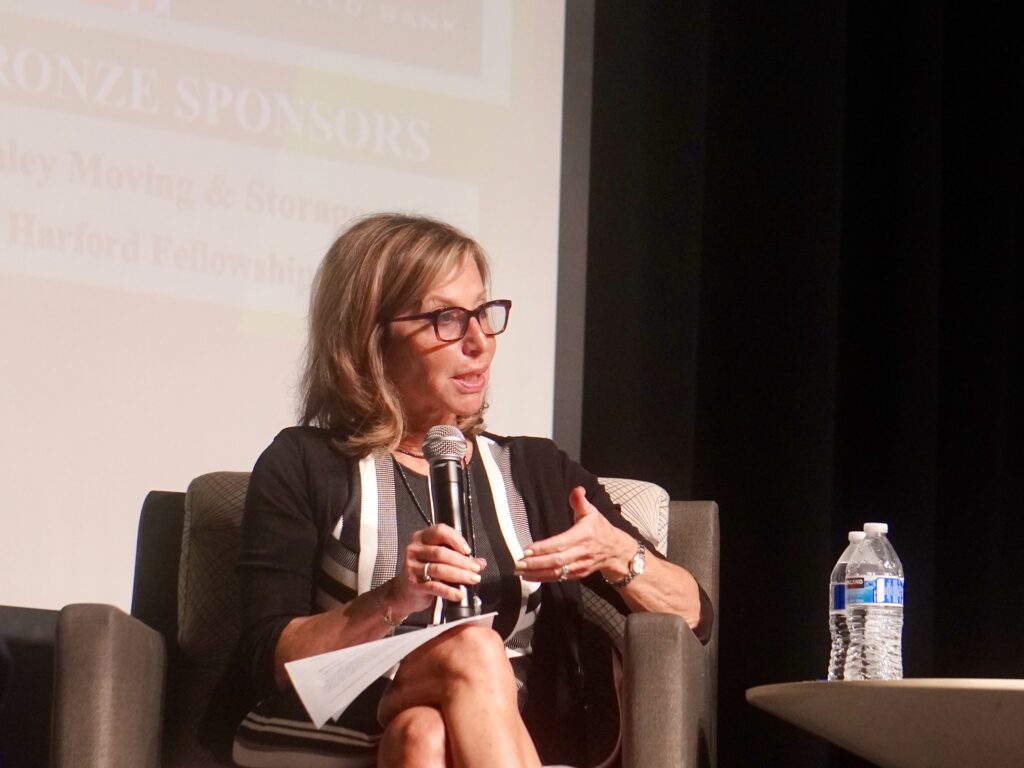
Mayor Shari Cantor. West Hartford State of the Town. April 15, 2026. Photo credit: Ronni Newton
“Rankings are a reflection of the past, but what we do now, and the investments we make now, and the decisions we make … actually determine whether we’re still standing in this position five and 10 years from now,” Cantor said, noting that the FY27 budget is due to be adopted Monday night.
Cantor said while there are wonderful things happening, there are several key challenges that frame the context of town decisions – housing among them. “We are in the hottest, tightest housing market in the country. … So there’s not a lot of inventory, prices go up. That’s great for a seller, not so good necessarily for a buyer, especially a first-time buyer.
Other challenges include the “cost squeeze,” Cantor said. “Inflation is ticking up every single day,” she said, driven by the cost of energy and insurance as well as other costs. State support – particularly the flat-funding of education – is another issue that greatly impacts the town’s budget. It’s been years since the state has increased the support level, she noted. And national uncertainty – “tariffs, the war in Iran, federal spending” – are all forces outside of the town’s control that impact the budget. The Community Development Block Grant, which for more than 30 years has been an important revenue source for the town, is potentially on the federal chopping block, she said.
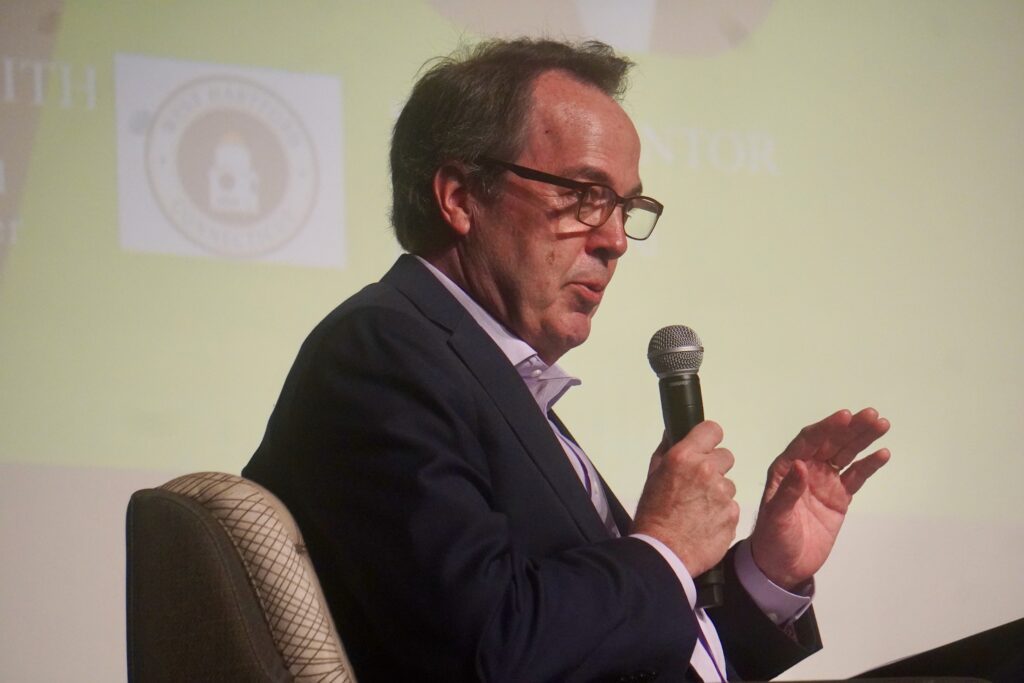
Chuck Coursey. West Hartford State of the Town. April 15, 2026. Photo credit: Ronni Newton
Coursey asked Ledwith to provide an overview of schools and public safety – which he said are “two of the most critical pillars of any community.”
“I think public safety is really the foundation,” said Ledwith. “Without public safety, without us feeling safe in our homes, safe in our streets, safe in our businesses, we aren’t the town that we are.” Ledwith, who has been town manager for four years, said he speaks with the chiefs, the directors – and the mayor –pretty much every day, including holidays. “That’s so important – maintaining a safe community, and we will always do whatever we have to do to ensure that we keep our community safe.”
Ledwith also touched on Vision Zero – which has a stated goal of eliminating all traffic fatalities and serious injuries by 2033. “Although the person to my right [Cantor] will say get it done before 2028,” Ledwith said, the town is working hard to implement safety measures, with 225 done in 2025 and 284 projects planned for 2026.

Town Manager Rick Ledwith. West Hartford State of the Town. April 15, 2026. Photo credit: Ronni Newton
“The speed humps, the raised crosswalks, the curb extensions … and yes, we have a rotary, too … probably the most famous roundabout in the country,” Ledwith said. “But the good news is … I think the old adage of there’s no such thing as bad publicity. I think everybody knows where it is, everybody knows how to safely navigate that roundabout.” Combined with the raised crosswalk in front of King Philip Middle School, the speed on the corridor has been reduced from 42 mph to 29 mph. “So, that’s great. It works.”
Vision Zero is working, and the community has been very much a part of designing plans, Ledwith said, adding that students from the University of Saint Joseph are also working with the town on a Vision Zero project.
And as for education, Ledwith said the town’s schools and their diversity were “one of the reasons why my wife and I moved to town almost 30 years ago. It’s because of our school system, and when you step back and you look at our school district it very much is a reflection of who we are as a community,” he said, noting that the diversity of the community is what makes us special and what people love about West Hartford.
“Nearly a third of our students are on free or reduced lunch, nearly a third of our students have a language that’s not English spoken at home,” Ledwith said, noting that roughly 75 languages are spoken, and 21% of students receive special education services. “And with all that diversity we continue to be a high performing school district, one of the top school districts in the state of Connecticut, and one of the top 3% in the country” – receiving accolades in arts, music, sports.
“So between public safety and education we are doing very, very well. And we’ll continue to build on that as we move forward.”
Coursey also asked about comparisons often made to other “peer communities” in the area, and Ledwith said towns like Glastonbury, Farmington, and Simsbury don’t have have the same degree of diversity in the community or the schools, and also don’t have the same level of municipal services such as a paid professional fire department. “Our fire department responds to 10,000 calls every single year … 30 different calls a day,” he said, something a volunteer department couldn’t handle.
Many nearby communities including Farmington, don’t have solid waste pick-up included in their property tax bill – and that also makes a difference when comparing town budgets.
On an infrastructure level, Ledwith noted that West Hartford has 217 miles of roadway and repaves about 10 miles per year, and is in the midst of a two-year plan to update infrastructure in the Center, funded by American Rescue Plan Act (ARPA) dollars received during the pandemic.
“Our mayor and our Town Council, I think, were so visionary in terms of how they utilized that ARPA money, and this is one of those ways where we didn’t have to tax our residents to make this transformational, generational change to one of our most prized assets,” he said of the project underway in the Center, which has a roughly $10 million budget and which includes widening sidewalks, shortening crossing distances for safety, and otherwise improving accessibility.
With the work last year on LaSalle and this year on Farmington Avenue, however, there are hardships created for businesses. “It’s gonna be a long summer,” Ledwith said. “We know that and we’ll continue to work closely with our businesses, to make sure people keep coming to the Center, keep shopping, and keep making West Hartford Center and Blue Back Square the prized jewel that it is.”
Infrastructure improvements are happening in other parts of town as well, Ledwith added. “We will not leave any part of town untouched,” he said, noting that reconstruction of Park Road and New Park Avenue – both long-discussed projects – is slated to take place in 2026. The emphasis on transit-oriented development will help the New Park area become the “crown jewel of the state,” he said. “And I won’t be doing my job unless I get a railroad station there at some point.”
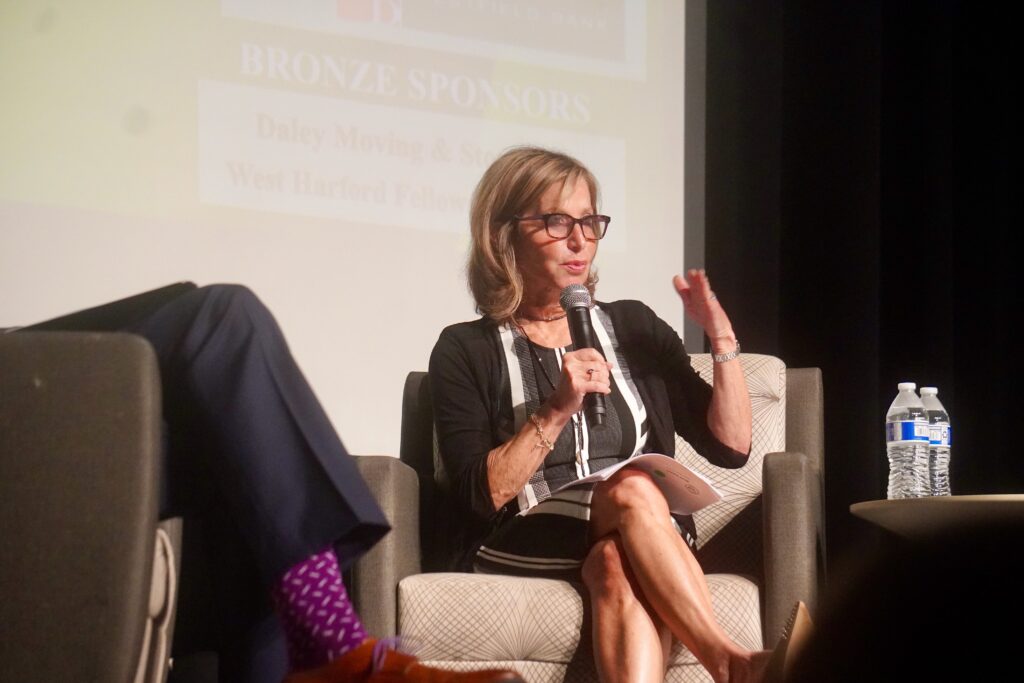
Mayor Shari Cantor. West Hartford State of the Town. April 15, 2026. Photo credit: Ronni Newton
The conversation also included the town’s sustainability efforts, and moving toward West Hartford’s goal of 100% clean energy by 2050. The new solar array on the roof of the Public Works building is one recent example – and because it’s a 20-year agreement where the system is owned by the developer, it didn’t require capital outlay.
“On the waste side, waste is a real crisis in New England, and Connecticut as well, and that’s not going away,” Cantor said. The town is working to divert as much as possible, with the food scrap collection at all schools and offered to residents.
The town budget – set to be adopted the night of April 20 – has been at the forefront of the minds of elected officials and town leaders. “We work on it all year long,” said Ledwith. “This year we had challenges – I’m sure folks have seen as we’re all dealing with our own personal businesses or households – hurting us all. So that’s impacted this year’s number.”
Holding community conversations – a suggestion Cantor had last year – has increased engagement during the budget process, Ledwith said. There are also public hearings, but those are legal requirements with a structured format while the conversations with the town manager, mayor, deputy mayor, superintendent of schools, and board of education leadership allow for questions and answers. “And we learn a lot through that process to help us these last few weeks that we’ve all been working so hard and getting that [budget] number down.” Between Town Council and Board of Education hearings, workshops, and community conversations, Ledwith said there have been 15 meetings – and 50 to 60 hours – focused on delving into the budget in a collaborative manner.

Town Manager Rick Ledwith. West Hartford State of the Town. April 15, 2026. Photo credit: Ronni Newton
“It’ll be lower than what we started at,” Ledwith said of the final budget. “We’ll do our best to manage that number as we move froward as well.” The town is always looking for ways to positively impact the budget, he said, noting that the town maintains its AAA bond rating and a few years ago the issuance of Pension Obligation Bonds led to the annual pension contribution being $16 million lower this year than it was five years ago.
“We are over-reliant on property taxes in the state of Connecticut,” Cantor said, and that’s not the case in most other parts of the country. “We as a town are only allowed one revenue stream … and property taxes are the only place we have to go when our costs increase.” She, Ledwith, and the legislative delegation continue to advocate for more Education Cost Sharing funds from the state since the base level has not been updated since 2013, as well as a share of the 1% hospitality tax – enacted in 2019 – that was intended to go to the municipalities where it was generated but instead has been swept into the state general fund. “Where it originates you have to provide parking, public safety, infrastructure. There’s costs associated with that vibrancy or those restaurants,” she said, and today that 1% would mean $3.3 million in revenue to the town.
Ledwith provided some update on the business climate, mentioning some of the information that was shared at the annual Economic Development Update, also hosted by the Chamber of Commerce, held in late January. While the economy is tough, he said, “when you look at the data, you look at the numbers, things are really good good in West Hartford with office vacancy rates at historic lows of 3.6%, industrial vacancies below 3%, and retail around 4.2%.
“We’re so thrilled with our partners, our businesses who continue to make West Hartford the community that it is,” said Ledwith, noting that 1,000 new businesses were registered in West Hartford in 2025.
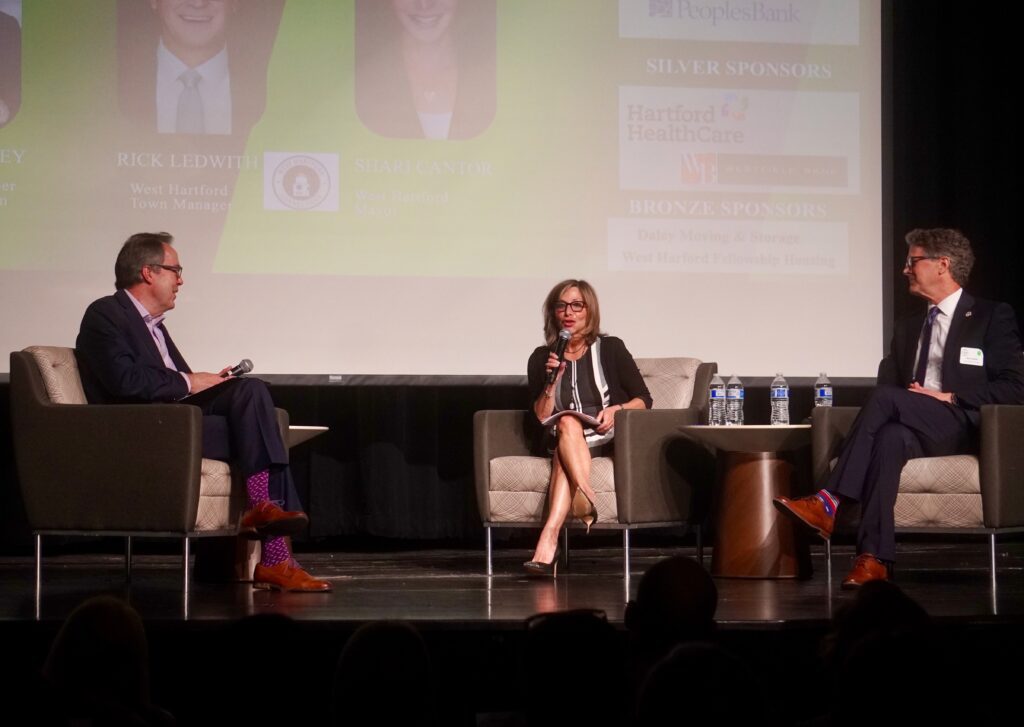
Chuck Coursey (left) moderated a discussion with Mayor Shari Cantor and Town Manager Rick Ledwith. West Hartford State of the Town. April 15, 2026. Photo credit: Ronni Newton
When Coursey asked about the Grand List, Ledwith said the town is “doing very well,” with an increase of $81 million in value this year – “our largest year-over-year increase in a non-revaluation year in over 15 years.” And, he added, “That number is not even touching the tip of the iceberg.”
There is about $500 million in development with the approval of “several transformative projects” in all corners of town, Ledwith said, including the Heritage Park project at the former UConn Campus, the Byline, One. West Hartford, and the Jayden on New Park Avenue. Those projects will really start to impact the Grand List next year as well as the year after.
The good and bad news, however, is that next year is also a revaluation year, and the increased real estate values will be recognized. Ledwith said the town’s assessor said values are up more than 50%, reflecting the value of the West Hartford brand, “and our businesses, with our residents combined, creating that value that’s unlike what we’re seeing in other parts of the state and country. We’re very, very proud of that,” he said.
Ledwith said with the impact of revaluation, he expects the overall Grand List to grow from the current $7.3 billion to more than $10 billion next year, “which will have a great impact on our mill rate.” The value growth, however, will have to be balanced to have as minimal impact on taxpayers as possible, he said.
“It’s both,” said Cantor when asked if rising home prices are good or bad. Having the value of an existing home increase is wonderful, but for people buying homes it’s very difficult, she said.
The town has worked to increase its affordable housing stock, and Cantor touted the use of ARPA funds to create “lasting legacy” with not only the Center infrastructure project but also an affordable housing fund. “We knew we needed to provide some support and incentives to bring developers here to provide deeply affordable – not just necessarily 80% of AMI (area median income) but more a deeper affordability,” Cantor said. The fund has supported projects like The Camelot on Farmington Avenue just outside the Center, which is 100% affordable and provides housing at a level of 30% AMI. Thousands of people applied when those units became available.
“No one did what we did with affordable housing,” Ledwith said about using ARPA to create the affordable housing fund – which was increased to $9 million with some state investment. It’s resulted in well over 150 new affordable housing units – 44 of which opened in 2025, and 74 more will open this year, and the town will exceed the state’s 10% threshold. “That’s not our goal,” Ledwith said. “We don’t live and die by this 10%. Our goal, as the mayor said, is to make our community more affordable for everyone.”
In terms of West Hartford’s financial strength, Ledwith said the town has maintained its AAA rating – the highest possible rating – for 50-plus years. While there are 15 AAA-rated communities in the state, “we don’t look anything like those communities,” many of which are on the Gold Coast. West Hartford is the only “inner ring” suburb that’s AAA-rated, he said.
Coursey asked about comments on social media from people who claim “West Hartford is growing way too fast.” Ledwith said there are currently 64,000 residents, and even adding 3,000 to 4,000 new residents through development won’t get the population to its peak. The growth is not just in population, but also in businesses and mixed-use development, he said.
Cantor said her vision for the future is a safe and even more vibrant community. “I want to see more music. I think we just need more music around, and all kinds of spaces … building on the arts, building on all those things that bring community together to make us a place where people really feel connected,” she said. And while that may be more challenging in a world of AI, she said, it’s even more important.
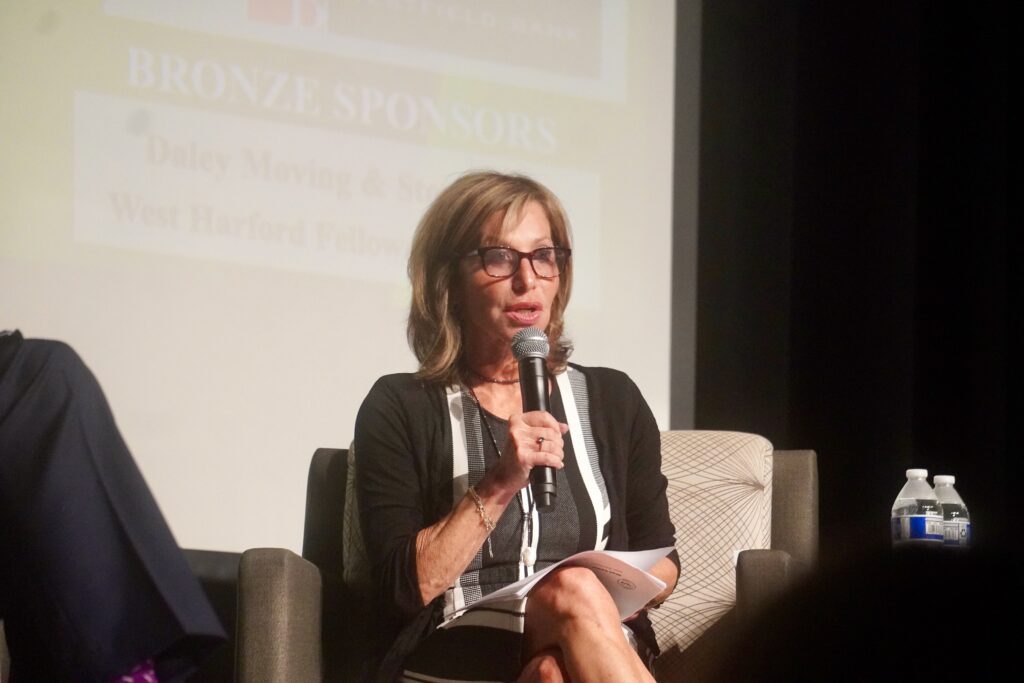
Mayor Shari Cantor. West Hartford State of the Town. April 15, 2026. Photo credit: Ronni Newton
Cantor shared some closing remarks as well.
“I’m just so proud,” said Cantor. She said the high rankings are part of it, and everywhere she goes, people have heard of West Hartford. It’s the people of the town, the business owners, the schools, the dedicated and committed staff that make it so great.
“You push us,” Cantor told the crowd. “You hold us accountable, and I respect that today more than ever. I think we need to hold all people in power accountable, and our elected officials accountable, because that’s the only way that we’re really gonna be assured that they’re doing what’s in our best interest,” she said.
“Life is complex right now,” Cantor said. With “an industrial kind of revolution with AI,” as well as war, tariffs, inflation, and other issues that need to be faced honestly and faced together in the best way possible.
“We’re positioned better now that we have been in decades past,” said Cantor – with strong schools and a public safety model that works well. “We have responsible finances. We haven’t taken shortcuts. We’ve looked at the long-term and said, ‘What is going to benefit our businesses, our town, our residents over the long-term, in the next 20 to 30 years?'”
West Hartford’s civic engagement is essential – with so many people coaching, advocating, helping out when needed, she said.
“We’re never standing still. As I say, as a runner, when you stand still you lose the race. So you need to keep moving forward, and sometimes it’s a little hard to keep that energy up,” said Cantor. But we can’t stop, and we don’t want to slip. “I want to make sure that we are the best place in Connecticut to live,” she said, thanking everyone for coming.
“I appreciate all you do every day – the resiliency, the community, the dedication that you show, and we’re gonna have another great year.”

Chamber of Commerce President and CEO Chris Conway. West Hartford State of the Town. April 15, 2026. Photo credit: Ronni Newton
Attendees at the State of the Town were welcomed by Mandell JCC President and CEO David Jacobs, as well as incoming JCC Board President Meryl Braunstein, representing the host sponsor. Chamber Board Chair Chris Clarke introduced Mark Milligan, vice president and senior relationship manager of TD Bank – the presenting sponsor – and Milligan introduced Coursey, Cantor, and Ledwith.
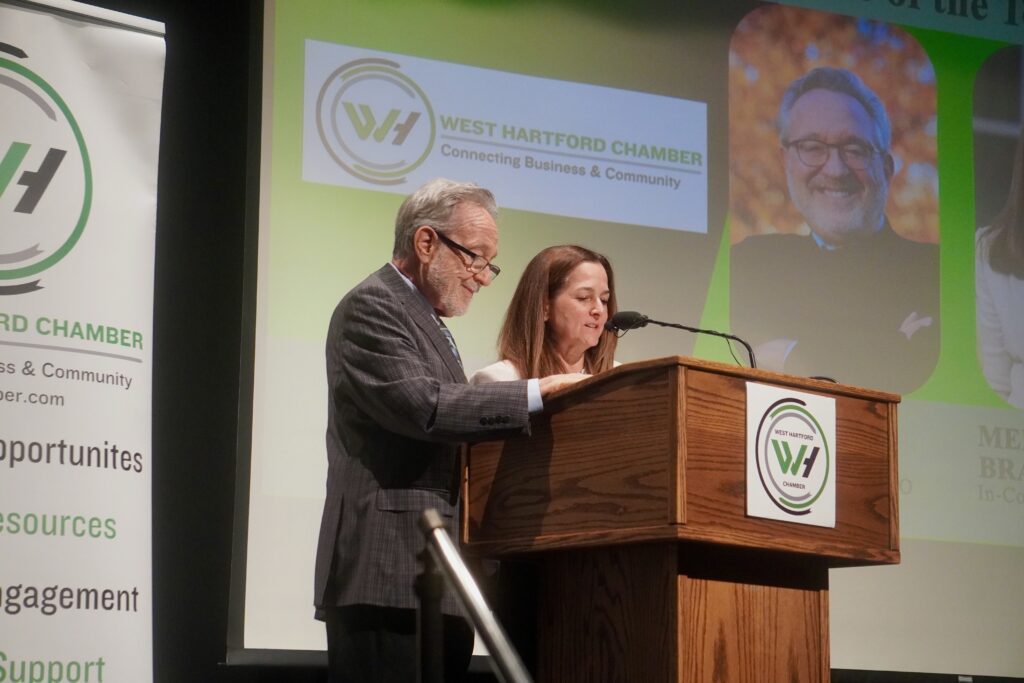
Mandell JCC President and CEO David Jacobs and incoming Board Chair Meryl Braunstein. West Hartford State of the Town. April 15, 2026. Photo credit: Ronni Newton
Many also attended a reception, catered by Le Mazet, that was held in the Chase Family Gallery following the discussion.
The entire State of the Town conversation was streamed live by WHCi, and the recording can be viewed through the YouTube link below.
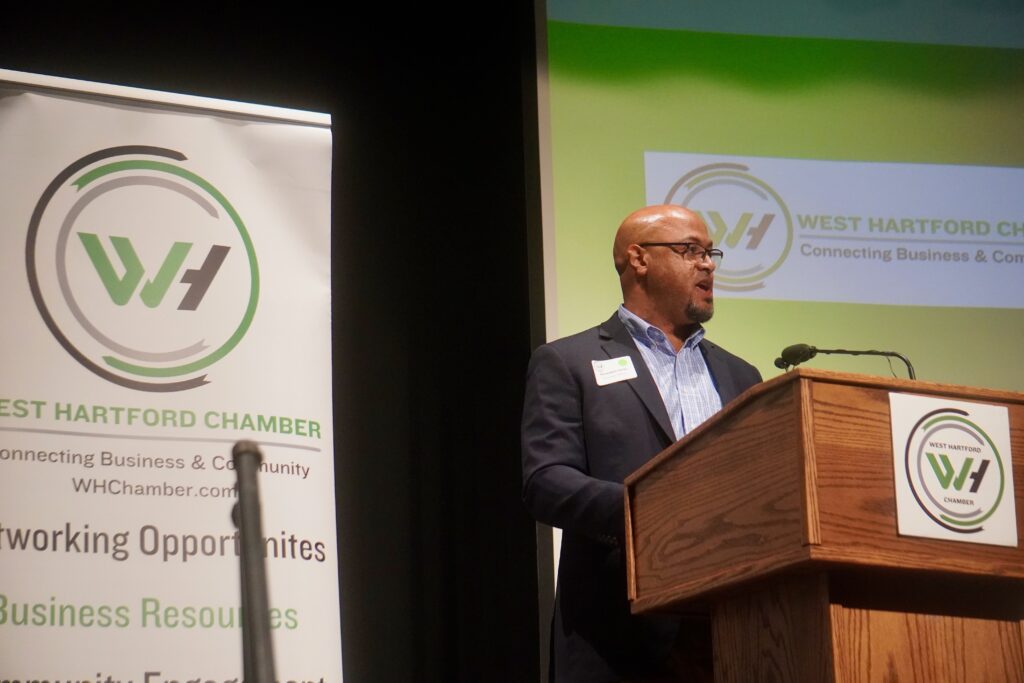
Chamber Board Chair Chris Clarke. West Hartford State of the Town. April 15, 2026. Photo credit: Ronni Newton
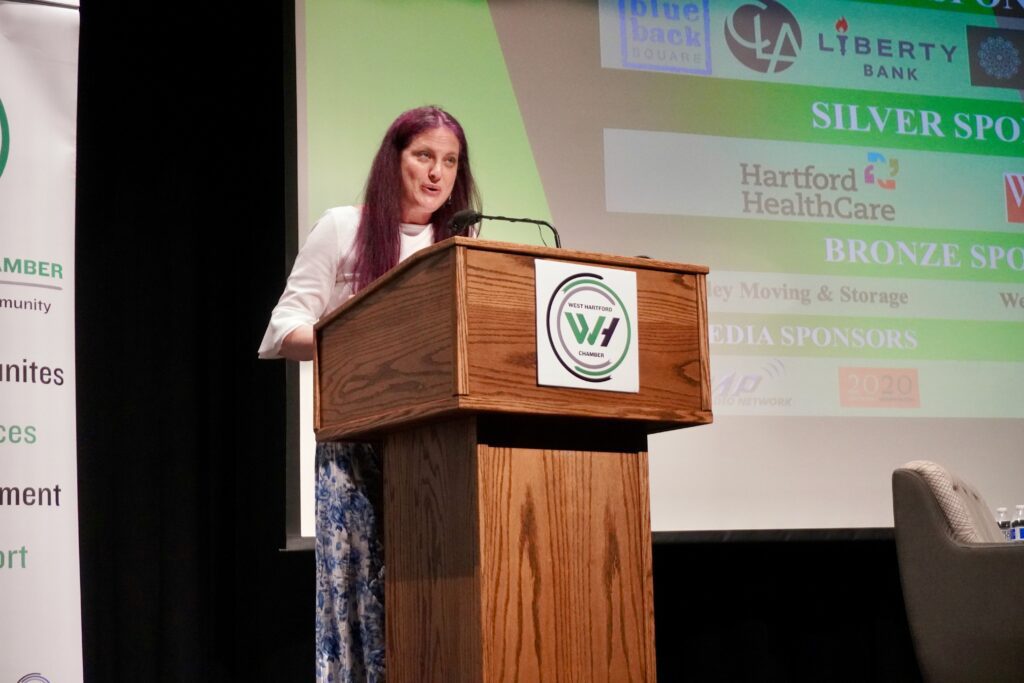
Kate Kobs, Director of Membership and Development for the Chamber of Commerce. West Hartford State of the Town. April 15, 2026. Photo credit: Ronni Newton
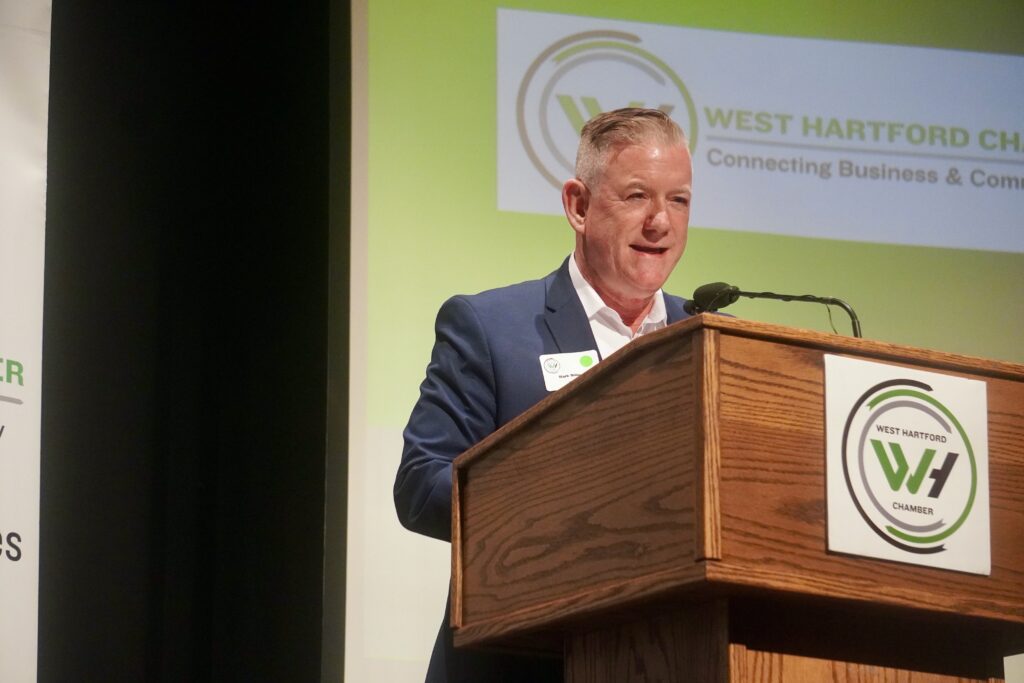
TD Bank Vice President Mark Milligan. West Hartford State of the Town. April 15, 2026. Photo credit: Ronni Newton
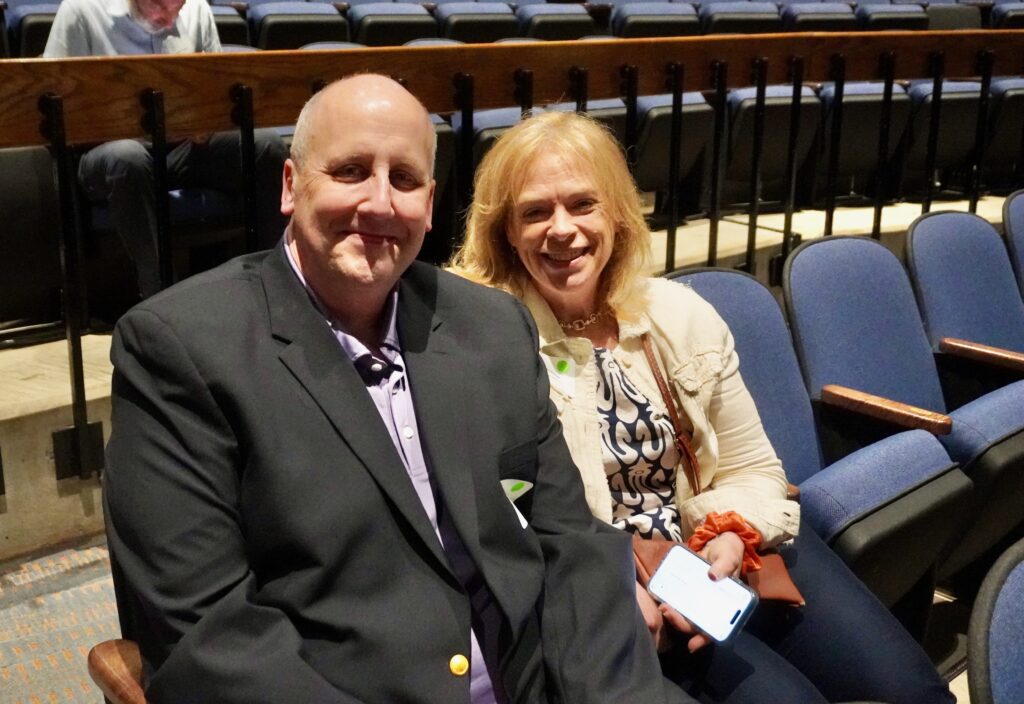
West Hartford State of the Town. April 15, 2026. Photo credit: Ronni Newton
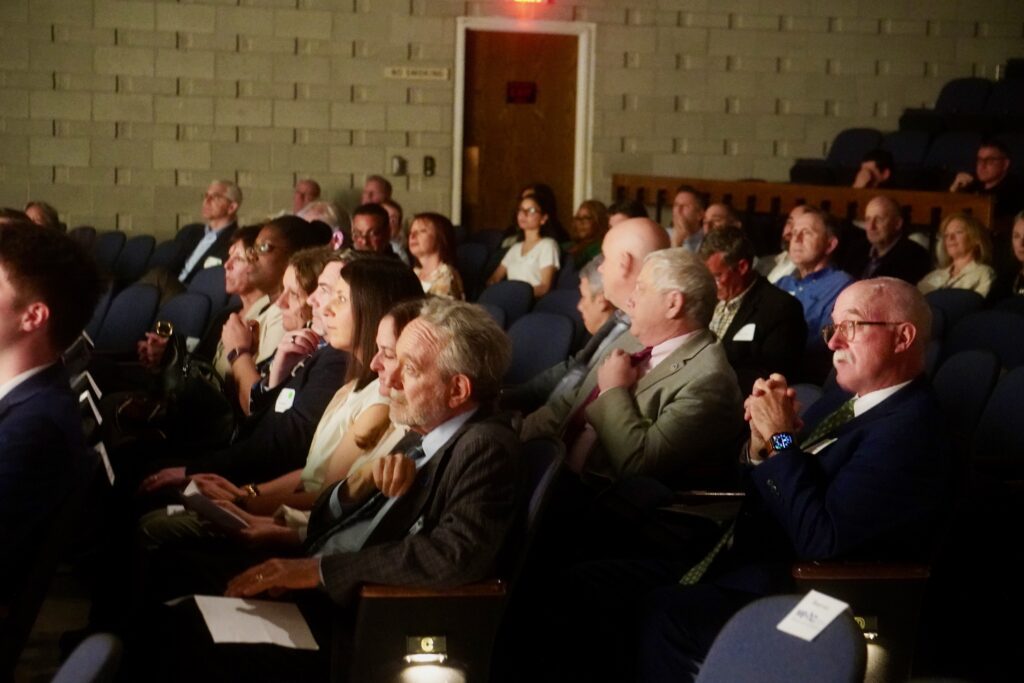
West Hartford State of the Town. April 15, 2026. Photo credit: Ronni Newton
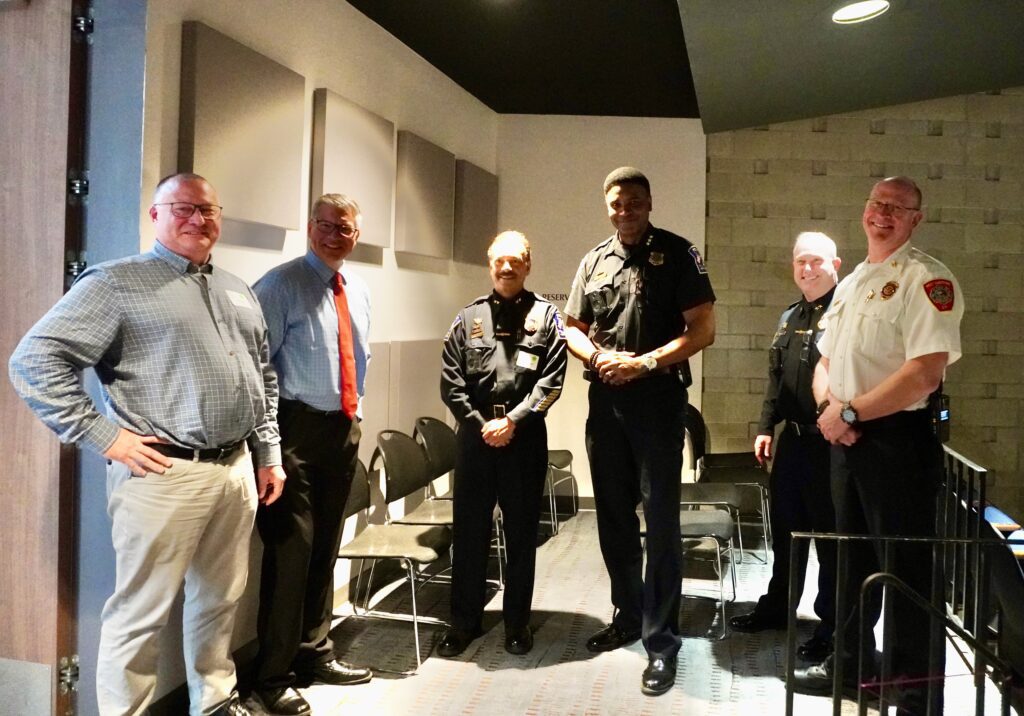
West Hartford State of the Town. April 15, 2026. Photo credit: Ronni Newton

West Hartford State of the Town. April 15, 2026. Photo credit: Ronni Newton

West Hartford State of the Town. April 15, 2026. Photo credit: Ronni Newton

West Hartford State of the Town. April 15, 2026. Photo credit: Ronni Newton

West Hartford State of the Town. April 15, 2026. Photo credit: Ronni Newton
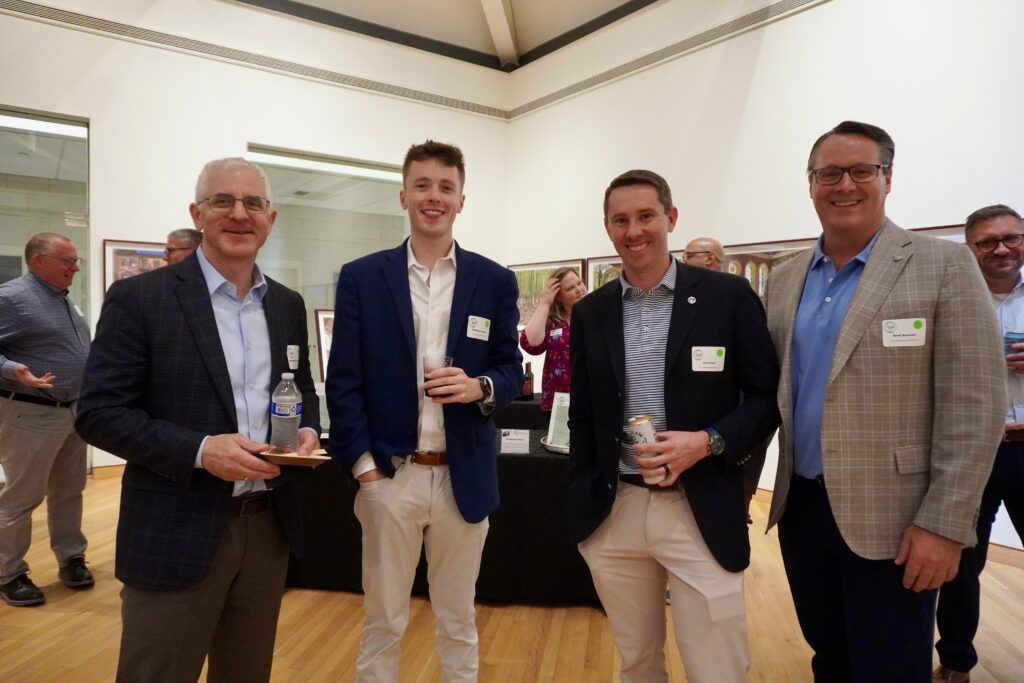
West Hartford State of the Town. April 15, 2026. Photo credit: Ronni Newton
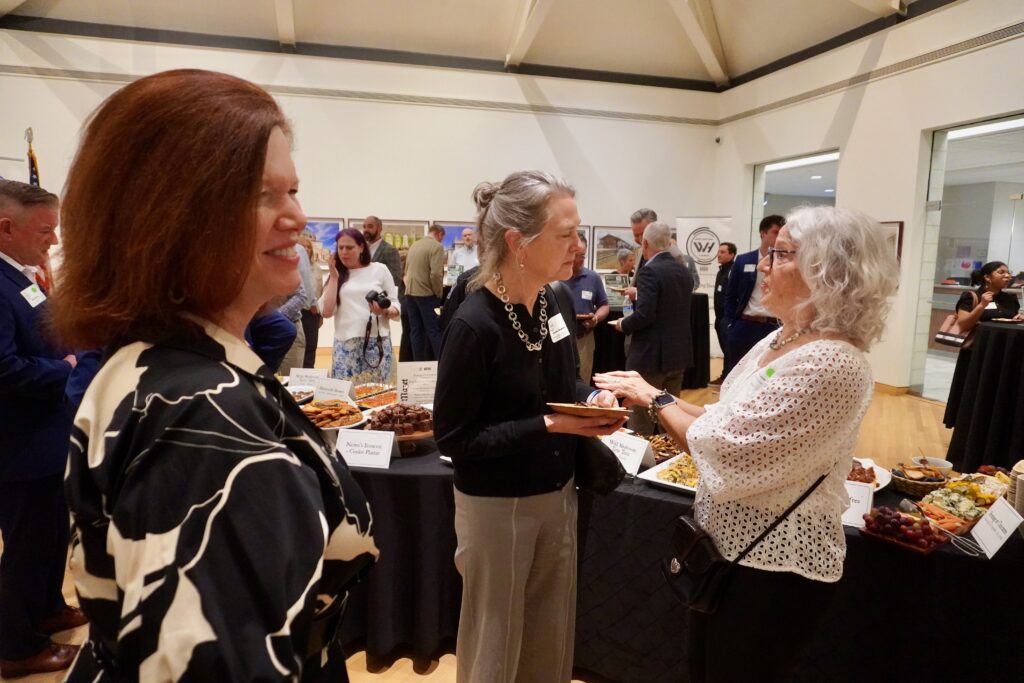
West Hartford State of the Town. April 15, 2026. Photo credit: Ronni Newton
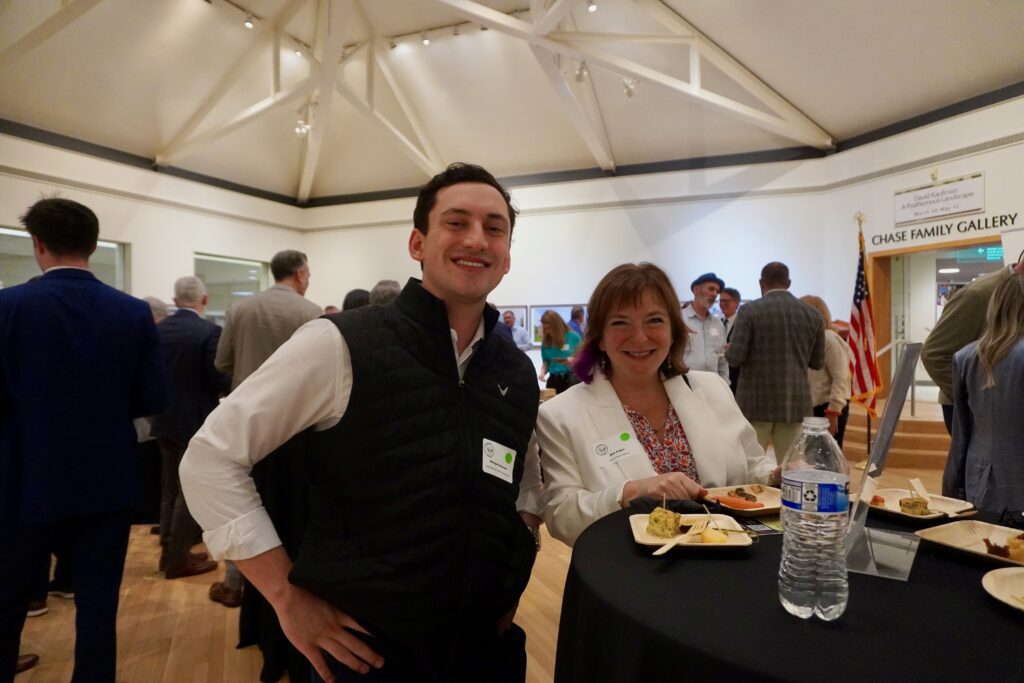
West Hartford State of the Town. April 15, 2026. Photo credit: Ronni Newton

West Hartford State of the Town. April 15, 2026. Photo credit: Ronni Newton
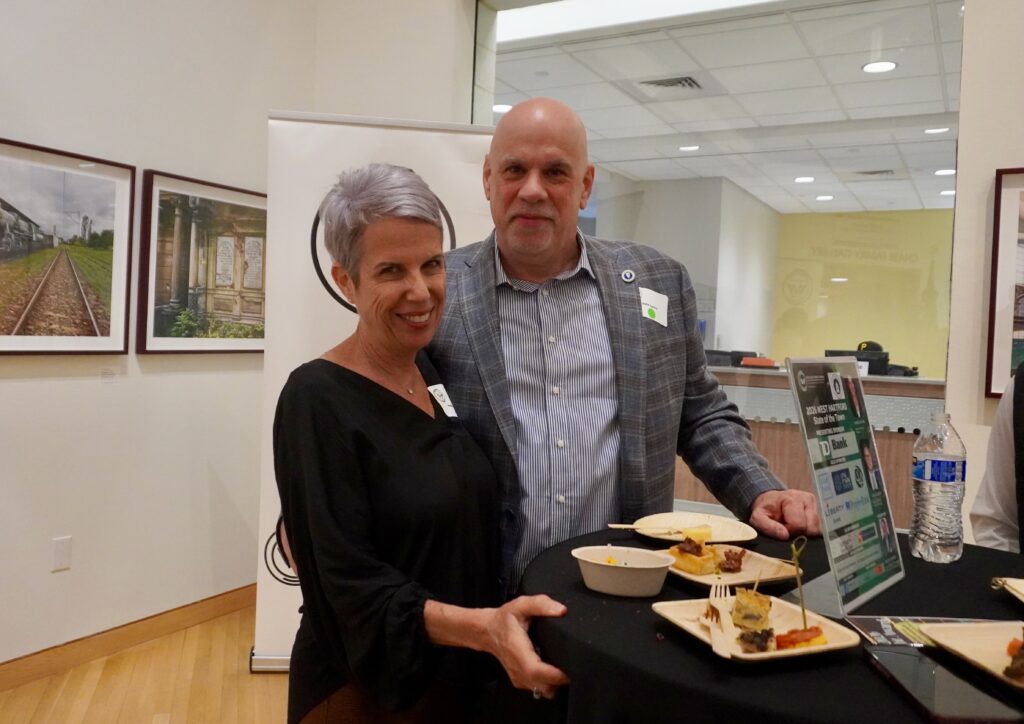
West Hartford State of the Town. April 15, 2026. Photo credit: Ronni Newton
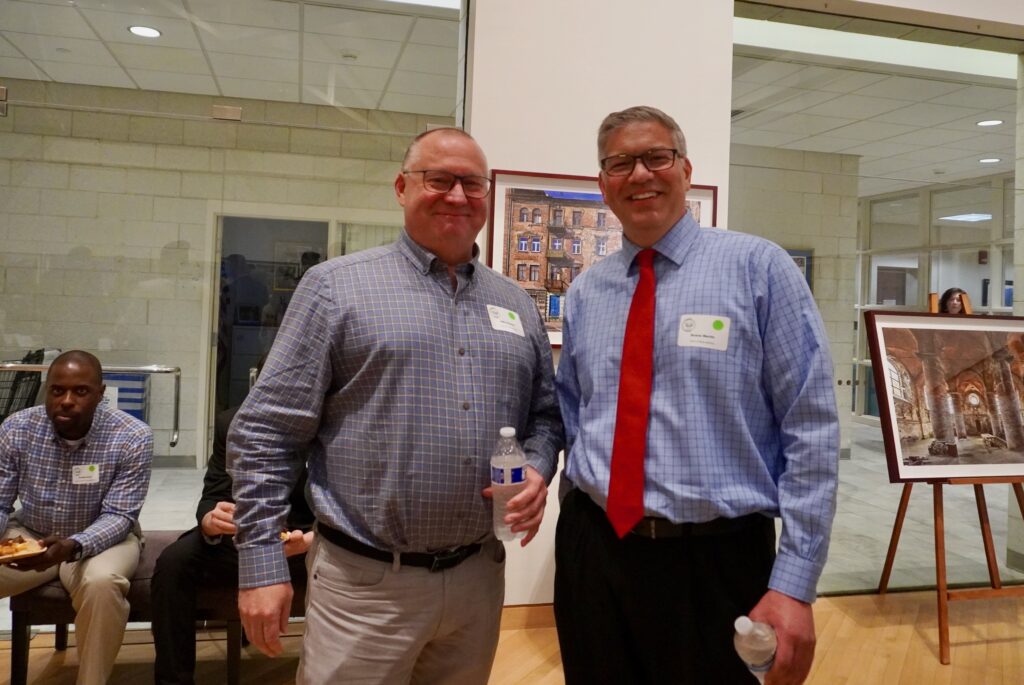
West Hartford State of the Town. April 15, 2026. Photo credit: Ronni Newton
West Hartford State of the Town. April 15, 2026. Photo credit: Ronni Newton
West Hartford State of the Town. April 15, 2026. Photo credit: Ronni Newton
West Hartford State of the Town. April 15, 2026. Photo credit: Ronni Newton
West Hartford State of the Town. April 15, 2026. Photo credit: Ronni Newton
Editor’s Note: This article has been corrected to reflect that Farmington residents do receive trash collection through the town, however, it is not included in the mill rate.
Like what you see here? Click here to subscribe to We-Ha’s newsletter so you’ll always be in the know about what’s happening in West Hartford! Click the blue button below to become a supporter of We-Ha.com and our efforts to continue producing quality journalism.