College Bound: ‘Hey! You’re In!’ (But How Can That Be? I Never Applied)

Audio By Carbonatix
Photo credit: Ronni Newton (we-ha.com file photo)





We-Ha.com will be publishing a series of essays/blogs/reflections on the issue of going to college – primarily a set of thoughts and musings, along with some practical advice, intended to support students and parents as they embark on this journey. While many of our readers are experts in this topic, many others are less knowledgeable and have little outside support. We hope this is helpful to all readers as they go through the various stages of getting into and getting something out of college.
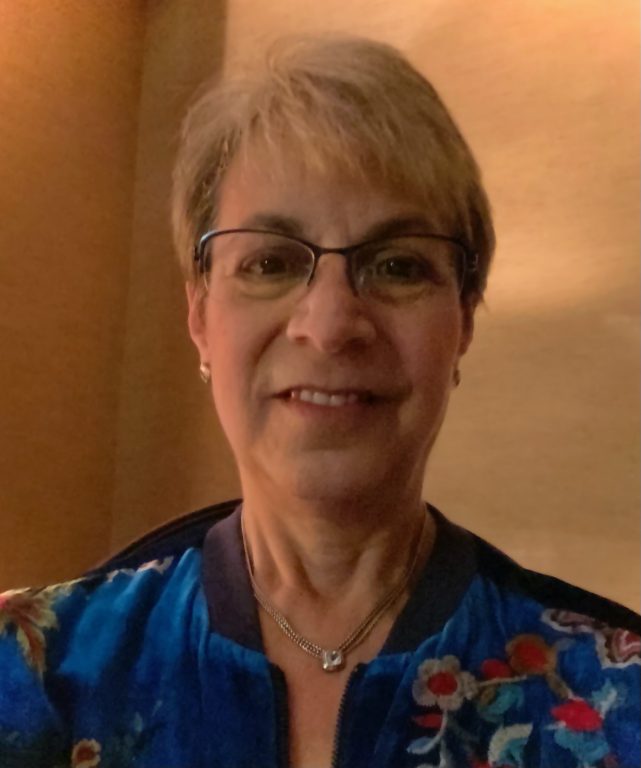
Adrienne Leinwand Maslin. Courtesy photo
By Adrienne Leinwand Maslin
Suppose an email arrives in your inbox from XYZ University. It says, “Congratulations! You have been admitted to XYZ University for the freshman class entering in Fall 2026!” It goes on to tell you how delighted they are to have admitted you and eagerly anticipate your arrival on campus in the fall. The email provides information about visiting campus, orientation, and next steps. Ordinarily, you might be ecstatic or, at least, pleased. But this time you are simply puzzled. You didn’t apply to XYZ University
This is called “direct admission.” In the direct admission process, colleges obtain your academic profile from one of the college databases such as the Common App. If you meet certain criteria such as specific GPA, SAT, or ACT scores, and are from a pre-determined demographic such as low- or middle-income family, a particular religious affiliation, or minority group, you might be selected for direct admission.
Why would colleges do this? Simply put, many of them want more students. The stressful, high-stakes jockeying around applying to college is a reality mostly for students aiming to attend highly competitive, brand-name institutions.
But less selective schools, whether private or public, need more applicants to maintain and grow their student bodies. “The vast majority of colleges accept most students who apply,” said Luke Skurman, chief executive of Niche. If those colleges can reduce the hassles and identify students who meet their minimum qualifications and admit them, the students may consider a college that otherwise may not have been on their radar.
According to EdSource, “In the Minnesota State system, which includes seven four-year universities and 26 two-year universities, enrollment has increased each of the past three years, including a 4.2% jump this fall over last year. The hikes in recent years followed about 15 consecutive years of enrollment declines.” Officials credit the turnaround partly to direct admissions, making it easier for students to enroll.
In addition to broadening the choices a student might have, the concept might be appealing to students who haven’t fully decided if college is for them; they might be considering other pathways to living a successful life. A student who is admitted directly might receive just the boost of confidence he needs to believe that college is for him and he could be successful there.
Direct admission is also helpful to students whose income level may preclude their applying to many colleges due to the accumulating cost of application fees. Direct admission alleviates this burden and opens up more colleges to such students; their choices are no longer as limited.
Direct admission focuses primarily on academic achievement rather than a student’s extracurricular activities. This is helpful for the student who either did not wish to participate in extracurriculars or who may not have had the time due to having other responsibilities such as a job or caring for a family member.
Typically, direct admission offers come with a variety of perks. While a student would have to complete and file an application, which colleges verify for accuracy, the student would not, as mentioned above, have to pay an application fee, and typically would be relieved of writing an essay and obtaining letters of recommendation. It really doesn’t get any easier than that!
Fastweb, a website that provides college and financial aid help for students and families, says that several major platforms have partnered with universities to offer instant acceptance based on your existing student profile. The most popular options for high school seniors include:
- The Common App – Specifically targeting first-generation applicants with proactive offers.
- Concourse – A streamlined “one-stop shop” where you lead with a single profile to receive multiple competing offers from global universities.
- Niche Direct Admissions – A “hands-off” approach where over 145 colleges reach out to you based on your Niche profile – no separate application required.
Connecticut has a version of a direct admission program called CAAP, CT Automatic Admission Program, which works in tandem with the Common App. Graduating high school seniors from our state who have a 3.0 (weighted) GPA or a 2.75 (unweighted) GPA are eligible for admission to the following colleges and universities:
- Central
- Eastern
- Southern
- Western
- Albertus Magnus College
- Goodwin University
- Mitchell College
- University of Bridgeport
- University of Hartford
- University of New Haven
Students can learn more about the program in Connecticut and complete an application by going to this website: https://www.ct.edu/admission/autoadmit#institutions. By applying through this program, a student’s application fee, essays, and letters of recommendation will be waived.
Whether you are accepted through a more traditional admissions process or admitted through a direct admission platform, it is important to do your own research into the college. Just because a college comes courting, which is very flattering, does not mean it is the right place for you. So do your due diligence as you would do with any other college. Visit the college if you can, look carefully at the academic offerings and majors, check out the residence halls and get a sense of campus life, and consider whether you can see yourself there for four years.
Adrienne Leinwand Maslin recently retired from a 45-year career in higher education administration. She has worked at public and private institutions, urban and rural, large and small, and two-year and four-year, and is Dean Emerita at CT State-Middlesex. She has held positions in admissions, affirmative action, president’s office, human resources, academic affairs, and student affairs. Adrienne has a BA from the University of Vermont, an MEd from Boston University, and a PhD from the University of Oregon. She is presently writing a series of graphic novels on life skills and social issues for 8-12 year olds believing that the more familiar youngsters are with important social issues the easier their transition to college and adulthood will be. Information about this series as well as contact information can be found at www.adrienneleinwandmaslin.com.
Like what you see here? Click here to subscribe to We-Ha’s newsletter so you’ll always be in the know about what’s happening in West Hartford! Click the blue button below to become a supporter of We-Ha.com and our efforts to continue producing quality journalism.